



The Martial Arts Training Methods That Seem Insane Today
June 8th, 2026
Modern martial arts training already looks intense to most people.
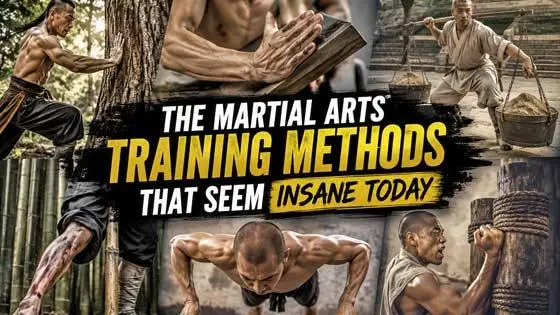
Heavy sparring. Endless drills. Conditioning workouts that leave people sore for days. But compared to some of the training methods martial artists used in the past, today's classes can look surprisingly tame. For centuries, practitioners around the world punched trees, struck sand and gravel, kicked hard surfaces to toughen their legs, balanced on narrow poles, practiced finger pushups, and followed training routines that would probably make most beginners question their life choices.
Heavy sparring. Endless drills. Conditioning workouts that leave people sore for days. But compared to some of the training methods martial artists used in the past, today's classes can look surprisingly tame. For centuries, practitioners around the world punched trees, struck sand and gravel, kicked hard surfaces to toughen their legs, balanced on narrow poles, practiced finger pushups, and followed training routines that would probably make most beginners question their life choices.
The strange part is that many of these methods were not random acts of punishment or martial arts mythology. Some were designed to build precision, endurance, body conditioning, mental discipline, or pain tolerance. Others blurred the line between brilliant training and absolute insanity. Either way, they left behind some of the strangest practices martial arts history has ever seen.
So, which martial arts training methods actually existed, and which ones seem completely unbelievable today?
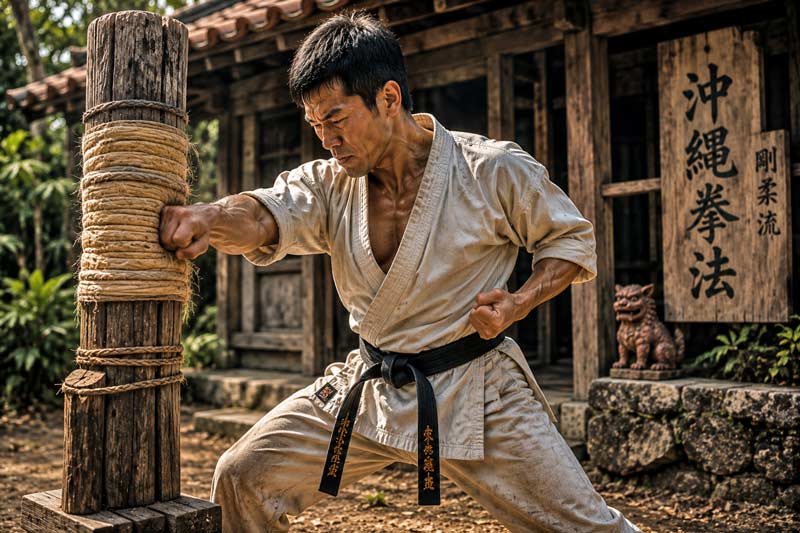
If you have ever seen an old martial arts movie where someone repeatedly punches a tree, there is a decent chance you assumed it was exaggerated for dramatic effect.
Surprisingly, it was not.
For generations, martial artists in different styles used forms of impact conditioning to toughen their hands, improve striking accuracy, and build body conditioning. One of the most famous examples comes from Okinawan karate training through something called the makiwara, a padded striking post designed to help practitioners practice punches with proper alignment and focus.
The idea was not simply to hit something hard for no reason.
At least in theory.
The goal was to improve technique, wrist alignment, precision, and controlled power while gradually conditioning the hands over time. Traditional practitioners believed this helped make strikes more effective while reinforcing good mechanics.
That said, some training methods pushed things much further.
In some systems, practitioners reportedly struck trees, wooden poles, bundles of bamboo, or rough surfaces repeatedly to toughen knuckles and forearms. Today, that sounds somewhere between "old-school dedication" and "absolutely terrible idea."
Modern martial artists are understandably divided on whether these methods were brilliant conditioning or unnecessary damage waiting to happen. Many instructors now prefer heavy bags, pads, focus mitts, and controlled conditioning exercises that are easier on joints while still building power and accuracy.
Still, it is hard not to respect the commitment of people who looked at a tree and thought:
"Yes... I should definitely punch that every day."
Karate training still includes many traditional striking principles today, although thankfully, beginners usually start with equipment designed to be a little more forgiving than hardwood.
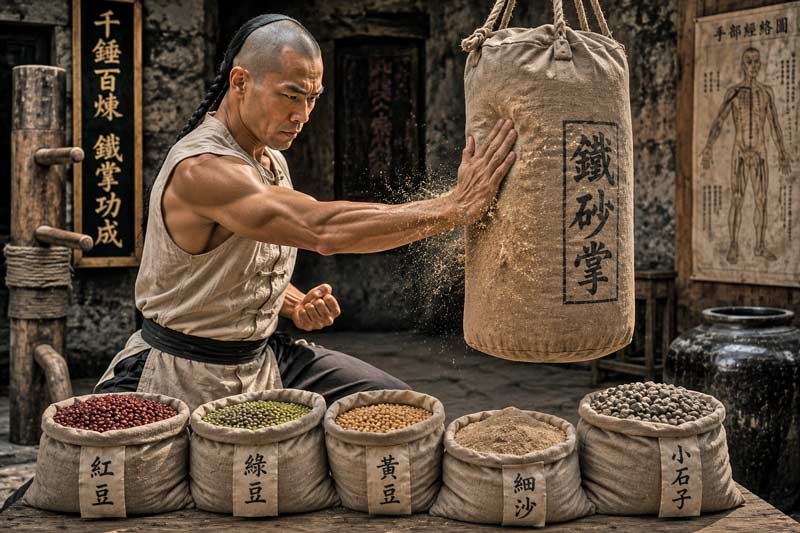
If punching trees sounds extreme, martial artists also spent centuries intentionally hitting bags filled with things that sound more like landscaping supplies than training equipment.
Welcome to the strange world of iron palm training.
Traditional iron palm methods, found in some Chinese martial arts systems, were designed to strengthen the hands and improve striking power through gradual conditioning. The process often involved repeatedly striking bags filled with materials that became progressively harder over time.
Training might start with something relatively forgiving, like rice or dried beans.
Then things got weird.
Eventually, practitioners sometimes moved on to gravel, sand, iron shot, steel pellets, or even rocks depending on the school and training philosophy. The idea was to condition bones, toughen skin, improve precision, and supposedly increase striking force.
To modern ears, this sounds suspiciously close to:
"What if we slowly destroyed our hands on purpose?"
But supporters argued there was more structure to it than people realize.
Traditional systems often emphasized gradual progression, recovery methods, herbal liniments, and proper technique to reduce injuries. In theory, this was not supposed to be reckless smashing. It was controlled conditioning over long periods of time.
That said, modern martial artists remain divided.
Some see iron palm as a fascinating piece of martial arts history with potential conditioning benefits when done responsibly. Others see it as unnecessary wear and tear in a world full of safer training tools.
Fortunately, nobody needs to start punching gravel in the garage to appreciate the history. Modern martial arts conditioning equipment offers far safer ways to explore controlled body conditioning, while traditional tools like an iron palm training bag still exist for practitioners interested in historical training methods.
Either way, you have to admire the confidence of someone who looked at a sack of rocks and thought:
"This will definitely improve my martial arts."
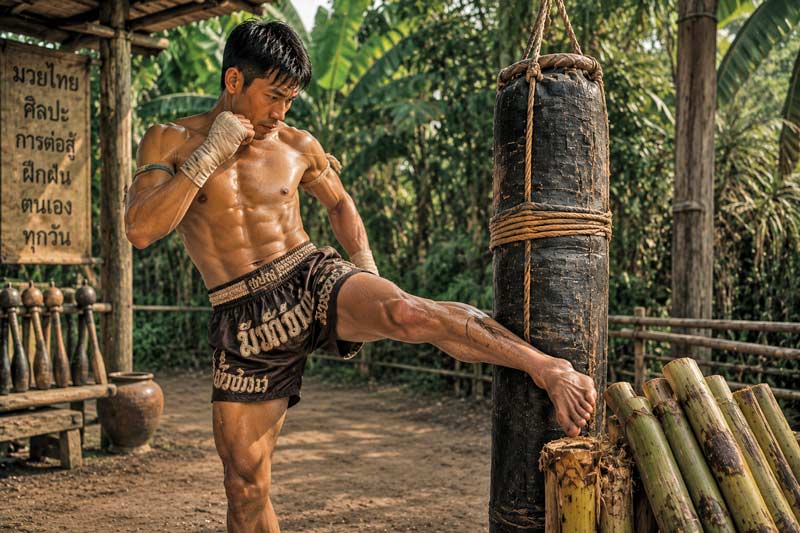
If you have ever watched Muay Thai fighters casually absorb leg kicks like it is no big deal, you may have wondered:
"How are their legs not completely destroyed?"
Part of the answer comes from one of the more painful-looking training traditions in martial arts history:
shin conditioning.
For decades, fighters in striking arts, especially Muay Thai, experimented with ways to toughen their shins and improve kicking power. Stories spread about martial artists kicking banana trees, smashing heavy bags endlessly, rolling glass bottles across their legs, or repeatedly striking hard surfaces to "deadening" nerves and condition the body.
Some of those stories are exaggerated.
Some are not.
Traditional Muay Thai training really did involve an incredible amount of repetitive kicking, especially on heavy bags and pads. Over time, this helped athletes develop conditioning, technique, and tolerance to impact. But the idea that every serious fighter was casually destroying banana trees every afternoon is probably a little more mythology than reality.
Still, compared to modern fitness routines, the mentality can seem wild.
The philosophy was simple:
If you want stronger kicks, your body has to adapt to impact.
Fortunately, most modern instructors prefer methods that are a bit less brutal. Controlled bag work, pads, drills, and structured martial arts conditioning equipment can help build durability without turning training into a contest of who can tolerate the most pain.
And yes, people still debate whether old-school shin conditioning methods were effective, unnecessary suffering, or somewhere in between.
Either way, the fact that anyone looked at a tree trunk and thought:
"I should kick that repeatedly."
is objectively impressive.
If nothing else, it makes skipping leg day feel a little less embarrassing.
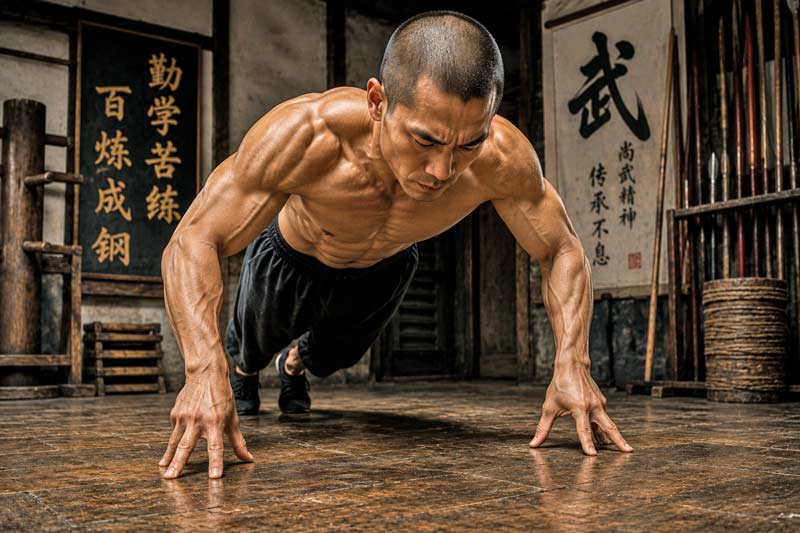
Most people struggle with normal pushups.
Some martial artists looked at that challenge and somehow decided:
"What if we did them on our fingertips instead?"
Finger pushups have appeared in different martial arts traditions for decades, especially in styles that emphasized grip strength, hand conditioning, wrist stability, and striking control. Practitioners believed strengthening the fingers and hands could improve punching precision, grappling ability, weapon control, and overall upper-body endurance.
And yes, they are exactly what they sound like.
Instead of supporting body weight with palms, practitioners balanced on their fingertips, sometimes progressing from multiple fingers down to just two or three depending on skill level and how much they apparently enjoyed suffering.
To be fair, there was some logic behind it.
Grip strength matters in many martial arts. Strong hands can improve grappling, weapon handling, and wrist stability. Controlled finger exercises may even help strengthen smaller muscles often ignored during traditional workouts.
Still, some of the stories surrounding finger pushups sound completely ridiculous by modern standards. Martial arts myths often featured masters supposedly doing endless repetitions on rocks, balancing on tiny ledges, or supporting themselves with only a couple fingers like it was somehow a reasonable weekend hobby.
Modern training tends to be a little less dramatic.
Today, athletes usually build grip and forearm strength with safer exercises, controlled bodyweight training, resistance tools, and specialized martial arts training equipment instead of immediately risking finger injuries trying to imitate movie scenes.
Still, there is something undeniably impressive about someone who mastered finger pushups.
Mostly because the average person looks at that idea and immediately thinks:
"Absolutely not."
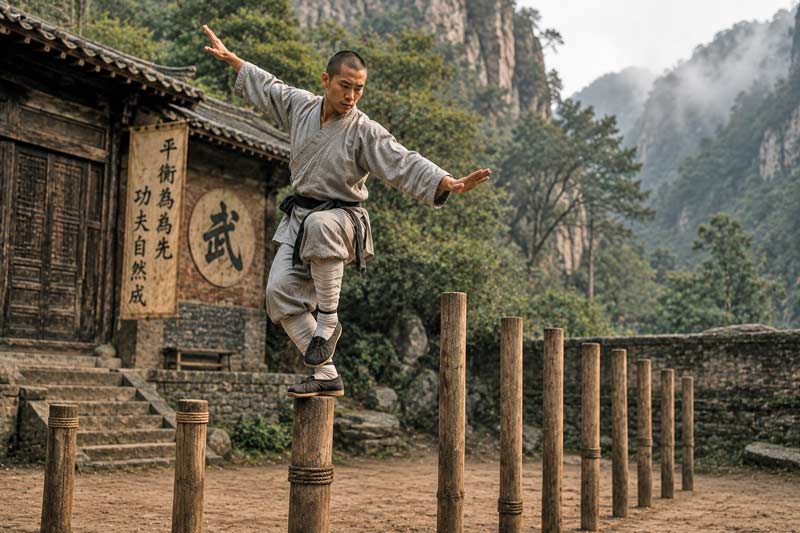
Before balance boards, agility ladders, and fancy gym equipment, some martial artists trained balance the hard way:
By standing on narrow wooden poles high enough to make failure feel very motivating.
Yes, this actually happened.
In some traditional Chinese martial arts systems, practitioners trained on raised wooden stakes, sometimes called pole training, to improve balance, footwork, coordination, and lower-body control. You have probably seen exaggerated versions of this in martial arts movies where fighters leap effortlessly across giant rows of poles while somehow never falling.
Hollywood definitely made it look cooler.
But the real concept was rooted in something practical.
Many martial arts styles place enormous emphasis on foot positioning, stability, and body control. Practicing movement on narrow or unstable surfaces forced students to become more aware of balance, posture, and precision. In theory, if you could move confidently on a tiny platform, normal footwork would feel much easier.
Of course, modern readers are probably thinking the obvious question:
"Could we maybe just practice this on the ground?"
And honestly... fair point.
Today, balance and agility training usually involve drills, footwork patterns, stability exercises, and controlled martial arts training equipment instead of risking an accidental face-first meeting with the dirt.
Still, there is something undeniably impressive about old-school practitioners who willingly trained on elevated poles with what appears to be absolute confidence and very questionable risk management.
At the very least, it makes modern balance drills feel a lot less dramatic.
For some martial artists, training was not just about learning how to hit harder.
It was also about learning how to get hit.
Enter one of the strangest old-school conditioning methods in martial arts history:
body hardening.
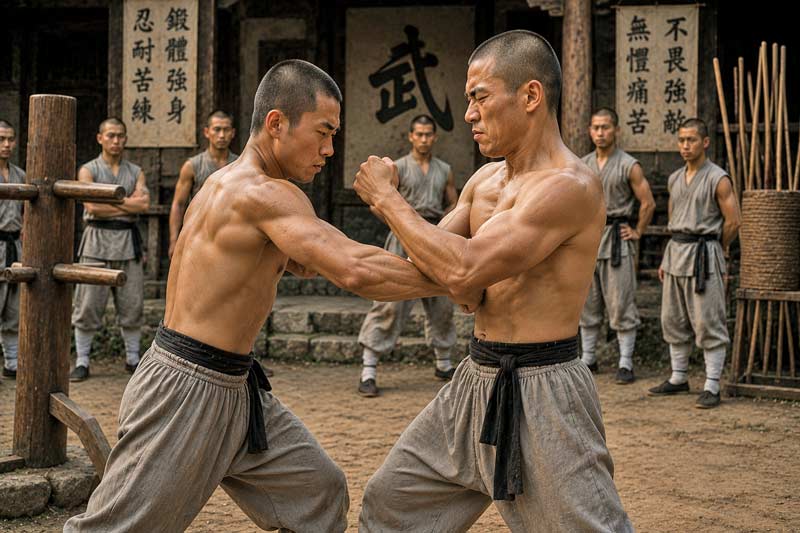
In different martial arts systems, practitioners experimented with ways to toughen muscles, improve pain tolerance, and reduce fear of impact. Sometimes this meant repeatedly striking their own bodies with controlled drills. Other times, training partners literally hit each other as part of conditioning practice.
Yes.
People willingly signed up for this.
Traditional exercises could include controlled punches to the stomach, forearm clashes, shin conditioning, partner body taps, stick drills, or repetitive contact meant to help the body gradually adapt to impact. The idea was not supposed to be random punishment.
At least in theory.
The goal was to build confidence, composure under pressure, and physical resilience over time. Martial artists believed that becoming more familiar with impact made panic less likely during sparring or real confrontations.
To modern audiences, some of these methods look absolutely wild.
Watching two people calmly hit each other in the ribs for "conditioning" tends to raise at least a few questions about decision-making.
Still, there is a practical idea hidden underneath all of it:
The body adapts to stress when training is gradual and controlled.
Fortunately, modern martial arts training usually emphasizes safer progression. Controlled partner drills, pads, sparring, and structured conditioning tools help athletes build durability without turning every class into a medieval endurance test.
That said, there is something oddly admirable about old-school practitioners whose training philosophy basically boiled down to:
"Eventually, this will stop hurting."
At some point in martial arts history, someone apparently decided that standing normally was just not difficult enough.
So instead, students were told to squat halfway to the ground and stay there.
For a very long time.
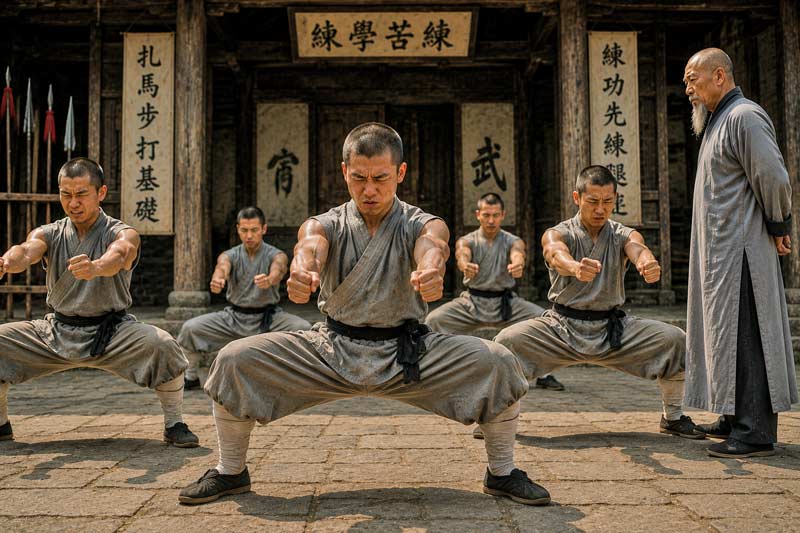
Welcome to the legendary misery known as the horse stance.
Found in many traditional martial arts systems, especially kung fu and karate, horse stance training involved holding a wide, low stance for extended periods to build leg strength, endurance, balance, posture, and mental discipline.
On paper, it sounds simple.
In reality, it feels like your legs are filing a formal complaint against you.
The logic behind it was actually pretty solid.
Strong lower-body stability matters in martial arts. A powerful stance can improve striking, balance, movement, and body control. Traditional instructors believed spending time in uncomfortable positions built both physical endurance and mental toughness.
Some schools took this to impressive extremes.
Stories exist of students holding horse stance for what felt like endless stretches of time while instructors corrected posture, placed objects on thighs to maintain depth, or expected students to simply tolerate discomfort without complaining.
Modern athletes may not train exactly the same way, but versions of stance endurance still exist. Many martial artists continue using controlled leg conditioning, balance work, and structured training equipment to improve lower-body stability without making people question every life choice they have ever made.
Still, if you have ever held a deep squat for more than thirty seconds, you already understand why horse stance training has earned legendary status.
Because eventually, every student reaches the exact same thought:
"Surely this cannot still be helping..."
Long before barbells, cable machines, or motivational gym mirrors, martial artists still had one very important problem to solve:
How do you get stronger?
Their answer was often surprisingly simple:
Lift extremely awkward, heavy things.
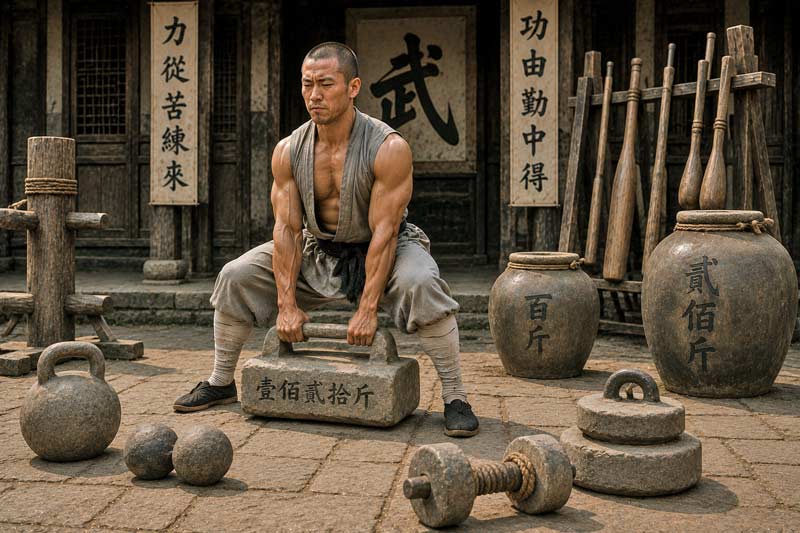
In different martial arts traditions, practitioners trained with strange-looking strength tools like giant stone locks, weighted jars, oversized rings, heavy clubs, sandbags, and massive iron weights that looked more like something stolen from an ancient blacksmith than exercise equipment.
Some of these tools were brutally practical.
Stone locks, for example, were used in Chinese martial arts to develop grip strength, explosive power, coordination, and whole-body movement. Unlike modern dumbbells, their uneven shape forced practitioners to control awkward weight distribution, making exercises feel much less predictable.
Imagine trying to do a workout while holding something specifically designed to be inconvenient.
That was basically the idea.
Martial artists also lifted heavy jars to build grip endurance, swung weighted implements to strengthen shoulders and wrists, and carried odd objects to improve balance and functional strength for striking, grappling, or weapons training.
Oddly enough, modern fitness has kind of come full circle.
Today, strongman training, kettlebells, sandbags, mace training, and functional fitness often look surprisingly similar to old-school martial arts conditioning methods. Apparently, people eventually realized:
"Maybe lifting weird heavy things actually works."
Fortunately, modern practitioners have access to safer, more structured martial arts training equipment instead of trying to casually deadlift rocks in the backyard.
Still, there is something undeniably impressive about people who got incredibly strong without a gym membership, air conditioning, or a playlist to complain about.
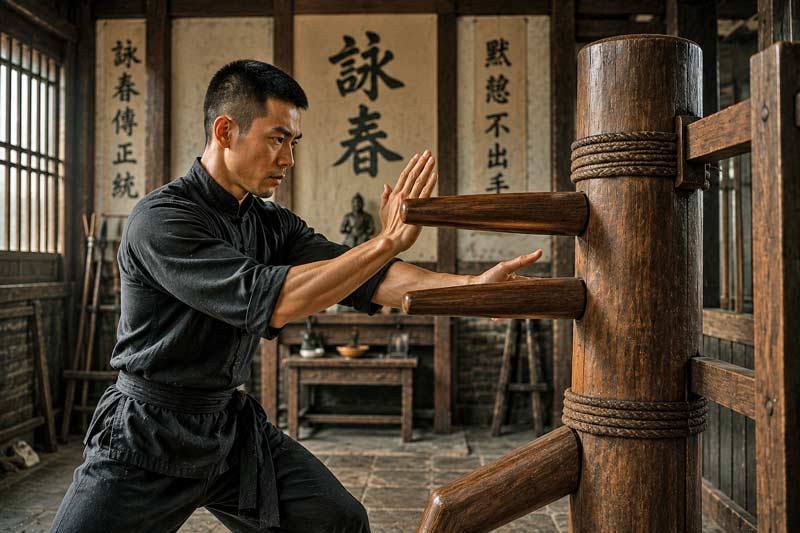
Most martial artists train with partners.
Some trained with something that looked suspiciously like an angry coat rack.
Welcome to the world of the wooden dummy.
Most famously associated with Wing Chun kung fu, wooden dummy training involved practicing strikes, blocks, angles, positioning, and body movement against a stationary wooden apparatus fitted with protruding arms and a leg.
At first glance, it looks slightly ridiculous.
A person repeatedly hitting and maneuvering around a wooden object with stick arms tends to raise at least a few questions.
But there was actually a lot of logic behind it.
Unlike sparring, a wooden dummy allowed practitioners to repeat movements endlessly without needing a training partner who eventually got tired of being punched. Students could practice timing, precision, positioning, footwork, and defensive reactions while building muscle memory through repetition.
The dummy also forced martial artists to pay attention to angles and structure. Poor positioning could quickly make techniques awkward, while good mechanics felt much smoother. In theory, it was less about brute force and more about body control and efficiency.
Still, to modern eyes, the whole thing looks wonderfully strange.
There is something undeniably funny about centuries of martial artists looking at a chunk of wood with arms and collectively agreeing:
"Yes. This seems like a reasonable training partner."
Oddly enough, versions of wooden dummy training still exist today, although modern martial artists often combine traditional drills with pads, sparring, and other martial arts training tools for a more balanced approach.
And honestly, compared to punching trees or kicking bamboo, fighting a wooden mannequin suddenly feels surprisingly reasonable.
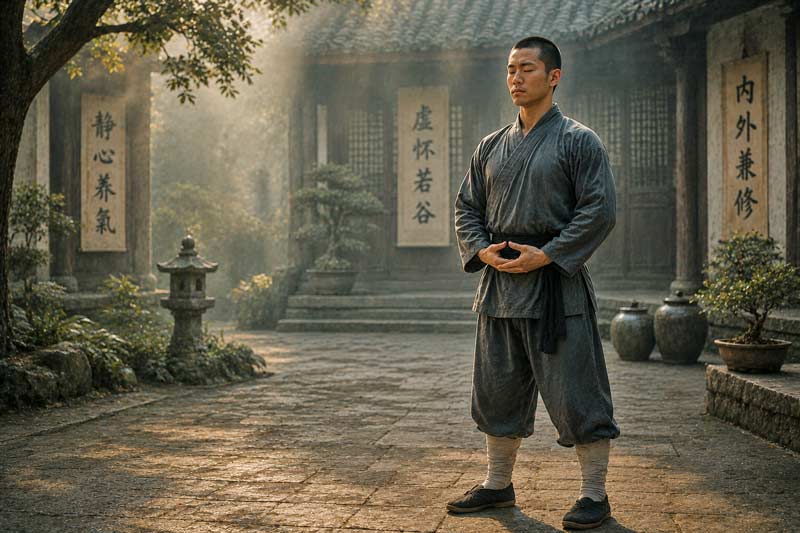
Not every strange martial arts training method involved pain, bruises, or punching random objects.
Some of them looked surprisingly boring.
In certain traditional systems, martial artists spent serious amounts of time doing something modern beginners often underestimate:
Standing still.
Really still.
Practices like standing meditation, breathing drills, and posture training appeared in different Chinese, Japanese, and internal martial arts traditions. Students sometimes held static positions for long periods while focusing on breathing, alignment, relaxation, balance, or mental focus.
To outsiders, this often looked completely ridiculous.
Imagine walking into a training hall and seeing someone standing in the same position for twenty straight minutes while everybody acts like this is perfectly normal.
The obvious reaction is:
"Are we sure this counts as exercise?"
But supporters believed these methods helped develop body awareness, posture, endurance, calmness under pressure, breathing control, and mental discipline. Internal styles especially emphasized the idea that good martial arts required not just strength or speed, but efficient movement and composure.
Oddly enough, modern sports science may give some of these methods more credit than people expect. Breath control, nervous system regulation, posture work, visualization, and mindfulness now show up in athletics far beyond martial arts.
In other words:
Some martial artists accidentally became early stress-management experts.
Of course, this still does not make it look any less strange to explain to someone that part of training involved standing motionless while trying to breathe better.
Still, compared to punching gravel or kicking trees, quietly standing around suddenly sounds surprisingly reasonable.
After looking at centuries of martial artists punching trees, striking gravel, balancing on poles, kicking hard objects, standing motionless for suspiciously long periods, and voluntarily getting hit for "conditioning," one question naturally comes up:
Did any of this actually work?
The honest answer is:
Probably some of it.
Many old-school training methods were built around ideas that still matter today, balance, conditioning, grip strength, precision, posture, endurance, pain tolerance, mental discipline, and repetition. In some cases, modern sports science has quietly backed up the core concepts even if the original methods seem a little dramatic.
At the same time, there is also a reason modern training evolved.
Today, martial artists have access to safer equipment, better recovery knowledge, structured coaching, and training methods designed to build skill without unnecessary wear and tear. Pads replaced tree trunks. Modern training gear replaced improvised suffering. And thankfully, most people no longer feel the need to test their knuckles against hardwood to prove dedication.
Still, it would be unfair to dismiss old-school martial artists completely.
These people were experimenting long before sports science existed. They were trying to solve real problems:
How do you hit harder?
How do you stay balanced?
How do you become mentally tougher?
How do you prepare for impact?
Sometimes their solutions were brilliant.
Sometimes they looked slightly unhinged.
Usually, they were somewhere in the middle.
And honestly, that may be part of what makes martial arts history so fascinating.
Because even if you never plan to punch a tree, practice fingertip pushups, or stand in horse stance until your legs start negotiating terms, it is hard not to admire the commitment of people who genuinely believed:
"This terrible idea might actually make me better."
Yes... although movies have probably exaggerated it a little.
Some traditional martial artists really did strike trees, wooden posts, bamboo, or wrapped training surfaces as part of conditioning and striking practice. In Okinawan karate, for example, practitioners commonly used a makiwara, a padded striking post designed to help improve punching accuracy, structure, and power.
The goal was not supposed to be mindless self-destruction.
At least in theory.
Traditional systems believed gradual conditioning could help strengthen hands, improve alignment, and build confidence in striking mechanics over time. That said, modern martial artists are divided on how necessary or safe these methods actually were.
Fortunately, most people interested in traditional striking practice today use safer tools like a canvas makiwara or makiwara training bag instead of repeatedly punching hardwood in the backyard.
Either way, the answer is yes:
People really did look at trees and think:
"This seems like useful training."
Yes, iron palm training is absolutely real, although it often sounds like something invented for a martial arts movie.
Traditional iron palm methods have existed for centuries in some Chinese martial arts systems. Practitioners used repeated striking drills against bags filled with materials like rice, beans, sand, gravel, or iron shot to gradually condition the hands and supposedly improve striking power.
The key word is:
gradually.
Traditional schools that practiced iron palm usually emphasized slow progression, recovery time, technique, and herbal liniments designed to help reduce strain. The idea was never supposed to be:
"Just punch rocks until your hands stop hurting."
Though from the outside, it definitely looked that way sometimes.
Modern martial artists are split on whether iron palm training is useful, outdated, or unnecessarily hard on the body. Some still practice controlled hand conditioning for historical or technical reasons, while others prefer safer training methods focused on pads, bags, and controlled striking drills.
For people curious about traditional conditioning methods, tools like an iron palm training bag still exist, along with more structured martial arts conditioning equipment designed for gradual progression.
The short answer is:
Yes, it was real.
Whether it was genius or madness depends on who you ask.
Sometimes, yes, but usually in much more controlled ways.
Many traditional martial arts training methods still exist, although modern instructors tend to adapt them to be safer and more practical.
For example, some practitioners still use makiwara boards, wooden dummies, stance training, body conditioning, grip work, and controlled hand conditioning. But most schools now combine those traditions with safer equipment, better coaching, and modern recovery knowledge.
In other words:
Martial artists still train hard.
They just try not to destroy their joints in the process.
Heavy bags replaced tree trunks. Pads replaced unnecessary impact. Structured drills replaced a lot of the more extreme "just suffer through it" mentality that existed in some traditional systems.
That said, some old-school methods never completely disappeared.
Traditional schools, especially in karate, kung fu, Muay Thai, and certain conditioning-heavy systems, may still include versions of stance endurance, shin conditioning, striking drills, breathing exercises, or controlled body conditioning.
Fortunately, modern martial arts training gear and conditioning equipment make it much easier to build strength, coordination, and durability without turning every workout into an accidental injury experiment.
So yes, many of these training ideas still exist today.
Thankfully, most people no longer feel obligated to prove dedication by punching random objects in nature.
Because they were trying to solve real problems, often without modern equipment, sports science, or much understanding of long-term recovery.
For centuries, martial artists wanted answers to questions like:
How do I hit harder?
How do I become tougher?
How do I improve balance?
How do I stay calm under pressure?
How do I prepare my body for impact?
Without gyms, modern coaching systems, or specialized equipment, many practitioners experimented with whatever methods they believed might work. That sometimes meant striking hard surfaces, holding painful stances, carrying awkward weights, balancing on poles, or doing repetitive drills that looked completely unreasonable to outsiders.
Some of those methods probably offered real benefits.
Repetition builds skill. Conditioning builds tolerance. Balance training improves coordination. Grip work improves control. Breath training can improve focus and composure.
The strange part is that many of the core ideas behind these methods still exist today, even if the execution looks very different.
Modern athletes still train balance, endurance, grip strength, posture, coordination, and mental toughness. They just usually do it with safer drills and better equipment instead of voluntarily punching gravel or standing in painful positions until their legs stopped working.
In hindsight, some of these methods seem brilliant.
Others feel like someone accidentally confused determination with suffering.
Usually, the truth is somewhere in between.
Some are.
Some definitely deserve a little caution.
The truth is that many traditional martial arts methods exist on a spectrum between:
"Surprisingly smart training idea"
and:
"Maybe we should not do that anymore."
Exercises focused on balance, posture, breathing, controlled stance work, grip strength, coordination, and repetition can still be very useful today. Many modern martial artists continue practicing versions of these methods because they build discipline, body awareness, and technical skill.
The risk usually comes from extreme impact conditioning or overdoing things too quickly.
Repeatedly punching hard surfaces, aggressive body hardening, excessive shin conditioning, or attempting advanced hand-conditioning methods without proper progression can increase the risk of joint issues, bruising, inflammation, or long-term wear and tear.
That does not automatically make traditional training "bad."
It just means context matters.
Good instructors usually emphasize gradual progression, technique, recovery, and realistic expectations rather than trying to prove toughness through pain alone. Many traditional ideas have evolved into safer modern approaches using structured conditioning tools and martial arts training equipment designed to reduce unnecessary injuries.
A good rule of thumb is simple:
If a training method sounds like something that could permanently damage your hands, knees, or spine if done recklessly, it is probably worth getting guidance before trying it.
Because while martial arts history is fascinating...
Nobody wants to explain to a doctor that they injured themselves trying to imitate a 300-year-old training method they saw online.
So, which martial arts training methods actually existed, and which ones seem completely unbelievable today?
Tree Punching and Makiwara Training: Yes, Martial Artists Really Hit Trees
If you have ever seen an old martial arts movie where someone repeatedly punches a tree, there is a decent chance you assumed it was exaggerated for dramatic effect.
Surprisingly, it was not.
For generations, martial artists in different styles used forms of impact conditioning to toughen their hands, improve striking accuracy, and build body conditioning. One of the most famous examples comes from Okinawan karate training through something called the makiwara, a padded striking post designed to help practitioners practice punches with proper alignment and focus.
The idea was not simply to hit something hard for no reason.
At least in theory.
The goal was to improve technique, wrist alignment, precision, and controlled power while gradually conditioning the hands over time. Traditional practitioners believed this helped make strikes more effective while reinforcing good mechanics.
That said, some training methods pushed things much further.
In some systems, practitioners reportedly struck trees, wooden poles, bundles of bamboo, or rough surfaces repeatedly to toughen knuckles and forearms. Today, that sounds somewhere between "old-school dedication" and "absolutely terrible idea."
Modern martial artists are understandably divided on whether these methods were brilliant conditioning or unnecessary damage waiting to happen. Many instructors now prefer heavy bags, pads, focus mitts, and controlled conditioning exercises that are easier on joints while still building power and accuracy.
Still, it is hard not to respect the commitment of people who looked at a tree and thought:
"Yes... I should definitely punch that every day."
Karate training still includes many traditional striking principles today, although thankfully, beginners usually start with equipment designed to be a little more forgiving than hardwood.
Iron Palm Training: Repeatedly Striking Sand, Beans, and Gravel
If punching trees sounds extreme, martial artists also spent centuries intentionally hitting bags filled with things that sound more like landscaping supplies than training equipment.
Welcome to the strange world of iron palm training.
Traditional iron palm methods, found in some Chinese martial arts systems, were designed to strengthen the hands and improve striking power through gradual conditioning. The process often involved repeatedly striking bags filled with materials that became progressively harder over time.
Training might start with something relatively forgiving, like rice or dried beans.
Then things got weird.
Eventually, practitioners sometimes moved on to gravel, sand, iron shot, steel pellets, or even rocks depending on the school and training philosophy. The idea was to condition bones, toughen skin, improve precision, and supposedly increase striking force.
To modern ears, this sounds suspiciously close to:
"What if we slowly destroyed our hands on purpose?"
But supporters argued there was more structure to it than people realize.
Traditional systems often emphasized gradual progression, recovery methods, herbal liniments, and proper technique to reduce injuries. In theory, this was not supposed to be reckless smashing. It was controlled conditioning over long periods of time.
That said, modern martial artists remain divided.
Some see iron palm as a fascinating piece of martial arts history with potential conditioning benefits when done responsibly. Others see it as unnecessary wear and tear in a world full of safer training tools.
Fortunately, nobody needs to start punching gravel in the garage to appreciate the history. Modern martial arts conditioning equipment offers far safer ways to explore controlled body conditioning, while traditional tools like an iron palm training bag still exist for practitioners interested in historical training methods.
Either way, you have to admire the confidence of someone who looked at a sack of rocks and thought:
"This will definitely improve my martial arts."
Shin Conditioning: Kicking Things Until Your Legs Stopped Complaining
If you have ever watched Muay Thai fighters casually absorb leg kicks like it is no big deal, you may have wondered:
"How are their legs not completely destroyed?"
Part of the answer comes from one of the more painful-looking training traditions in martial arts history:
shin conditioning.
For decades, fighters in striking arts, especially Muay Thai, experimented with ways to toughen their shins and improve kicking power. Stories spread about martial artists kicking banana trees, smashing heavy bags endlessly, rolling glass bottles across their legs, or repeatedly striking hard surfaces to "deadening" nerves and condition the body.
Some of those stories are exaggerated.
Some are not.
Traditional Muay Thai training really did involve an incredible amount of repetitive kicking, especially on heavy bags and pads. Over time, this helped athletes develop conditioning, technique, and tolerance to impact. But the idea that every serious fighter was casually destroying banana trees every afternoon is probably a little more mythology than reality.
Still, compared to modern fitness routines, the mentality can seem wild.
The philosophy was simple:
If you want stronger kicks, your body has to adapt to impact.
Fortunately, most modern instructors prefer methods that are a bit less brutal. Controlled bag work, pads, drills, and structured martial arts conditioning equipment can help build durability without turning training into a contest of who can tolerate the most pain.
And yes, people still debate whether old-school shin conditioning methods were effective, unnecessary suffering, or somewhere in between.
Either way, the fact that anyone looked at a tree trunk and thought:
"I should kick that repeatedly."
is objectively impressive.
If nothing else, it makes skipping leg day feel a little less embarrassing.
Finger Pushups: Because Regular Pushups Apparently Were Not Hard Enough
Most people struggle with normal pushups.
Some martial artists looked at that challenge and somehow decided:
"What if we did them on our fingertips instead?"
Finger pushups have appeared in different martial arts traditions for decades, especially in styles that emphasized grip strength, hand conditioning, wrist stability, and striking control. Practitioners believed strengthening the fingers and hands could improve punching precision, grappling ability, weapon control, and overall upper-body endurance.
And yes, they are exactly what they sound like.
Instead of supporting body weight with palms, practitioners balanced on their fingertips, sometimes progressing from multiple fingers down to just two or three depending on skill level and how much they apparently enjoyed suffering.
To be fair, there was some logic behind it.
Grip strength matters in many martial arts. Strong hands can improve grappling, weapon handling, and wrist stability. Controlled finger exercises may even help strengthen smaller muscles often ignored during traditional workouts.
Still, some of the stories surrounding finger pushups sound completely ridiculous by modern standards. Martial arts myths often featured masters supposedly doing endless repetitions on rocks, balancing on tiny ledges, or supporting themselves with only a couple fingers like it was somehow a reasonable weekend hobby.
Modern training tends to be a little less dramatic.
Today, athletes usually build grip and forearm strength with safer exercises, controlled bodyweight training, resistance tools, and specialized martial arts training equipment instead of immediately risking finger injuries trying to imitate movie scenes.
Still, there is something undeniably impressive about someone who mastered finger pushups.
Mostly because the average person looks at that idea and immediately thinks:
"Absolutely not."
Balancing on Poles: Martial Arts Training With Real "Fall and Learn" Consequences
Before balance boards, agility ladders, and fancy gym equipment, some martial artists trained balance the hard way:
By standing on narrow wooden poles high enough to make failure feel very motivating.
Yes, this actually happened.
In some traditional Chinese martial arts systems, practitioners trained on raised wooden stakes, sometimes called pole training, to improve balance, footwork, coordination, and lower-body control. You have probably seen exaggerated versions of this in martial arts movies where fighters leap effortlessly across giant rows of poles while somehow never falling.
Hollywood definitely made it look cooler.
But the real concept was rooted in something practical.
Many martial arts styles place enormous emphasis on foot positioning, stability, and body control. Practicing movement on narrow or unstable surfaces forced students to become more aware of balance, posture, and precision. In theory, if you could move confidently on a tiny platform, normal footwork would feel much easier.
Of course, modern readers are probably thinking the obvious question:
"Could we maybe just practice this on the ground?"
And honestly... fair point.
Today, balance and agility training usually involve drills, footwork patterns, stability exercises, and controlled martial arts training equipment instead of risking an accidental face-first meeting with the dirt.
Still, there is something undeniably impressive about old-school practitioners who willingly trained on elevated poles with what appears to be absolute confidence and very questionable risk management.
At the very least, it makes modern balance drills feel a lot less dramatic.
Body Hardening: Letting People Hit You on Purpose
For some martial artists, training was not just about learning how to hit harder.
It was also about learning how to get hit.
Enter one of the strangest old-school conditioning methods in martial arts history:
body hardening.
In different martial arts systems, practitioners experimented with ways to toughen muscles, improve pain tolerance, and reduce fear of impact. Sometimes this meant repeatedly striking their own bodies with controlled drills. Other times, training partners literally hit each other as part of conditioning practice.
Yes.
People willingly signed up for this.
Traditional exercises could include controlled punches to the stomach, forearm clashes, shin conditioning, partner body taps, stick drills, or repetitive contact meant to help the body gradually adapt to impact. The idea was not supposed to be random punishment.
At least in theory.
The goal was to build confidence, composure under pressure, and physical resilience over time. Martial artists believed that becoming more familiar with impact made panic less likely during sparring or real confrontations.
To modern audiences, some of these methods look absolutely wild.
Watching two people calmly hit each other in the ribs for "conditioning" tends to raise at least a few questions about decision-making.
Still, there is a practical idea hidden underneath all of it:
The body adapts to stress when training is gradual and controlled.
Fortunately, modern martial arts training usually emphasizes safer progression. Controlled partner drills, pads, sparring, and structured conditioning tools help athletes build durability without turning every class into a medieval endurance test.
That said, there is something oddly admirable about old-school practitioners whose training philosophy basically boiled down to:
"Eventually, this will stop hurting."
Horse Stance Training: Sitting in Invisible Chairs for Ridiculous Amounts of Time
At some point in martial arts history, someone apparently decided that standing normally was just not difficult enough.
So instead, students were told to squat halfway to the ground and stay there.
For a very long time.
Welcome to the legendary misery known as the horse stance.
Found in many traditional martial arts systems, especially kung fu and karate, horse stance training involved holding a wide, low stance for extended periods to build leg strength, endurance, balance, posture, and mental discipline.
On paper, it sounds simple.
In reality, it feels like your legs are filing a formal complaint against you.
The logic behind it was actually pretty solid.
Strong lower-body stability matters in martial arts. A powerful stance can improve striking, balance, movement, and body control. Traditional instructors believed spending time in uncomfortable positions built both physical endurance and mental toughness.
Some schools took this to impressive extremes.
Stories exist of students holding horse stance for what felt like endless stretches of time while instructors corrected posture, placed objects on thighs to maintain depth, or expected students to simply tolerate discomfort without complaining.
Modern athletes may not train exactly the same way, but versions of stance endurance still exist. Many martial artists continue using controlled leg conditioning, balance work, and structured training equipment to improve lower-body stability without making people question every life choice they have ever made.
Still, if you have ever held a deep squat for more than thirty seconds, you already understand why horse stance training has earned legendary status.
Because eventually, every student reaches the exact same thought:
"Surely this cannot still be helping..."
Stone Locks and Giant Weights: Strength Training Before Gyms Existed
Long before barbells, cable machines, or motivational gym mirrors, martial artists still had one very important problem to solve:
How do you get stronger?
Their answer was often surprisingly simple:
Lift extremely awkward, heavy things.
In different martial arts traditions, practitioners trained with strange-looking strength tools like giant stone locks, weighted jars, oversized rings, heavy clubs, sandbags, and massive iron weights that looked more like something stolen from an ancient blacksmith than exercise equipment.
Some of these tools were brutally practical.
Stone locks, for example, were used in Chinese martial arts to develop grip strength, explosive power, coordination, and whole-body movement. Unlike modern dumbbells, their uneven shape forced practitioners to control awkward weight distribution, making exercises feel much less predictable.
Imagine trying to do a workout while holding something specifically designed to be inconvenient.
That was basically the idea.
Martial artists also lifted heavy jars to build grip endurance, swung weighted implements to strengthen shoulders and wrists, and carried odd objects to improve balance and functional strength for striking, grappling, or weapons training.
Oddly enough, modern fitness has kind of come full circle.
Today, strongman training, kettlebells, sandbags, mace training, and functional fitness often look surprisingly similar to old-school martial arts conditioning methods. Apparently, people eventually realized:
"Maybe lifting weird heavy things actually works."
Fortunately, modern practitioners have access to safer, more structured martial arts training equipment instead of trying to casually deadlift rocks in the backyard.
Still, there is something undeniably impressive about people who got incredibly strong without a gym membership, air conditioning, or a playlist to complain about.
Wooden Dummy Training: Practicing Fights Against a Very Uncooperative Opponent
Most martial artists train with partners.
Some trained with something that looked suspiciously like an angry coat rack.
Welcome to the world of the wooden dummy.
Most famously associated with Wing Chun kung fu, wooden dummy training involved practicing strikes, blocks, angles, positioning, and body movement against a stationary wooden apparatus fitted with protruding arms and a leg.
At first glance, it looks slightly ridiculous.
A person repeatedly hitting and maneuvering around a wooden object with stick arms tends to raise at least a few questions.
But there was actually a lot of logic behind it.
Unlike sparring, a wooden dummy allowed practitioners to repeat movements endlessly without needing a training partner who eventually got tired of being punched. Students could practice timing, precision, positioning, footwork, and defensive reactions while building muscle memory through repetition.
The dummy also forced martial artists to pay attention to angles and structure. Poor positioning could quickly make techniques awkward, while good mechanics felt much smoother. In theory, it was less about brute force and more about body control and efficiency.
Still, to modern eyes, the whole thing looks wonderfully strange.
There is something undeniably funny about centuries of martial artists looking at a chunk of wood with arms and collectively agreeing:
"Yes. This seems like a reasonable training partner."
Oddly enough, versions of wooden dummy training still exist today, although modern martial artists often combine traditional drills with pads, sparring, and other martial arts training tools for a more balanced approach.
And honestly, compared to punching trees or kicking bamboo, fighting a wooden mannequin suddenly feels surprisingly reasonable.
Breathing, Meditation, and Standing Completely Still for Long Periods
Not every strange martial arts training method involved pain, bruises, or punching random objects.
Some of them looked surprisingly boring.
In certain traditional systems, martial artists spent serious amounts of time doing something modern beginners often underestimate:
Standing still.
Really still.
Practices like standing meditation, breathing drills, and posture training appeared in different Chinese, Japanese, and internal martial arts traditions. Students sometimes held static positions for long periods while focusing on breathing, alignment, relaxation, balance, or mental focus.
To outsiders, this often looked completely ridiculous.
Imagine walking into a training hall and seeing someone standing in the same position for twenty straight minutes while everybody acts like this is perfectly normal.
The obvious reaction is:
"Are we sure this counts as exercise?"
But supporters believed these methods helped develop body awareness, posture, endurance, calmness under pressure, breathing control, and mental discipline. Internal styles especially emphasized the idea that good martial arts required not just strength or speed, but efficient movement and composure.
Oddly enough, modern sports science may give some of these methods more credit than people expect. Breath control, nervous system regulation, posture work, visualization, and mindfulness now show up in athletics far beyond martial arts.
In other words:
Some martial artists accidentally became early stress-management experts.
Of course, this still does not make it look any less strange to explain to someone that part of training involved standing motionless while trying to breathe better.
Still, compared to punching gravel or kicking trees, quietly standing around suddenly sounds surprisingly reasonable.
So... Were These Training Methods Brilliant or Completely Insane?
After looking at centuries of martial artists punching trees, striking gravel, balancing on poles, kicking hard objects, standing motionless for suspiciously long periods, and voluntarily getting hit for "conditioning," one question naturally comes up:
Did any of this actually work?
The honest answer is:
Probably some of it.
Many old-school training methods were built around ideas that still matter today, balance, conditioning, grip strength, precision, posture, endurance, pain tolerance, mental discipline, and repetition. In some cases, modern sports science has quietly backed up the core concepts even if the original methods seem a little dramatic.
At the same time, there is also a reason modern training evolved.
Today, martial artists have access to safer equipment, better recovery knowledge, structured coaching, and training methods designed to build skill without unnecessary wear and tear. Pads replaced tree trunks. Modern training gear replaced improvised suffering. And thankfully, most people no longer feel the need to test their knuckles against hardwood to prove dedication.
Still, it would be unfair to dismiss old-school martial artists completely.
These people were experimenting long before sports science existed. They were trying to solve real problems:
How do you hit harder?
How do you stay balanced?
How do you become mentally tougher?
How do you prepare for impact?
Sometimes their solutions were brilliant.
Sometimes they looked slightly unhinged.
Usually, they were somewhere in the middle.
And honestly, that may be part of what makes martial arts history so fascinating.
Because even if you never plan to punch a tree, practice fingertip pushups, or stand in horse stance until your legs start negotiating terms, it is hard not to admire the commitment of people who genuinely believed:
"This terrible idea might actually make me better."
Frequently Asked Questions
Did Martial Artists Really Punch Trees?
Yes... although movies have probably exaggerated it a little.
Some traditional martial artists really did strike trees, wooden posts, bamboo, or wrapped training surfaces as part of conditioning and striking practice. In Okinawan karate, for example, practitioners commonly used a makiwara, a padded striking post designed to help improve punching accuracy, structure, and power.
The goal was not supposed to be mindless self-destruction.
At least in theory.
Traditional systems believed gradual conditioning could help strengthen hands, improve alignment, and build confidence in striking mechanics over time. That said, modern martial artists are divided on how necessary or safe these methods actually were.
Fortunately, most people interested in traditional striking practice today use safer tools like a canvas makiwara or makiwara training bag instead of repeatedly punching hardwood in the backyard.
Either way, the answer is yes:
People really did look at trees and think:
"This seems like useful training."
Is Iron Palm Training Actually Real?
Yes, iron palm training is absolutely real, although it often sounds like something invented for a martial arts movie.
Traditional iron palm methods have existed for centuries in some Chinese martial arts systems. Practitioners used repeated striking drills against bags filled with materials like rice, beans, sand, gravel, or iron shot to gradually condition the hands and supposedly improve striking power.
The key word is:
gradually.
Traditional schools that practiced iron palm usually emphasized slow progression, recovery time, technique, and herbal liniments designed to help reduce strain. The idea was never supposed to be:
"Just punch rocks until your hands stop hurting."
Though from the outside, it definitely looked that way sometimes.
Modern martial artists are split on whether iron palm training is useful, outdated, or unnecessarily hard on the body. Some still practice controlled hand conditioning for historical or technical reasons, while others prefer safer training methods focused on pads, bags, and controlled striking drills.
For people curious about traditional conditioning methods, tools like an iron palm training bag still exist, along with more structured martial arts conditioning equipment designed for gradual progression.
The short answer is:
Yes, it was real.
Whether it was genius or madness depends on who you ask.
Do Martial Artists Still Train Like This Today?
Sometimes, yes, but usually in much more controlled ways.
Many traditional martial arts training methods still exist, although modern instructors tend to adapt them to be safer and more practical.
For example, some practitioners still use makiwara boards, wooden dummies, stance training, body conditioning, grip work, and controlled hand conditioning. But most schools now combine those traditions with safer equipment, better coaching, and modern recovery knowledge.
In other words:
Martial artists still train hard.
They just try not to destroy their joints in the process.
Heavy bags replaced tree trunks. Pads replaced unnecessary impact. Structured drills replaced a lot of the more extreme "just suffer through it" mentality that existed in some traditional systems.
That said, some old-school methods never completely disappeared.
Traditional schools, especially in karate, kung fu, Muay Thai, and certain conditioning-heavy systems, may still include versions of stance endurance, shin conditioning, striking drills, breathing exercises, or controlled body conditioning.
Fortunately, modern martial arts training gear and conditioning equipment make it much easier to build strength, coordination, and durability without turning every workout into an accidental injury experiment.
So yes, many of these training ideas still exist today.
Thankfully, most people no longer feel obligated to prove dedication by punching random objects in nature.
Why Did Martial Artists Use Such Extreme Training Methods?
Because they were trying to solve real problems, often without modern equipment, sports science, or much understanding of long-term recovery.
For centuries, martial artists wanted answers to questions like:
How do I hit harder?
How do I become tougher?
How do I improve balance?
How do I stay calm under pressure?
How do I prepare my body for impact?
Without gyms, modern coaching systems, or specialized equipment, many practitioners experimented with whatever methods they believed might work. That sometimes meant striking hard surfaces, holding painful stances, carrying awkward weights, balancing on poles, or doing repetitive drills that looked completely unreasonable to outsiders.
Some of those methods probably offered real benefits.
Repetition builds skill. Conditioning builds tolerance. Balance training improves coordination. Grip work improves control. Breath training can improve focus and composure.
The strange part is that many of the core ideas behind these methods still exist today, even if the execution looks very different.
Modern athletes still train balance, endurance, grip strength, posture, coordination, and mental toughness. They just usually do it with safer drills and better equipment instead of voluntarily punching gravel or standing in painful positions until their legs stopped working.
In hindsight, some of these methods seem brilliant.
Others feel like someone accidentally confused determination with suffering.
Usually, the truth is somewhere in between.
Are Any of These Old Martial Arts Training Methods Safe?
Some are.
Some definitely deserve a little caution.
The truth is that many traditional martial arts methods exist on a spectrum between:
"Surprisingly smart training idea"
and:
"Maybe we should not do that anymore."
Exercises focused on balance, posture, breathing, controlled stance work, grip strength, coordination, and repetition can still be very useful today. Many modern martial artists continue practicing versions of these methods because they build discipline, body awareness, and technical skill.
The risk usually comes from extreme impact conditioning or overdoing things too quickly.
Repeatedly punching hard surfaces, aggressive body hardening, excessive shin conditioning, or attempting advanced hand-conditioning methods without proper progression can increase the risk of joint issues, bruising, inflammation, or long-term wear and tear.
That does not automatically make traditional training "bad."
It just means context matters.
Good instructors usually emphasize gradual progression, technique, recovery, and realistic expectations rather than trying to prove toughness through pain alone. Many traditional ideas have evolved into safer modern approaches using structured conditioning tools and martial arts training equipment designed to reduce unnecessary injuries.
A good rule of thumb is simple:
If a training method sounds like something that could permanently damage your hands, knees, or spine if done recklessly, it is probably worth getting guidance before trying it.
Because while martial arts history is fascinating...
Nobody wants to explain to a doctor that they injured themselves trying to imitate a 300-year-old training method they saw online.
You May Also Be Interested In:
- What Is a Rope Dart? History, Training, and Martial Arts Uses
- What Is a Chain Whip? History, Training, and Martial Arts Uses
- Best Martial Arts Pants: Karate and Taekwondo Training Guide
- INSANE Weapons and New Self-Defense Tools
- 10 Reasons Why You Should Try Martial Arts
- Whatever Happened to These Martial Arts?
- What is the Best Bo Staff for Martial Arts?
- How to Tell if a Martial Arts School Is Actually Good
- What Martial Arts Style Should I Choose?
- Top 5 Least Practical Martial Arts Weapons You Know You Want
Leave a Reply