



The Hidden History of the Bolas: The Ancient Weapon That Could Stop You in Your Tracks
July 22nd, 2026
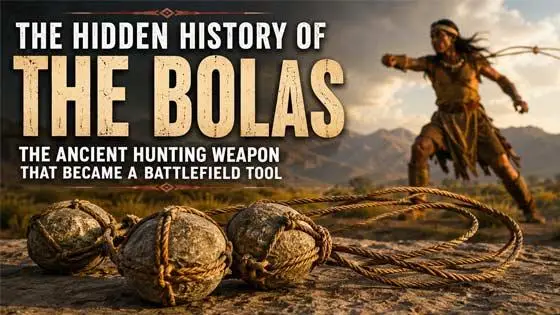
Some of history's most effective weapons weren't designed to kill. They were designed to stop. The bolas is a perfect example. At first glance, it looks almost too simple to be dangerous: a few weighted cords tied together and thrown through the air. Yet for thousands of years, hunters used it to bring down fast-moving animals, and in the right hands, it could entangle an opponent before they ever got close enough to fight back. Despite its remarkable effectiveness, the bolas has largely faded from popular history, overshadowed by swords, spears, and bows. Its story, however, is every bit as fascinating.
What Are Bolas?
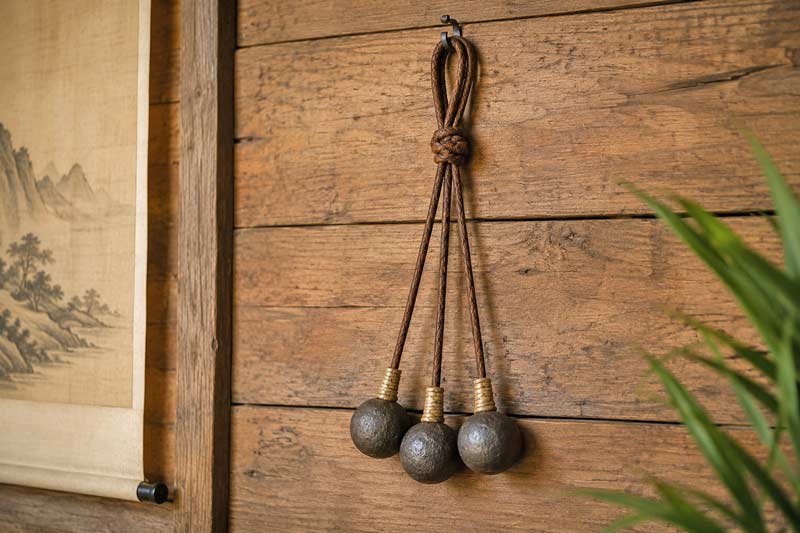
At their core, bolas are surprisingly simple weapons. They consist of two or more weighted balls connected by strong cords. When thrown with the proper technique, the weights spread apart in flight before wrapping around the legs, neck, or body of a target. Instead of relying on a sharp blade or heavy impact, the bolas use entanglement to stop movement, making escape difficult and follow-up capture much easier.
The earliest bolas were often made from smooth stones wrapped in leather or tied with rawhide thongs. Over time, different cultures experimented with heavier materials, stronger cords, and varying numbers of weights to improve their effectiveness. Two-ball and three-ball designs became the most common, each offering its own balance of throwing distance, accuracy, and wrapping ability.
While most people associate bolas with South American hunters, similar entangling weapons have appeared in different parts of the world throughout history. Their simple construction made them relatively easy to build using local materials, yet using them effectively required excellent timing, practice, and precision.
Modern versions are still popular among collectors, martial arts enthusiasts, and throwing weapon hobbyists. Whether you prefer a compact double steel ball bola, a traditional corded triple-ball bola, or the added weight of a triple steel ball bola, today's designs remain faithful to one of history's most ingenious entangling weapons.
How Bolas Worked
The effectiveness of bolas came from the way their separate weights behaved after release. Before throwing, the user gathered the cords and swung the weapon to build momentum. Once released, the weights spread apart in flight, creating a wide pattern that increased the chance of catching a moving target.
When one weight passed on one side of an animal's legs and another passed on the opposite side, the cords wrapped tightly around them. The remaining weight continued to rotate, adding more turns and pulling the cords tighter. A successful throw could cause the target to stumble almost instantly, often without requiring a direct strike.
Different bola designs behaved differently in the air. Two-weight versions were generally easier to control and could be thrown with greater precision. Three-weight versions created a wider spread and were more likely to wrap securely, but they also demanded better timing and coordination from the thrower.
Weight and cord length mattered just as much as the number of balls. Heavier weights carried more momentum, while longer cords created a broader reach. Hunters had to balance those advantages against accuracy, since a poorly proportioned bola could become difficult to control or fail to open properly in flight.
What made the weapon so ingenious was that it turned movement against the target. The faster an animal ran, the more violently the cords could tighten once they caught its legs. Rather than overpowering speed, the bolas used it to complete the trap.
Who Invented the Bolas?
No one knows exactly who invented the bolas, but archaeologists believe variations of the weapon have existed for thousands of years. Evidence of weighted throwing cords has been found in several ancient cultures, suggesting that the basic idea emerged independently in different parts of the world. After all, tying heavy objects to cords was a simple solution that didn't require advanced metalworking or specialized tools.
The people most closely associated with the bolas are the indigenous tribes of South America, particularly those who lived across the open grasslands of what are now Argentina, Uruguay, and Patagonia. For hunters pursuing fast-moving animals such as guanacos, rheas, and other game, the bolas offered a major advantage. Instead of trying to wound an animal with a spear or arrow, they could disable it by tangling its legs, allowing hunters to approach safely afterward.
As generations passed, the weapon became closely linked with the region's famous horsemen, the gauchos. Skilled riders could swing and throw bolas with remarkable accuracy while riding at full speed, making them effective for capturing livestock as well as hunting wild animals. Their expertise helped preserve the weapon long after many ancient hunting tools had disappeared.
Although the South American bolas became the best known, historians have found evidence of similar entangling weapons elsewhere in the world. Different cultures adapted the basic concept using local materials and different numbers of weights, proving that simple ideas can evolve in remarkably similar ways across distant civilizations.
Today, the bolas are remembered not because of a single inventor, but because countless generations refined one of humanity's most clever hunting tools into a weapon whose ingenuity still impresses historians and martial arts enthusiasts alike.
Did Bolas Ever Become Real Battlefield Weapons?
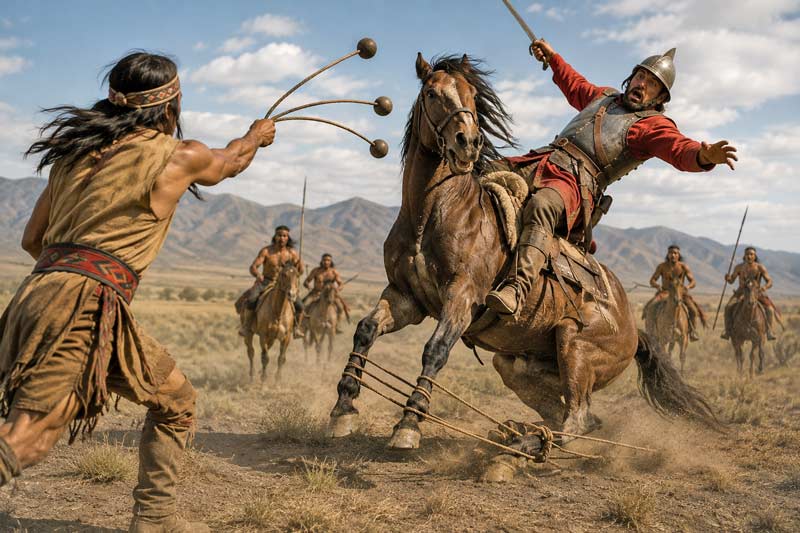
Although the bolas are best known as hunting tools, they weren't used exclusively for hunting. Historical accounts suggest that some indigenous warriors carried bolas into battle, where they served a very different purpose. Instead of trying to kill an opponent outright, they were used to disrupt movement, unseat riders, or create an opening for other weapons to finish the fight.
Against mounted enemies, the bolas could be especially effective. A well-placed throw that tangled a horse's legs could bring both horse and rider crashing to the ground, instantly changing the course of a fight. Even if the throw only slowed the animal or forced it to stumble, it gave warriors a valuable tactical advantage.
Despite those successes, the bolas never replaced more conventional battlefield weapons such as spears, bows, or swords. They required considerable skill, worked best in open terrain, and generally offered only one opportunity before needing to be retrieved. In the confusion of a large battle, that limited their practicality compared to weapons that could be used repeatedly without interruption.
Their greatest military value was psychological as well as physical. An opponent suddenly tangled in cords or thrown from a horse became vulnerable, confused, and unable to react effectively. Even if the bolas didn't end the fight immediately, they often created the decisive moment that allowed other warriors to do so.
In that sense, the bolas occupied a unique place in military history. They were never a dominant battlefield weapon, but they proved that victory didn't always depend on striking the hardest. Sometimes, preventing an enemy from moving was enough to win the battle.
How Gauchos Turned Bolas into a Horseman's Weapon
By the time gauchos became the legendary horsemen of the South American plains, bolas were no longer just ancient hunting tools. They had become practical equipment for managing livestock, capturing runaway animals, and surviving in open country where speed mattered more than brute force.
A skilled gaucho could carry bolas while riding and prepare them without slowing down. The cords were often held together in one hand while the weights hung ready at the rider's side. When an animal broke away from the herd, the gaucho could accelerate, swing the bolas, and release them toward its legs from horseback.
Throwing from a moving horse required exceptional timing. The rider had to account for the speed of the horse, the direction of the target, and the expanding path of the weights. Releasing too early sent the weapon harmlessly behind the animal. Releasing too late risked tangling the wrong legs or missing entirely.
Gauchos also adapted the weapon to different tasks. Lighter bolas could be used for smaller animals or more precise throws, while heavier versions offered greater stopping power against cattle and horses. Some were carried as everyday working tools rather than weapons, much like a rope or lasso.
That practical use helped keep the bolas alive long after their role in warfare had faded. While many historical weapons survived only in museums, the bolas remained connected to a living tradition of horsemanship, ranching, and rural skill.
For the gauchos, mastering the bolas wasn't about performing a flashy trick. It was about controlling an unpredictable animal while moving at full speed across open terrain. Few weapons demanded that same combination of balance, judgment, and precision.
Why the Bolas Disappeared While Other Weapons Survived
For centuries, the bolas remained an effective tool wherever people hunted or worked in wide-open country. But as firearms became more accurate, affordable, and widely available, there was less reason to rely on a weapon that demanded years of practice and only worked well under the right conditions.
Changing hunting methods also played a role. Rifles allowed hunters to take game from much greater distances without needing to chase animals across open ground. Ranchers increasingly replaced traditional tools with modern equipment, leaving the bolas as more of a cultural symbol than an everyday necessity.
Unlike swords, knives, or bows, the bolas never developed a strong place in organized military training or sporting competition. Once their practical purpose faded, there were fewer opportunities for new generations to learn how to use them. Knowledge that had been passed from parent to child for centuries slowly became less common.
Even so, the weapon never completely vanished. Museums preserve historic examples, historians continue to study their role in hunting and warfare, and traditional demonstrations can still be found in parts of South America where gaucho culture remains strong. Collectors and martial arts enthusiasts have also helped keep interest alive by showcasing the remarkable engineering behind such a deceptively simple weapon.
Today, the bolas stand as a reminder that history's most effective weapons were not always the ones with blades or gunpowder. Sometimes a few cords and carefully balanced weights were enough to solve problems that far more intimidating weapons could not.
Why the Bolas Still Fascinate People Today
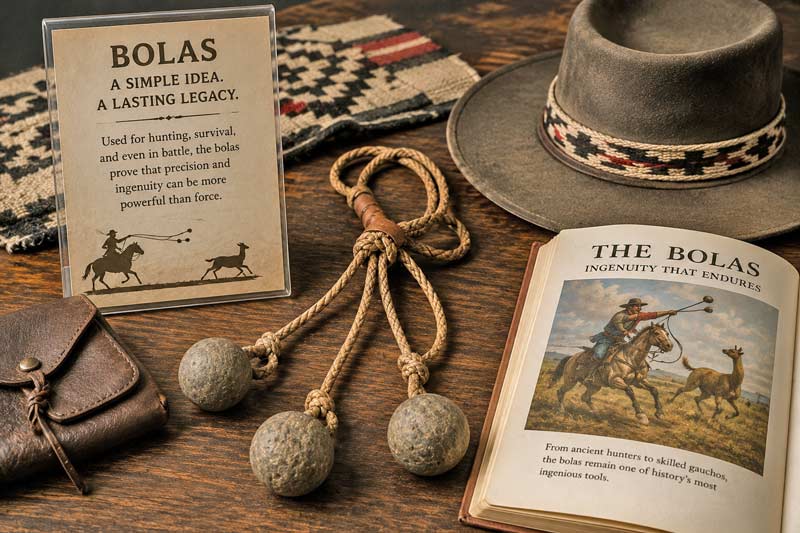
Unlike many ancient weapons, the bolas don't impress people because they look intimidating. There are no sharpened blades, heavy heads, or elaborate designs. At first glance, they seem almost too simple to be effective. That's exactly what makes them so fascinating. Once people see how they actually work, they quickly realize that the weapon relies on physics, timing, and precision rather than brute force.
The bolas also challenge our expectations about what a weapon can be. Most historical weapons were designed to strike, stab, or cut. The bolas took a completely different approach by targeting mobility instead. Disabling an opponent or capturing an animal without delivering a lethal blow was an ingenious solution that proved surprisingly effective for centuries.
Today, replicas are popular with collectors, history enthusiasts, and martial arts fans who appreciate unusual weapons from around the world. Museums continue to display authentic examples, while documentaries and historical demonstrations introduce new audiences to a weapon that many people have never encountered before.
Although the bolas are no longer carried across the plains by hunters or gauchos, their legacy lives on as one of history's most creative and unconventional inventions. They serve as a reminder that the most effective weapons aren't always the most complex. Sometimes, the simplest ideas are the ones that survive in our imagination long after they've disappeared from everyday life.
FAQ: Were Bolas Designed to Kill or Capture?
Bolas were primarily designed to capture rather than kill. Their purpose was to wrap around an animal's legs, interrupt its stride, and bring it to the ground so hunters could approach safely. This made them especially useful for pursuing fast game across open terrain.
That doesn't mean they were harmless. Heavy stone or metal weights could cause serious injuries if they struck the body directly, and a fall at full speed could be deadly for both animals and mounted riders. In battle, the weapon's danger often came from what happened after the target became tangled and defenseless.
What made the bolas unusual was that their effectiveness didn't depend on a sharp edge or penetrating point. They defeated movement itself, making them one of history's most inventive nontraditional weapons.
FAQ: Why Did Some Bolas Have Two Weights While Others Had Three?
The number of weights affected how the bolas behaved in flight. Two-weight versions were generally easier to throw accurately and were favored when precision mattered most. Three-weight bolas spread out farther as they spun, increasing the chances of wrapping securely around an animal's legs.
Hunters often chose the design that best matched the game they were pursuing and the terrain they were working in. Smaller or lighter bolas could be ideal for certain animals, while larger three-weight versions offered a wider entangling pattern for bigger, faster targets.
Neither design was universally better. Both relied on the same principle of using spinning momentum and flexible cords to trap movement, proving that even small design changes could significantly affect how the weapon performed in the field.
FAQ: Are Bolas Still Used Today?
Yes, although not as everyday hunting tools. In parts of South America, especially where gaucho traditions remain strong, bolas are still demonstrated as part of cultural festivals, historical reenactments, and horsemanship exhibitions. They serve as an important reminder of the region's rich history and ranching heritage.
Outside South America, bolas are popular with collectors, museums, and martial arts enthusiasts who appreciate unusual historical weapons. Modern reproductions are also sold as display pieces, giving people the opportunity to own a replica of one of history's most ingenious hunting tools.
While modern hunting and ranching have largely replaced the practical need for bolas, their clever design continues to fascinate people who enjoy learning about the inventive weapons and tools developed by ancient cultures.
FAQ: Can You Really Throw Bolas Accurately?
Yes, but only after considerable practice. Throwing bolas effectively requires much more than simply swinging and releasing them. A skilled user must judge the target's speed, distance, direction, and the timing of the release so the spinning weights spread correctly before reaching the target.
Experienced hunters and gauchos developed remarkable accuracy through years of repetition, often throwing from horseback while both they and their target were moving. To an observer, the throw could look effortless, but it was the result of countless hours of practice and careful technique.
Without that training, bolas are surprisingly difficult to use. Their flexible design makes them one of history's most deceptive weapons, appearing simple at first glance while demanding far more skill than most people expect.
FAQ: What's the Difference Between Bolas and a Lasso?
Although both were used by skilled horsemen to capture animals, they worked in completely different ways. A lasso relies on a loop that is thrown over the target and then tightened by pulling the rope. Bolas, on the other hand, use spinning weighted cords that wrap themselves around the target's legs through momentum and entanglement.
Because of this difference, bolas could stop a fast-moving animal without requiring the thrower to maintain constant tension on a rope. Once the weights wrapped around the legs, the target's own movement helped tighten the cords, making escape much more difficult.
Both tools became iconic symbols of South American gaucho culture, but they were designed for different situations. Together, they demonstrate the remarkable ingenuity of people who developed specialized tools for life on the open plains.
You May Also Be Interested In:
- I Made a Hidden Marker Spike Weapon!
- Why Did Ancient Warriors Destroy Their Own Swords?
- The History of the Medieval Flail Weapon
- The Real History of the Sai (It Wasn't Originally a Weapon)
- The History of the Poleaxe: The Weapon That Gave Knights an Edge Against Armor
- New Bolas Video!
- Why Were Bolas So Effective at Bringing Down Moving Targets?
- Ultimate Throwing Weapon Showdown! Which Weapon Is The BEST?
- The Best Hidden Weapons
- Hidden Weapons That Look Like Ordinary Objects
Leave a Reply