




The History of the Poleaxe: The Weapon That Gave Knights an Edge Against Armor
August 6th, 2026
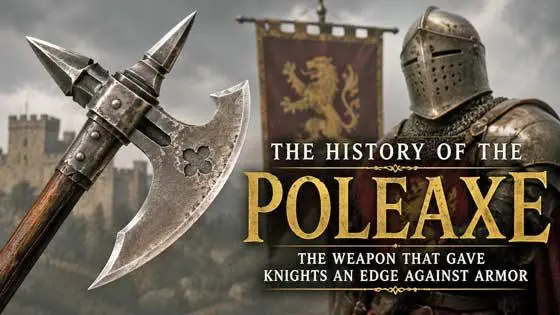
The poleaxe was one of the most sophisticated weapons ever carried into medieval combat, yet it remains surprisingly overlooked today. Designed specifically for fighting heavily armored opponents, it combined the crushing force of a hammer, the cutting power of an axe, and the piercing ability of a spear into a single, remarkably versatile weapon. Favored by knights, men-at-arms, and champions fighting in tournaments and on the battlefield, the poleaxe was built for a world where steel armor had changed the rules of war. Its clever design made it one of the deadliest close-combat weapons of the Middle Ages and helped shape the way armored warriors fought for centuries.
What Makes a Poleaxe Different From Other Polearms?
At first glance, the poleaxe looks similar to a halberd or other medieval polearms, but it was designed with a very different purpose in mind. While many polearms were intended for use by infantry fighting in large formations, the poleaxe was built primarily for knights and men-at-arms engaged in close combat. It was shorter, heavier, and engineered to defeat heavily armored opponents rather than keep enemies at a distance.
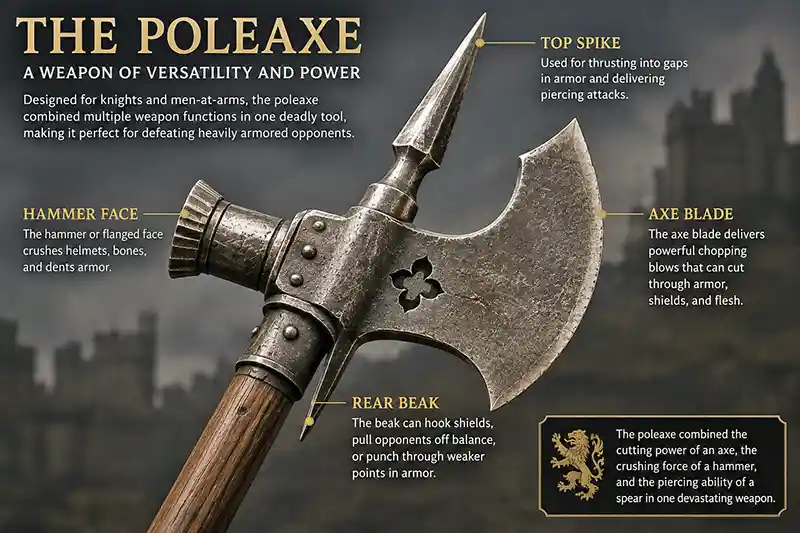
Most poleaxes featured three primary striking surfaces. The axe blade delivered powerful chopping blows, the hammer or flanged face crushed armor and helmets, and the long steel spike on top was ideal for thrusting into gaps in plate armor. Many also included a rear beak that could punch through thinner sections of armor or hook an opponent's weapon, making the poleaxe one of the most adaptable weapons ever carried by a medieval warrior.
Unlike the halberd, which excelled in disciplined infantry formations, the poleaxe was intended for individual combat. It was equally at home on the battlefield, during castle sieges, and in formal judicial duels where armored knights fought one another face to face. In skilled hands, it offered an unmatched combination of reach, leverage, and armor-breaking power.
Its compact design also made it easier to maneuver than many longer polearms. A trained fighter could quickly switch between chopping, thrusting, hooking, and crushing attacks without changing weapons. That versatility helped make the poleaxe one of the finest close-combat weapons of the late Middle Ages and a favorite among Europe's elite warriors.
Why Knights Preferred the Poleaxe Over the Sword
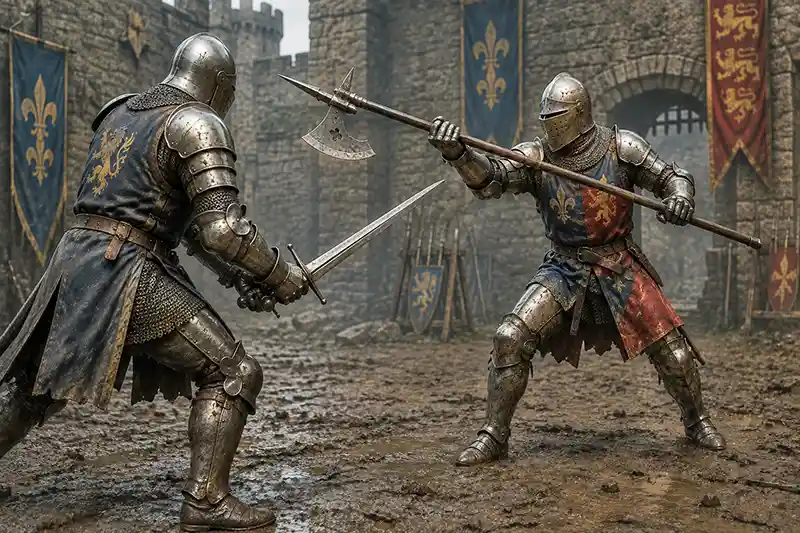
The sword may have been the ultimate symbol of knighthood, but when facing a heavily armored opponent, many experienced warriors reached for a poleaxe instead. Plate armor had become so effective by the late Middle Ages that even powerful sword blows often failed to do significant damage. The poleaxe was specifically engineered to solve that problem, giving knights a weapon capable of crushing, piercing, and exploiting the weak points in armor.
Unlike a sword, which relied primarily on cutting or thrusting, the poleaxe offered several ways to attack. The hammer face could dent helmets and breastplates with devastating force, the top spike could drive into gaps around the visor or joints, and the axe blade delivered powerful chopping blows against exposed limbs or lighter armor. Every part of the weapon served a purpose, making it exceptionally adaptable during close combat.
The poleaxe also gave its user a valuable reach advantage. Its longer shaft allowed a knight to strike before an opponent carrying a sword could close the distance. Even when the fight moved into grappling range, the weapon could be used to hook an enemy's legs, pull away a shield, or control an opponent's balance before delivering a finishing blow.
It was never intended to replace the medieval sword. Instead, the two weapons complemented one another. A knight often carried both, drawing the poleaxe when fighting heavily armored enemies and relying on the sword in situations where speed, versatility, or a backup weapon was more important. Together, they represented two of the finest military tools of the medieval world.
The Deadliest Weapon for Fighting Plate Armor
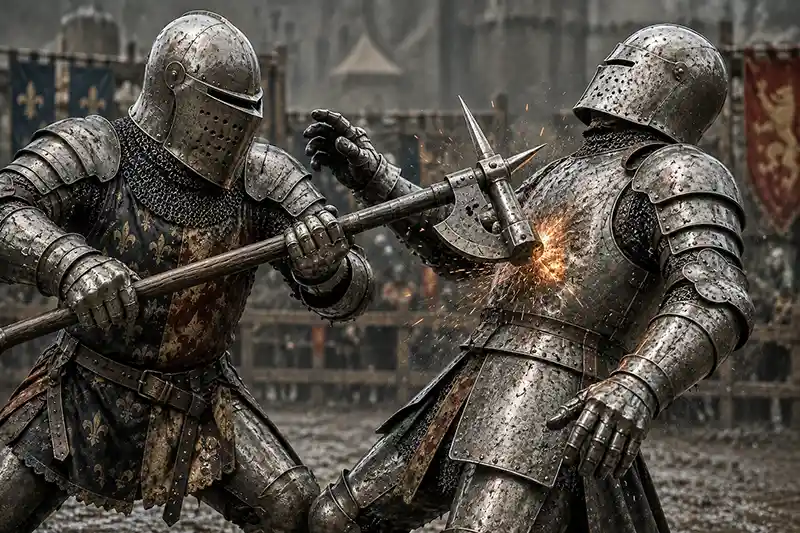
By the 15th century, full plate armor had become one of the greatest defensive achievements of the medieval world. Well-made steel armor could resist many sword cuts that would have been devastating only a century earlier. Knights needed weapons that attacked armor differently, and the poleaxe was one of the most effective answers ever developed.
Rather than trying to slice through steel, the poleaxe targeted the weaknesses of both the armor and the person wearing it. The hammer face could deliver crushing impacts capable of denting helmets, damaging joints, or staggering an opponent through sheer force. The top spike was designed to thrust into vulnerable gaps around the visor, armpits, elbows, and knees, while the rear beak could concentrate tremendous pressure onto a very small point, making it especially dangerous against thinner sections of plate.
The weapon also allowed a skilled fighter to control the pace of the duel. Its long shaft could be used to keep an opponent at a distance, redirect incoming attacks, or shove an enemy off balance before launching a decisive strike. Against a heavily armored knight, creating an opening was often more important than landing the first blow, and the poleaxe excelled at doing exactly that.
Its effectiveness was one reason weapons like the poleaxe and the war hammer became so highly respected during the late Middle Ages. They were not designed to cut armor apart. They were designed to defeat the warrior inside it, making them among the most practical and feared weapons ever carried by Europe's armored elite.
How the Poleaxe Was Used in Medieval Duels
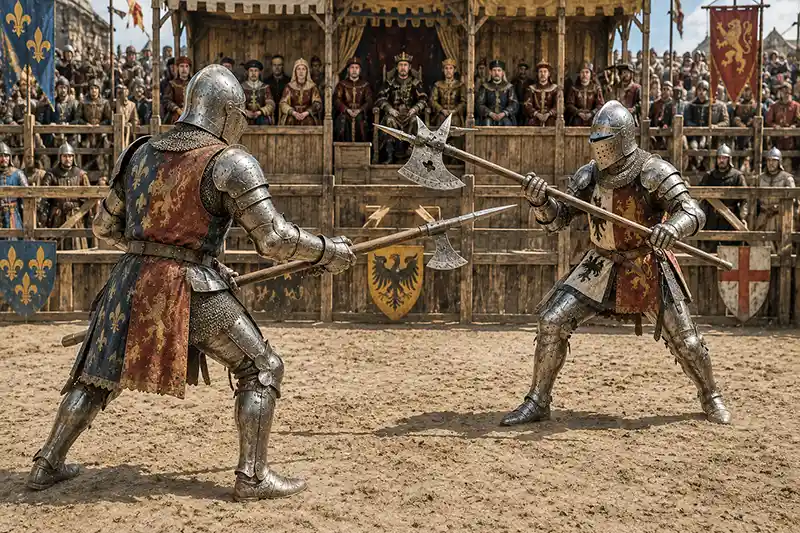
The poleaxe was more than a battlefield weapon. It also became one of the preferred arms for formal judicial duels and tournaments where heavily armored knights fought to settle disputes, prove honor, or demonstrate martial skill. These contests were governed by strict rules, but they were anything but harmless. A duel with poleaxes demanded strength, precision, endurance, and an intimate understanding of armored combat.
Unlike chaotic battles involving hundreds of soldiers, these encounters often became highly technical contests. Fighters constantly shifted between long-range thrusts, powerful overhead strikes, hooks, trips, and wrestling techniques. Medieval combat manuals written by masters such as Fiore dei Liberi and Hans Talhoffer illustrate the poleaxe being used not only to strike but also to trap an opponent's weapon, throw them to the ground, and finish the fight with carefully aimed thrusts.
Many surviving manuals show that the shaft itself was considered just as important as the head. Knights used it to block attacks, shove opponents off balance, choke up on the weapon for close-quarters fighting, and even strike with either end depending on the situation. A skilled fighter treated the entire poleaxe as a weapon rather than relying on a single blade or spike.
These duels helped establish the poleaxe as one of the most respected weapons of the late Middle Ages. While the most intimidating weapons in history often earned their reputation through sheer destruction, the poleaxe became famous because it rewarded technique, timing, and control as much as raw strength. It was a weapon for highly trained warriors who understood that precision could be every bit as deadly as power.
The Parts of a Poleaxe and What They Were Designed to Do
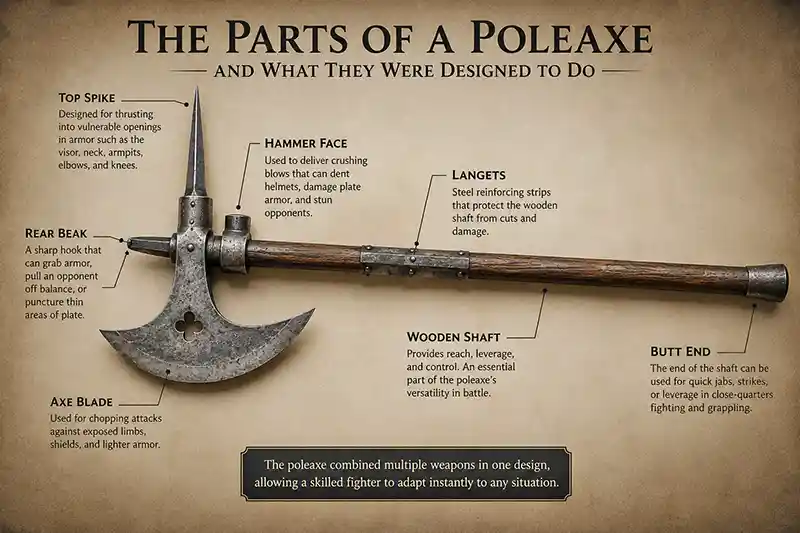
Every part of the poleaxe had a specific purpose, making it one of the most carefully engineered weapons of the late Middle Ages. Rather than relying on a single striking surface, medieval weapon makers combined several specialized tools into one balanced design. This allowed a knight to adapt instantly as the fight changed, switching from crushing blows to precise thrusts without changing weapons.
The axe blade was designed for chopping attacks against exposed limbs, shields, and lighter armor. Opposite it was either a hammer face or a flanged hammer, which concentrated tremendous force into a small area to dent helmets, damage plate armor, and stun opponents. Above both sat a long steel spike that could thrust into vulnerable openings around the visor, neck, armpits, elbows, and knees where even the finest armor offered less protection.
Many poleaxes also featured a rear beak, a sharply pointed hook capable of concentrating force onto an incredibly small point. It could catch an opponent's armor, pull them off balance, or punch into thinner sections of plate where a broader blade might glance away. Combined with the leverage of the long wooden shaft, this made the poleaxe an exceptionally effective weapon against armored enemies.
Even the shaft itself was part of the design. Reinforcing strips of steel called langets protected the wood from being cut apart by swords or axes, while the butt end could be used for quick jabs or strikes during close-range grappling. Few medieval weapons made such efficient use of every component, which is why the poleaxe remains one of the finest examples of practical weapon engineering in European history.
How the Poleaxe Changed Over Time
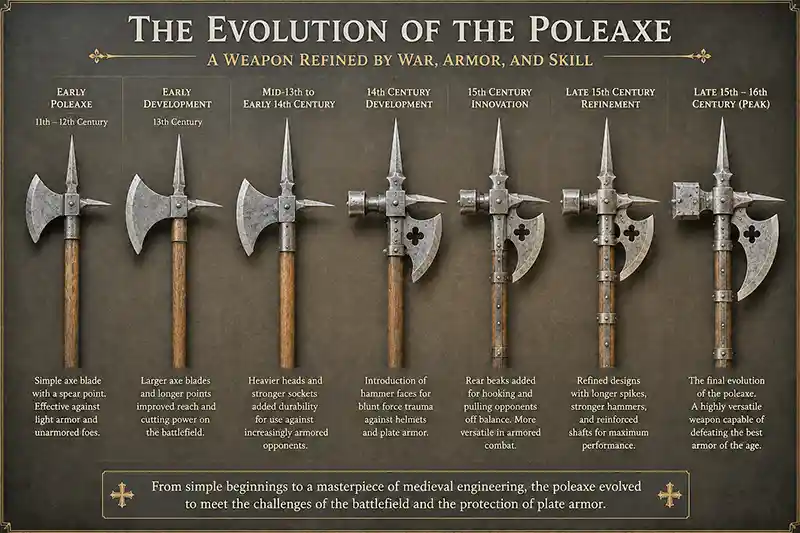
Like many medieval weapons, the poleaxe evolved as armor, tactics, and battlefield conditions changed. Early versions were often simple combinations of an axe head and spear point mounted on a sturdy wooden shaft. As plate armor became stronger during the 14th and 15th centuries, weapon makers began adding hammer faces, rear beaks, reinforced langets, and longer spikes to give knights more ways to attack heavily protected opponents.
Different regions of Europe also developed their own variations. Some poleaxes emphasized a broad axe blade for powerful chopping attacks, while others featured a smaller blade paired with a heavier hammer or an aggressively curved beak designed to concentrate force on a tiny point. Although their appearance varied, all of these designs reflected the same goal: creating a weapon capable of defeating the finest armor of the day.
The poleaxe also became more refined as martial arts manuals documented increasingly sophisticated fighting techniques. Rather than relying on brute strength, experienced warriors learned to combine thrusts, hooks, trips, grappling, and precise strikes into a seamless system of armored combat. The weapon's design evolved alongside these techniques, becoming as much a product of martial skill as blacksmithing.
By the end of the Middle Ages, the poleaxe had reached its peak. It represented centuries of battlefield experience distilled into a single weapon that balanced power, reach, durability, and control. Few medieval arms demonstrate the steady progression of military engineering as clearly as the poleaxe, whose final forms remain some of the most sophisticated hand weapons ever created.
Why the Poleaxe Eventually Disappeared
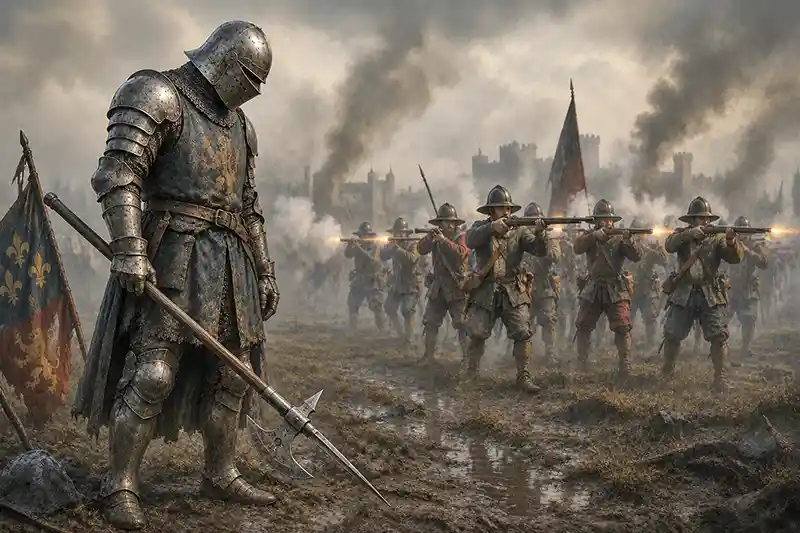
The poleaxe reached its peak during the late Middle Ages, but the world that created it did not last. As firearms became more powerful and reliable, heavy plate armor gradually lost its battlefield value. Muskets and early artillery could defeat armor from a distance, reducing the need for specialized weapons designed to crush, hook, and pierce armored opponents at close range.
Changes in military organization also worked against the poleaxe. Armies increasingly relied on large formations of pikemen, musketeers, and professional infantry equipped with standardized weapons. The poleaxe demanded significant training and was most effective in the hands of highly skilled knights or men-at-arms. In an age moving toward mass armies and gunpowder tactics, that level of specialization became harder to justify.
The weapon did not vanish overnight. Poleaxes continued to appear in tournaments, guard duty, and ceremonial settings even after their battlefield importance declined. Their imposing appearance and close association with elite armored warriors allowed them to survive as symbols of rank and martial tradition long after their practical role had faded.
Like many of the weapons that were more effective than swords, the poleaxe disappeared not because it failed, but because warfare moved on. It had been created for the age of plate armor, and once that age ended, one of its finest weapons no longer had a problem to solve.
Why the Poleaxe Still Fascinates Historians Today
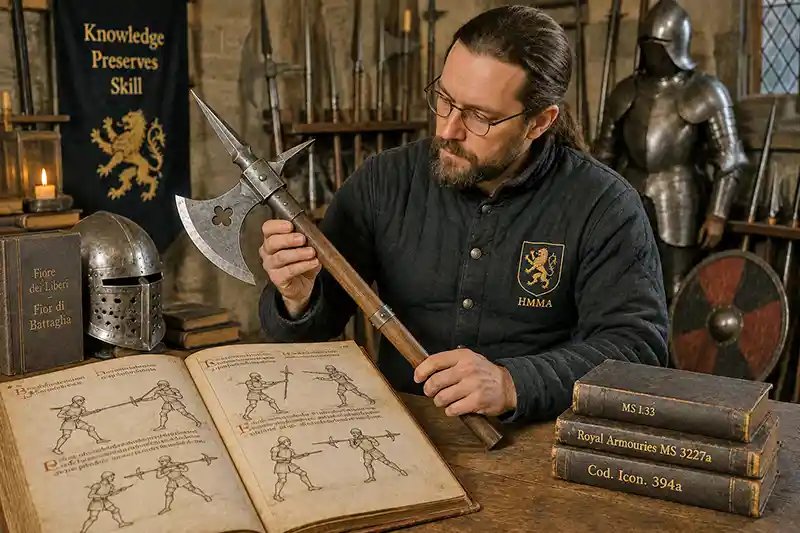
The poleaxe survives today not because it remained in military service, but because it represents one of the most advanced forms of medieval combat. Historians study it to understand how knights actually fought once plate armor became common, revealing a world far more technical than the wild sword swinging often shown in movies.
Surviving combat manuals provide especially valuable evidence. Detailed illustrations show armored fighters thrusting, hooking, grappling, tripping, and striking with every part of the weapon. These techniques demonstrate that poleaxe combat depended on balance, timing, leverage, and control rather than simple brute strength.
Modern historical martial artists have helped bring these forgotten methods back to life. By studying original manuscripts and training with safe reproductions, they can test how the weapon moved and why certain techniques were effective. Their work offers a clearer picture of medieval combat and helps separate practical fighting methods from later myths.
Original poleaxes also reveal an extraordinary level of craftsmanship. Their reinforced shafts, carefully shaped heads, and balanced construction show that medieval armorers understood exactly how to combine several weapons without making the result clumsy or excessively heavy. Each surviving example is both a weapon and a piece of engineering history.
That is why the poleaxe remains so compelling. It was not merely a brutal tool built to smash armor. It was a sophisticated weapon created for highly trained warriors, and its design offers one of the clearest windows into the skill, danger, and ingenuity of armored combat during the late Middle Ages.
A Weapon That Perfectly Matched Its Time
Few weapons in history were as perfectly suited to their era as the poleaxe. It appeared when plate armor dominated the battlefield, evolved alongside advances in blacksmithing and military tactics, and gave armored warriors a practical way to overcome equally well-protected opponents. Every feature, from its hammer face to its top spike and reinforced shaft, reflected centuries of battlefield experience and careful refinement.
Although gunpowder eventually brought the age of armored knights to a close, the poleaxe remains an enduring symbol of medieval innovation. It reminds us that the most effective weapons were not always the most famous ones. While swords captured the imagination, specialized weapons like the poleaxe often decided the outcome of real battles because they were designed to solve the challenges of their time.
Today, the poleaxe continues to fascinate historians, collectors, and martial artists who appreciate both its ingenious engineering and the remarkable skill required to wield it. More than a relic of the Middle Ages, it stands as one of history's finest examples of a weapon built with a clear purpose and refined until it achieved near perfection.
What Is the Difference Between a Poleaxe and a Halberd?
Although they look similar, the poleaxe and halberd were designed for different types of combat. The poleaxe was primarily a weapon for knights and men-at-arms fighting heavily armored opponents in close quarters. It was generally shorter, more compact, and featured a combination of an axe blade, hammer face, top spike, and often a rear beak, giving it exceptional versatility against plate armor.
The halberd, by contrast, was an infantry weapon intended for use in disciplined formations. Its longer shaft gave soldiers greater reach against cavalry and advancing troops, making it ideal for battlefield formations rather than individual duels. While both were formidable polearms, the poleaxe excelled in one-on-one armored combat, whereas the halberd became famous for helping organized infantry dominate medieval battlefields.
How Long Was a Typical Poleaxe?
Most historical poleaxes measured between 5 and 6 feet (1.5 to 1.8 meters) in length, making them noticeably shorter than many battlefield polearms such as pikes and some halberds. This more compact size gave knights and men-at-arms an ideal balance of reach and maneuverability, allowing them to fight effectively in close quarters without sacrificing leverage or striking power.
The exact dimensions varied depending on where and when the weapon was made, as well as the preferences of its owner. Poleaxes intended for judicial duels or tournaments were sometimes built with slightly different proportions than those carried into war. Regardless of the variation, the weapon was carefully balanced so a trained fighter could transition smoothly between thrusting, chopping, hooking, and grappling techniques throughout a fight.
Did the Poleaxe Replace the Sword?
No. The poleaxe and the sword served different purposes, and many knights carried both. When facing a heavily armored opponent, the poleaxe was often the preferred weapon because its hammer, spike, and beak could damage armor or exploit weak points more effectively than a sword. Its longer reach also gave the wielder an important advantage before the fight moved into close quarters.
The sword remained an essential sidearm because it was easier to carry, quicker to draw, and more practical in situations where a long pole weapon became cumbersome. If a poleaxe was lost or broken, the sword became the knight's backup weapon. Rather than replacing one another, the two complemented each other, with each excelling under different battlefield conditions.
Were Poleaxes Only Used by Knights?
No. Although the poleaxe is most closely associated with knights, it was also carried by men-at-arms and other professional soldiers who could afford high-quality armor and specialized weapons. Because mastering the poleaxe required considerable training, it was generally issued to experienced fighters rather than ordinary infantry.
Its association with knights comes from the fact that it excelled in armored combat. Medieval illustrations, tournament records, and surviving combat manuals frequently show noble warriors using poleaxes in judicial duels, tournaments, and on the battlefield. However, any well-trained professional warrior fighting in heavy armor could make effective use of the weapon. What mattered most was skill and experience, not noble birth.
Could a Poleaxe Really Crush Plate Armor?
Not in the way movies often portray. A poleaxe usually did not split or shatter high-quality plate armor with a single blow. Instead, it delivered tremendous force that could dent armor, damage helmets, injure the person inside, or leave an opponent stunned and vulnerable. Medieval fighters did not need to destroy the armor itself to win the fight.
The weapon's real advantage was its versatility. If the hammer face failed to create an opening, the fighter could immediately follow with a thrust from the top spike into a gap around the visor or joints, or use the rear beak to hook and unbalance the opponent. Rather than relying on one overwhelming strike, the poleaxe allowed skilled warriors to combine multiple techniques until they found an opening, making it one of the most effective anti-armor weapons ever developed.
Did Medieval Combat Manuals Really Teach Poleaxe Fighting?
Yes. In fact, the poleaxe is one of the best-documented medieval weapons thanks to surviving combat manuals written by renowned fencing masters. Manuals by figures such as Fiore dei Liberi and Hans Talhoffer include detailed illustrations and instructions showing how armored fighters used the poleaxe to thrust, strike, hook, grapple, trip, and control their opponents during both duels and battlefield encounters.
These manuscripts reveal that poleaxe combat was far more sophisticated than simple swinging and smashing. Fighters were taught to exploit weak points in armor, manipulate an opponent's balance, and transition seamlessly between weapon techniques and wrestling. Because these manuals survive today, historians and HEMA practitioners have been able to reconstruct many of the original techniques, making the poleaxe one of the best-understood weapons of the Middle Ages.
Why Did the Poleaxe Have Both an Axe and a Hammer?
The poleaxe combined an axe and a hammer because each served a different purpose in combat. The axe blade was useful for chopping at exposed limbs, damaging lighter armor, or delivering powerful cutting blows. The hammer face, however, was designed to concentrate force into a much smaller area, making it far more effective at denting helmets, crushing armor, and transferring impact to the person inside.
Giving the weapon both striking surfaces meant a knight could instantly adapt to changing situations. If one attack proved ineffective, the fighter could rotate the weapon and strike with another surface without losing momentum. Combined with the top spike and rear beak found on many poleaxes, this versatility made it one of the most adaptable weapons ever carried by a heavily armored warrior.
Was the Poleaxe More Effective Than the War Hammer?
Neither weapon was universally better because they were designed with different priorities. The war hammer specialized in delivering concentrated impact against armored opponents, using a heavy hammer face and armor-piercing spike to dent plate and exploit weak points. The poleaxe offered many of those same advantages while adding greater reach and several additional ways to attack, including chopping with an axe blade, hooking with a rear beak, and controlling an opponent from a distance.
In a one-on-one fight between heavily armored warriors, many knights favored the poleaxe because of its versatility. It allowed them to thrust, strike, hook, grapple, and keep opponents at bay without switching weapons. The war hammer remained a formidable anti-armor weapon, but the poleaxe's combination of reach, leverage, and multiple striking surfaces made it one of the most complete close-combat weapons ever developed during the Middle Ages.
Did the Poleaxe Influence Later Weapons?
Yes, although no later weapon copied the poleaxe exactly. Its greatest legacy was demonstrating the value of combining multiple combat functions into a single design. The idea that one weapon could thrust, crush, hook, and strike efficiently influenced the continued development of military polearms during the late medieval and Renaissance periods.
Even after firearms replaced armored knights on the battlefield, many ceremonial polearms carried by palace guards and military units retained features inspired by the poleaxe and similar weapons. Today, its influence is perhaps most visible in historical European martial arts (HEMA), where practitioners continue to study original combat manuals and appreciate the poleaxe as one of the most advanced hand weapons ever created. Its practical design remains a testament to the ingenuity of medieval weapon makers.
Were Poleaxes Used on Horseback?
Generally, no. The poleaxe was designed primarily for fighting on foot, especially against other heavily armored warriors. Its length, weight, and balance made it ideal for controlled strikes, thrusts, and grappling techniques that were far easier to perform while standing on the ground than from the back of a moving horse.
Mounted knights usually preferred the lance for the initial charge because its long reach and forward-pointing design made it far more effective at full gallop. Once the charge ended or a knight was unhorsed, the poleaxe became an excellent choice for the close-range fighting that followed. This combination of lance on horseback and poleaxe on foot gave medieval knights effective weapons for every stage of battle.
How Heavy Was a Typical Poleaxe?
Despite its intimidating appearance, most historical poleaxes weighed only about 5 to 7 pounds (2.3 to 3.2 kg). Medieval armorers carefully balanced the weapon so it could deliver powerful blows without exhausting its user. The long wooden shaft provided excellent leverage, allowing skilled fighters to generate tremendous force through technique rather than relying solely on strength.
A heavier poleaxe was not necessarily a better one. An overly heavy weapon would be slower to recover after each strike and more tiring to wield during a prolonged fight. The most effective poleaxes struck a careful balance between power, speed, and control, giving experienced warriors the ability to chain together thrusts, hooks, chops, and grappling techniques with remarkable efficiency.
Why Is the Poleaxe Often Confused With the Halberd?
The poleaxe and the halberd share a similar overall shape, which is why they are so often mistaken for one another. Both are mounted on long wooden shafts and feature an axe blade combined with a pointed spike. To someone unfamiliar with medieval weapons, they can appear almost identical at first glance.
The key difference lies in their purpose. The halberd was primarily an infantry weapon designed for fighting in large formations against cavalry and advancing troops. The poleaxe, on the other hand, was created for individual armored combat. It was typically shorter, more compact, and usually included a hammer face or rear beak specifically intended to defeat plate armor. While both weapons were exceptionally effective, they filled very different roles on the medieval battlefield.
Did Any Medieval Kings Fight With a Poleaxe?
Yes. Several medieval rulers and nobles are recorded using poleaxes during tournaments, military campaigns, and formal combats. One of the best-known examples is King Henry VIII of England, who trained extensively with the poleaxe as part of his martial education. During his younger years, he was known for competing in tournaments that tested skill with a variety of weapons, including the poleaxe.
Beyond kings, many dukes, princes, and high-ranking knights practiced with the weapon because it represented one of the highest forms of armored combat. Medieval combat manuals were often written for members of the nobility, reflecting the poleaxe's reputation as a weapon that rewarded discipline, technique, and tactical thinking. Far from being a common infantry arm, it became closely associated with the elite warriors of late medieval Europe.
Could a Poleaxe Cut Through Plate Armor?
Not usually. High-quality plate armor was specifically designed to resist cutting attacks, even from powerful weapons like the poleaxe. While the axe blade could damage lighter armor, shields, or exposed limbs, it rarely sliced cleanly through well-made steel plate.
Instead, the poleaxe defeated armored opponents by attacking weak points. Its hammer face transferred tremendous force through the armor, the top spike targeted gaps around the visor and joints, and the rear beak concentrated pressure onto a tiny point. Success depended on exploiting vulnerabilities rather than chopping straight through the armor itself.
What Is the Difference Between a Poleaxe and a Bec de Corbin?
Although both weapons were designed to fight armored opponents, they emphasized different methods of attack. A poleaxe combined an axe blade, hammer face, top spike, and often a rear beak into one highly versatile weapon. It allowed a fighter to chop, crush, thrust, hook, and grapple without changing weapons.
A bec de corbin, whose name means "raven's beak," placed greater emphasis on its long, pointed hammer spike. Rather than relying on a broad axe blade, it specialized in punching through weak points in armor and delivering concentrated impact. Both were formidable anti-armor weapons, but the poleaxe generally offered greater versatility.
Did Poleaxes Have Different Shapes in Different Countries?
Yes. As the weapon spread across Europe, regional armorers developed distinctive styles that reflected local fighting traditions. English examples often featured robust hammer faces, while some German and Italian designs emphasized longer spikes or more elaborate axe blades. French poleaxes sometimes incorporated highly decorative craftsmanship without sacrificing effectiveness.
Despite these differences, the underlying concept remained the same. Whether made in England, France, Germany, or Italy, the poleaxe combined multiple striking surfaces into a balanced weapon capable of defeating heavily armored opponents.
Why Was the Poleaxe So Popular in Medieval Tournaments?
Tournaments provided knights with a safe environment to demonstrate martial skill, and the poleaxe was one of the finest weapons for showcasing advanced technique. Because it combined striking, thrusting, hooking, and wrestling, it rewarded precision and control rather than reckless aggression.
Many tournament bouts followed strict rules and used specially prepared weapons, but they still demanded exceptional athleticism. Success with the poleaxe became a mark of an accomplished warrior, helping cement its reputation as one of the most respected weapons in medieval Europe.
Could a Poleaxe Break a Shield?
Yes, particularly if the shield was made primarily of wood. The axe blade could split or chop through weakened sections, while the hammer face could crack wooden boards or damage the metal fittings that held the shield together. Even when it failed to break the shield outright, repeated blows could make it difficult to use effectively.
Against heavily reinforced shields, however, many fighters preferred to hook the shield aside or attack around it rather than trying to destroy it. The poleaxe's versatility gave warriors several ways to overcome an opponent's defenses.
What Wood Was Used for Poleaxe Shafts?
Most poleaxe shafts were made from strong hardwoods such as ash, oak, or hickory-like European woods that combined strength with flexibility. Ash was especially popular because it could absorb heavy impacts without breaking while remaining relatively lightweight.
The shaft was just as important as the steel head. Many were reinforced with metal langets running down the sides to prevent enemy blades from cutting through the wood, helping ensure the weapon remained functional during prolonged combat.
Did Vikings Ever Use Poleaxes?
No. The poleaxe appeared several centuries after the Viking Age had ended. Vikings fought primarily between the late 8th and 11th centuries, while the poleaxe emerged during the 14th century as plate armor became increasingly common.
Vikings certainly used axes, including large two-handed Danish axes, but these were different weapons designed for a different style of warfare. Although they share the word "axe," the medieval poleaxe was a much later invention created specifically to combat armored knights.
Are Original Medieval Poleaxes Rare Today?
Yes. Authentic medieval poleaxes are relatively rare because relatively few survived centuries of warfare, changing military technology, and metal recycling. Many damaged weapons were melted down and reforged into new tools or arms once they became obsolete.
Today, original examples are highly prized by museums and private collectors. They provide valuable insight into medieval craftsmanship and continue to help historians understand how armored warriors fought during the late Middle Ages.
What Is the Difference Between a Poleaxe and a Pollaxe?
There is no difference. "Poleaxe" and "pollaxe" are simply two accepted spellings of the same weapon. Modern historians, museums, publishers, and historical martial arts groups use both versions, although "poleaxe" has become the more common spelling in recent years.
The confusion often leads people to believe they are separate weapons, but they refer to the same versatile anti-armor polearm carried by knights and men-at-arms during the late Middle Ages.
Was the Poleaxe the Ultimate Knight Weapon?
Many historians would argue that it was. Few medieval weapons matched the poleaxe's ability to thrust, chop, crush, hook, and grapple while giving its user superior reach against heavily armored opponents. Its design represented centuries of military refinement, making it one of the most complete hand weapons ever developed.
Of course, no weapon was perfect in every situation. The poleaxe excelled in armored combat, while swords, lances, bows, and other weapons each dominated under different conditions. Even so, when two armored knights met on foot, few weapons were more respected or more feared than the poleaxe.
You May Also Be Interested In:
- The History of the Kendo Uniform: From Samurai Armor to Modern Training
- The History of the Bec de Corbin: The Raven Beak That Defeated Plate Armor
- The History of the Medieval Flail Weapon
- The Real History of the Sai (It Wasn't Originally a Weapon)
- The Hidden History of the Bolas: The Ancient Weapon That Could Stop You in Your Tracks
- Ultimate Throwing Weapon Showdown! Which Weapon Is The BEST?
- The History of the Halberd
- A Brief History of Judo
- A Brief History of Kung Fu
- Was the Seax Really a Viking Weapon?
Leave a Reply