




The History of the Dojo: Why Martial Arts Schools Look the Way They Do
August 7th, 2026

Walk into almost any traditional martial arts school, and you'll notice the same familiar details. Students bow before entering the training floor, shoes are left at the door, uniforms are kept neat, and the instructor stands at the front of the room beneath flags or calligraphy. These customs are so common that many people never stop to ask why they exist. The answer lies in the history of the dojo itself. Far more than just a place to practice punches and kicks, the dojo has long been a symbol of discipline, respect, and personal growth. Its traditions have evolved over centuries, shaping the way martial arts are taught around the world today.
What Does the Word Dojo Actually Mean?
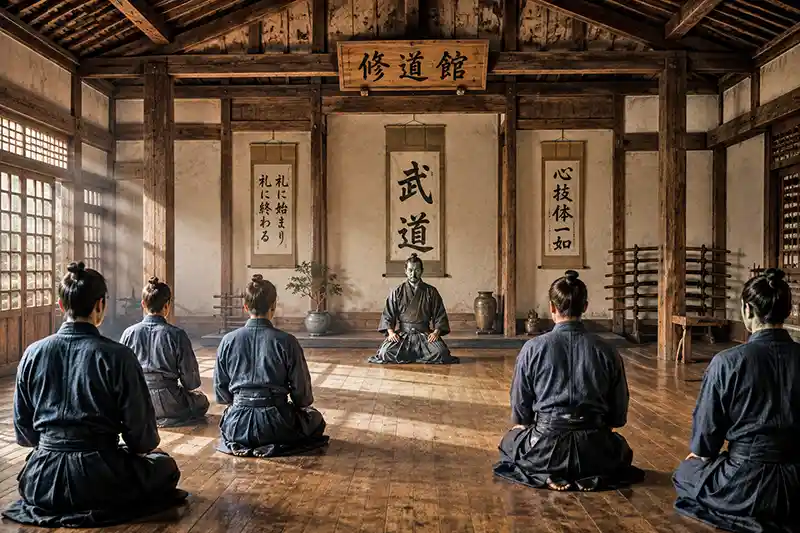
The word "dojo" is often translated simply as "training hall," but its original meaning is much deeper. In Japanese, "do" means "the way" or "the path," while "jo" means "place." Put together, dojo literally means "the place of the way." It was not originally a martial arts term at all.
The word has roots in Buddhism, where it referred to a place devoted to meditation, study, and spiritual discipline. Over time, Japanese martial traditions adopted the term because training was seen as more than learning how to fight. A dojo became a place where students were expected to develop character, self-control, and discipline alongside physical skill.
That history explains why traditional dojos are treated with a level of respect that might seem unusual for an ordinary gym. Students bow when entering, keep the training area clean, follow strict etiquette, and often avoid wearing shoes on the floor. The room itself is meant to reinforce the idea that training begins the moment you step inside.
Even modern martial arts schools that look more like fitness centers than traditional Japanese halls often preserve some of these customs. The surroundings may have changed, but the original idea remains: a dojo is not simply a room where techniques are practiced. It is a place dedicated to following a martial path.
How Buddhist Temples Shaped the First Dojos
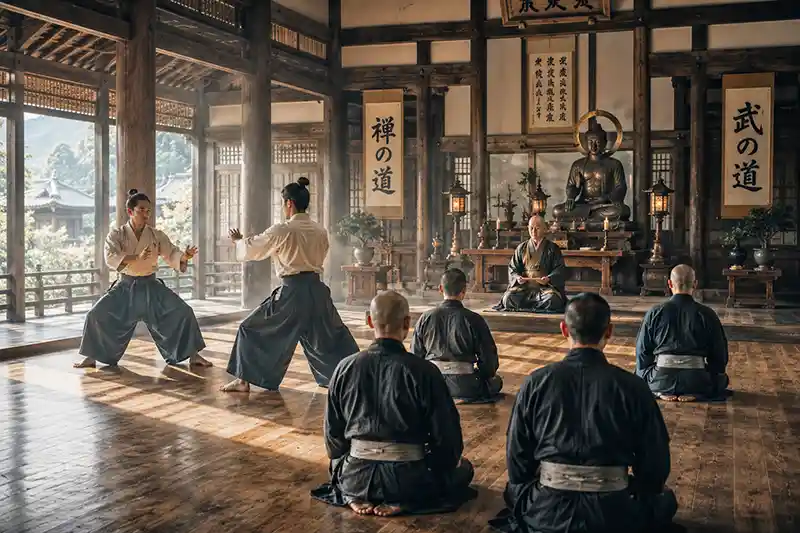
Long before the dojo became associated with martial arts, it was a place for spiritual practice. The earliest dojos were found within Buddhist temples, where monks gathered to meditate, study sacred teachings, and cultivate self-discipline. The emphasis was not on combat but on developing the mind through patience, focus, and repetition.
As martial arts evolved in Japan, many instructors adopted this same philosophy. They believed that training should strengthen a person's character just as much as their physical abilities. A dojo was never intended to be a place where students simply learned to fight. It was a place where they learned humility, perseverance, and respect through consistent practice.
This connection to Buddhist traditions also explains why many dojos have such a calm, orderly atmosphere. Clean floors, quiet behavior, and carefully observed etiquette are not merely traditions for tradition's sake. They help create an environment where students can concentrate without unnecessary distractions, allowing them to fully engage in their training.
Although modern martial arts schools may include mirrors, fitness equipment, and even air conditioning, the underlying philosophy remains remarkably similar. A dojo is still meant to be a place where students improve themselves, one lesson at a time, both physically and mentally.
Why Respect Became the Foundation of Every Dojo
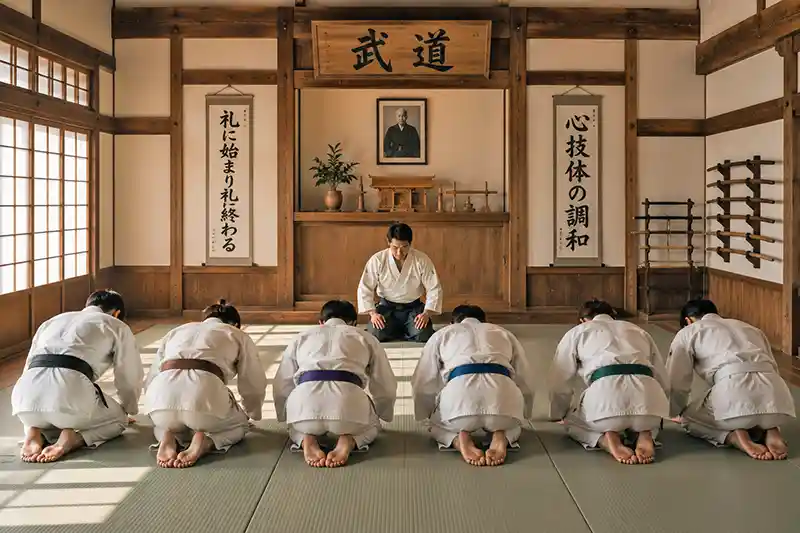
One of the first lessons taught in almost every dojo has nothing to do with punching, kicking, or throwing. It is respect. Students are expected to bow, listen carefully, help their training partners, and care for the space around them. While these customs may seem formal to newcomers, they exist for practical reasons that have been passed down for generations.
In the early days of Japanese martial arts, students often trained with techniques capable of causing serious injury. A respectful attitude helped create an environment where everyone could learn safely while placing trust in one another. Following instructions, practicing self-control, and treating fellow students with courtesy became just as important as mastering physical techniques.
Respect also extended to the dojo itself. Floors were swept, equipment was cared for, and students understood that the training hall was a place set aside for learning. Even today, many schools encourage students to help clean the dojo after class, reinforcing the idea that everyone shares responsibility for maintaining the training environment.
These traditions continue because they shape more than skilled martial artists. They help develop patience, humility, and discipline, qualities that often prove just as valuable outside the dojo as they are during training.
Why Students Bow Before Entering a Dojo
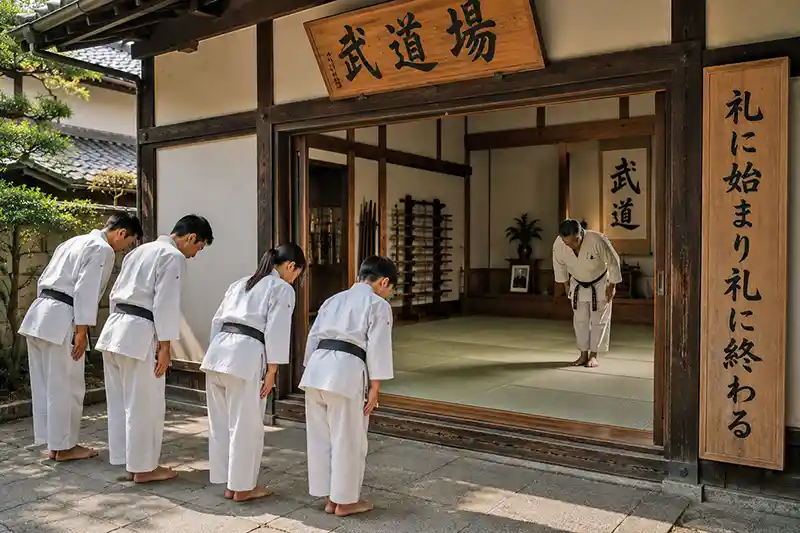
One of the most recognizable traditions in martial arts is bowing before stepping onto the training floor. To someone unfamiliar with the custom, it may seem like a simple greeting or an outdated ritual. In reality, the bow serves as a reminder that the dojo is different from the outside world. It marks the transition from everyday life to a place dedicated to learning, discipline, and self-improvement.
Contrary to popular belief, bowing is not an act of worship or submission. It is a gesture of mutual respect. Students bow to instructors, training partners, and sometimes even the dojo itself to acknowledge the opportunity to learn in a safe environment. Everyone, regardless of rank, shares the responsibility of helping one another improve through respectful training.
Bowing also has a practical purpose. It encourages students to pause, focus, and leave distractions behind before class begins. That brief moment of mindfulness helps create an atmosphere where everyone can train with greater concentration and awareness, reducing careless mistakes and reinforcing proper etiquette.
These traditions have endured because they work. A simple bow takes only a second, but it reinforces values that shape the entire training experience. In many ways, the first lesson inside a dojo begins before a single technique is practiced.
Why Shoes Stay Outside the Dojo
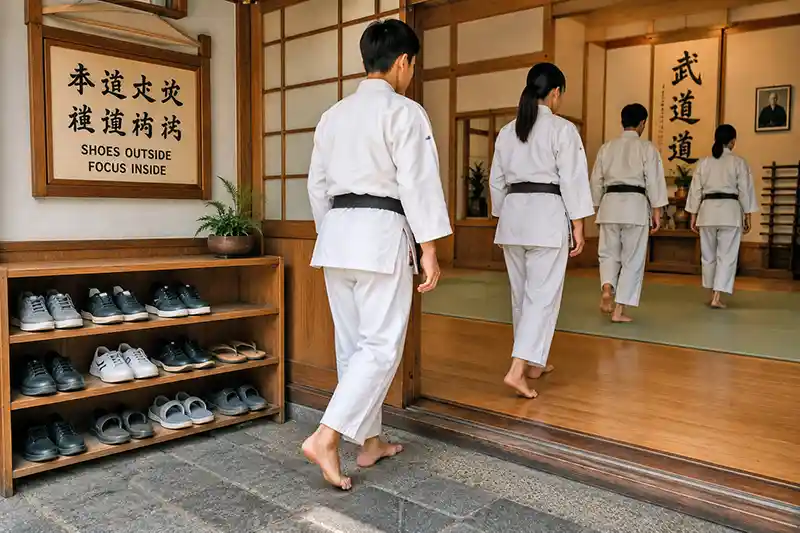
Leaving shoes at the entrance is one of the most visible traditions in a traditional dojo, and it comes from both culture and practicality. In Japan, removing shoes before entering homes, temples, and other clean indoor spaces has long been a normal part of daily life. Martial arts schools adopted the same custom, especially when training took place on polished wooden floors or tatami mats that were difficult to clean and easy to damage.
There is also a training benefit. Practicing barefoot gives students direct contact with the floor, which can improve balance, foot positioning, and awareness of how weight shifts during movement. It also removes the extra traction or bulk that footwear can add, making it easier for instructors to see whether a student is placing the feet correctly.
Not every martial art follows the same rule, though. Some modern schools allow specialized footwear, and certain styles train in shoes as part of their normal practice. That has led to an ongoing debate over whether martial artists should wear shoes, especially in schools that blend traditional training with modern fitness facilities.
Even when the reason is partly practical, removing shoes still carries symbolic weight. It reinforces the idea that the dojo is a separate space with its own expectations, where students leave outside distractions behind and enter ready to train with focus and respect.
Why Martial Artists Wear Uniforms in the Dojo
The traditional martial arts uniform does more than give everyone in the room a similar appearance. It creates a sense of equality. Once students step onto the training floor wearing the same basic clothing, outside markers of status matter less. Job titles, fashion, and social differences are replaced by something much simpler: everyone is there to learn.
Uniforms also serve a practical purpose. A properly fitted gi is designed to handle repeated movement, gripping, and contact while still allowing the body to move freely. That is why martial arts uniforms remain standard equipment in so many traditional schools, even as modern training methods continue to evolve.
Different martial arts developed their own versions over time. Karate practitioners commonly wear a lightweight white gi, while judo uniforms are heavier and reinforced to withstand constant gripping and throwing. If you have ever wondered why the uniform is called a gi in the first place, the history of the gi reveals how the term became so closely associated with martial arts around the world.
The uniform also reinforces dojo etiquette. Keeping it clean, tying the belt correctly, and wearing it with care are all small exercises in discipline. The goal is not to look impressive. It is to show that the student respects the training, the instructor, and the people sharing the floor.
Why Belt Rankings Became Part of the Dojo
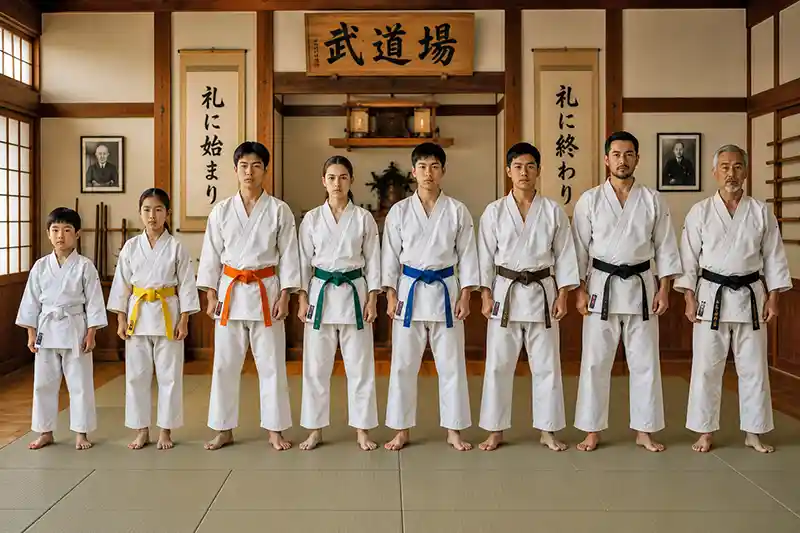
For much of martial arts history, students did not wear colored belts at all. Traditional Japanese schools often had no visible ranking system, and progress was measured by an instructor's personal assessment rather than by outward symbols. The colored belt system that most people recognize today is actually a relatively modern invention.
The idea gained popularity in the late nineteenth and early twentieth centuries as martial arts spread to larger groups of students. Colored belts gave instructors a simple way to recognize experience, organize classes, and motivate students with clear goals. Today, martial arts belts are one of the most recognizable symbols of progress, even though the colors and ranking systems vary between styles and organizations.
Of course, earning a new belt is about much more than memorizing techniques. Students are expected to demonstrate discipline, consistent attendance, good etiquette, and an understanding of the principles behind their art. Reaching black belt is often viewed as the beginning of deeper learning rather than the end of training. If you are curious about the journey, our guide to earning a black belt explains what most students can realistically expect.
While belts provide useful milestones, the true purpose of the dojo has never been collecting ranks. The goal has always been continuous improvement, with each promotion serving as one more step along a lifelong path of learning.
How Traditional Dojos Trained Without Modern Equipment
Modern martial arts schools often contain heavy bags, focus mitts, protective gear, mirrors, and other specialized equipment. However, many traditional dojos developed long before these tools existed. Early martial artists relied primarily on bodyweight exercises, repetition, partner drills, and careful instruction from their teachers to develop their skills.
Training was built around mastering the fundamentals. Students spent countless hours repeating basic movements, practicing forms, and refining their timing and balance. Weapons training, when included, often used simple wooden practice tools rather than expensive equipment. The goal was not to collect gear but to develop control, awareness, and precision through consistent practice.
Partner training was also essential. Students learned by working with one another under careful supervision, gradually increasing difficulty as their skills improved. This required trust between training partners and reinforced the respect that became a defining feature of the dojo environment.
While modern equipment has provided valuable ways to train safely and efficiently, the foundation remains the same. Even today, the most important tools in any dojo are still the instructor, the student, and the willingness to practice the fundamentals repeatedly until they become second nature.
How the Modern Dojo Has Changed
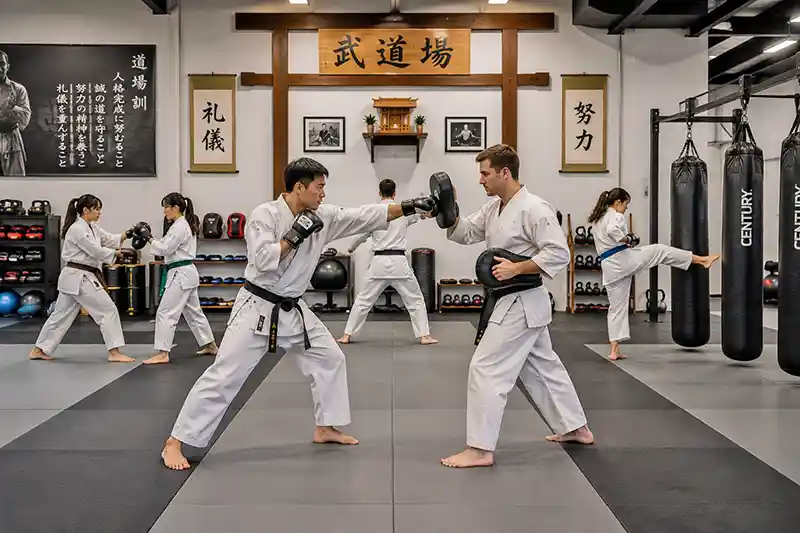
While the traditional dojo remains rooted in centuries of history, martial arts schools have adapted significantly to fit the modern world. Today's dojos can be found in community centers, fitness facilities, schools, and dedicated training buildings. Many still preserve traditional customs, but they also incorporate new methods designed to make training safer, more accessible, and more effective.
One of the biggest changes has been the introduction of modern training equipment. Students may now use martial arts training gear such as protective equipment, striking targets, and conditioning tools to improve specific skills. Equipment like focus mitts allows instructors to help students develop speed, accuracy, and timing in ways that were not possible in many older training environments.
Modern dojos have also become more diverse. Traditional martial arts that were once limited to specific regions are now practiced by people of all ages and backgrounds around the world. Some schools focus on competition, others emphasize self-defense, and many combine traditional techniques with modern fitness approaches.
Despite these changes, the heart of the dojo remains the same. Respect, discipline, and the pursuit of improvement continue to define the training experience. The appearance of the dojo may evolve, but its purpose has remained remarkably consistent for generations.
How Dojos Spread Martial Arts Around the World
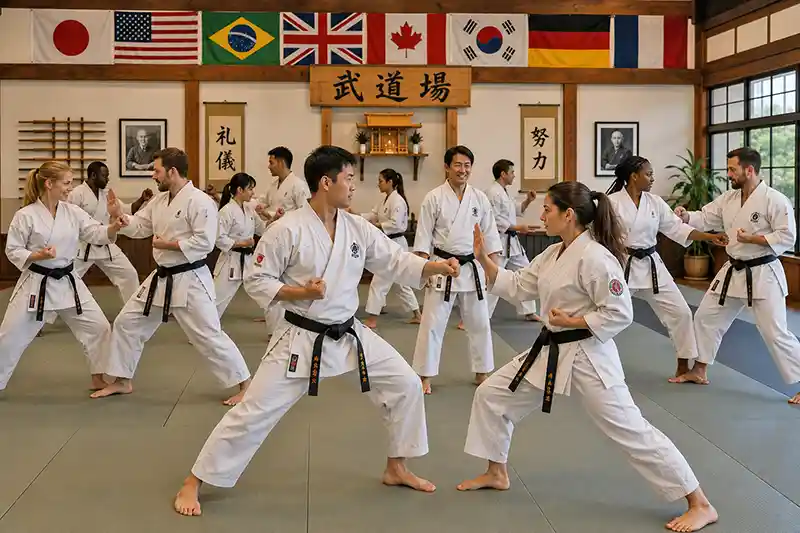
For much of history, martial arts knowledge was passed down within small groups, families, or specific schools. A dojo was often closely connected to a particular instructor and community, with techniques taught directly from one generation to the next. That began to change during the twentieth century as Japanese martial arts expanded beyond Japan and reached students around the globe.
After World War II, arts such as karate, judo, and aikido gained international attention. Instructors traveled to new countries, opened schools, and introduced millions of students to Japanese training methods and traditions. The dojo became a place where people from completely different backgrounds could come together through a shared interest in martial arts.
The growth of martial arts in America was especially significant. What began as a niche practice gradually became part of mainstream culture through movies, television, competitions, and local schools. The rise of martial arts in America changed how many people viewed the dojo, transforming it from a mysterious training hall into a familiar part of many communities.
Despite spreading across continents, many dojos continue to preserve the traditions that defined them from the beginning. Students still bow, instructors still emphasize discipline, and the relationship between teacher and student remains central. The modern dojo may look different from its historical counterpart, but the core idea of personal improvement continues to connect martial artists worldwide.
Why the Dojo Still Matters Today
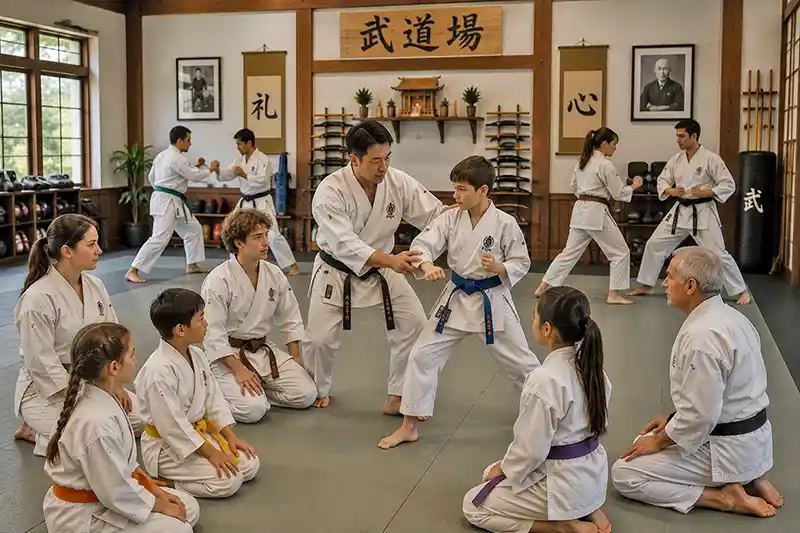
In a world where martial arts techniques can be learned through videos, online courses, and virtual instruction, the traditional dojo continues to offer something that technology cannot fully replace. A dojo is not just a place to collect information. It is a place where students experience the process of learning through repetition, correction, and interaction with others.
The relationship between instructor and student remains one of the most important parts of the dojo experience. A skilled teacher does more than demonstrate techniques. They help students understand timing, discipline, attitude, and the deeper principles behind the movements. This personal guidance is one reason why choosing the right school matters so much, and learning what makes a good martial arts school can help beginners find an environment where they can truly grow.
The dojo also provides a sense of community that is difficult to recreate elsewhere. Students train alongside people with different backgrounds, ages, and abilities, all working toward improvement together. Over time, training partners become mentors, friends, and a support system that extends beyond the walls of the school.
Although the appearance of dojos has changed over the centuries, their purpose has remained remarkably consistent. They continue to be places where people develop confidence, discipline, and respect while following a path of continuous improvement.
Why the Dojo Is More Than Just a Training Room
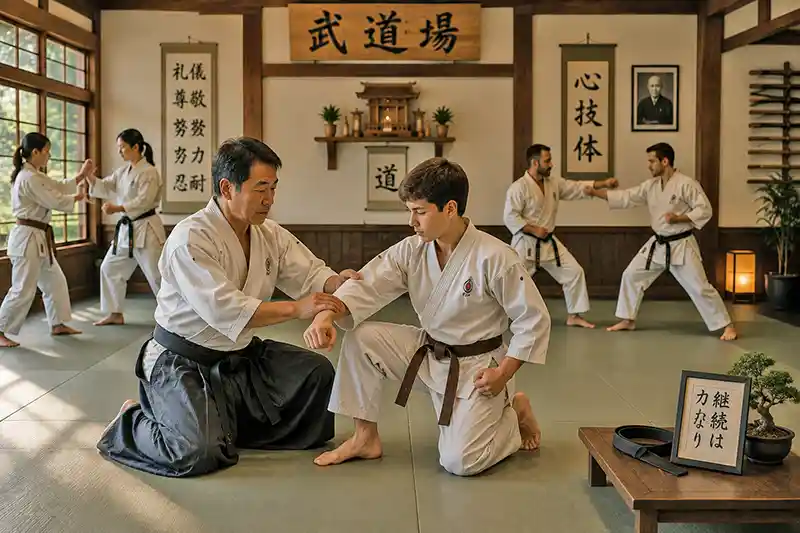
A dojo may appear to be a simple room with mats, equipment, and students practicing techniques, but its purpose has always extended far beyond physical training. The greatest lessons learned inside a dojo are often the ones that cannot be measured with belts, trophies, or competition results. Patience, confidence, discipline, and the ability to overcome challenges are all part of the journey.
This is why many martial artists view the dojo as a place of personal development rather than simply a gym. Every training session presents opportunities to make mistakes, receive feedback, and improve. The process teaches students how to stay committed even when progress feels slow, a lesson that carries over into everyday life.
The shared experience of training also creates a unique bond between students. Beginners learn from more experienced practitioners, while advanced students continue developing by helping others. This cycle of teaching and learning has allowed martial arts traditions to survive for generations.
Whether a person trains for competition, fitness, self-defense, or personal growth, the dojo remains a place where improvement never truly ends. The techniques may change over time, but the deeper purpose remains the same: becoming a better martial artist and a better person through consistent practice.
The Future of the Dojo in Modern Martial Arts
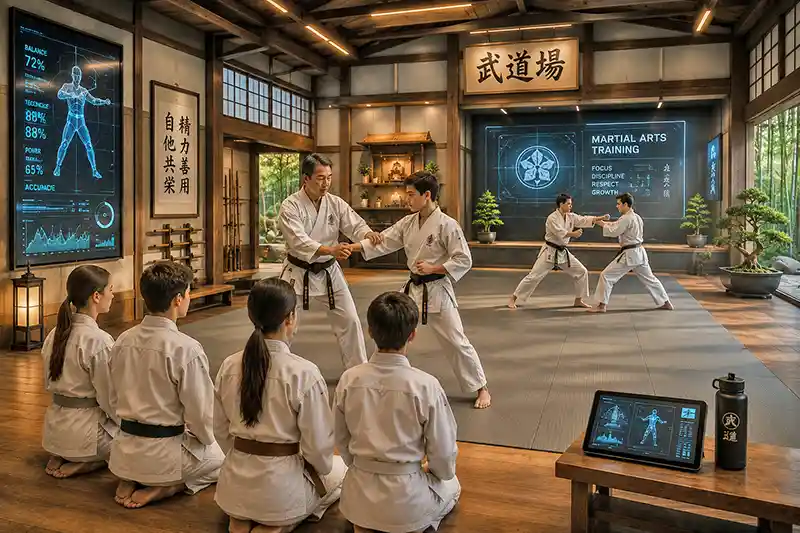
As martial arts continue to evolve, the dojo will likely continue changing with them. New technology, training methods, and teaching styles have already influenced how many schools operate, but the core principles that define the dojo remain surprisingly resilient. Respect, discipline, and the pursuit of improvement continue to be the foundation of martial arts training.
Future dojos may incorporate more advanced training tools, including digital instruction, performance tracking, and new methods for analyzing technique. These innovations can help students train more effectively, but they are unlikely to replace the most important parts of the dojo experience: the relationship between teacher and student and the shared commitment of a training community.
The next generation of martial artists may discover the dojo in different ways than those who came before them. Some will find it through competition, others through fitness, self-defense, or a desire to connect with a centuries-old tradition. Regardless of the reason, the dojo will continue serving as a place where people challenge themselves and grow.
The appearance of the dojo may change over time, but its purpose has remained constant for hundreds of years. It is still a place where students learn not only how to perform techniques, but also how to develop patience, confidence, and character through dedicated practice.
Why the Spirit of the Dojo Has Survived for Centuries
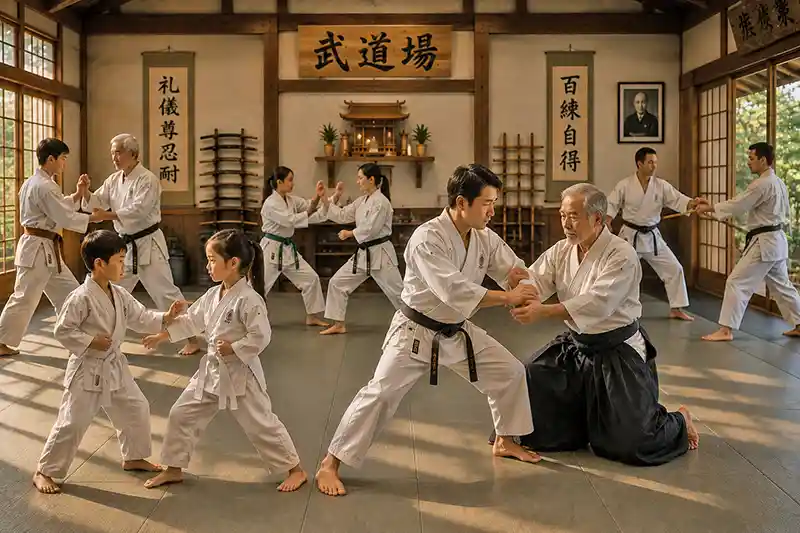
The appearance of the dojo has changed dramatically over time, but the ideas behind it have remained remarkably consistent. Wooden training halls have become modern facilities, handwritten notes have been replaced by digital resources, and traditional practices have been adapted for new generations. Yet the core values that define the dojo have survived because they continue to serve a purpose.
A dojo creates structure in a world that often lacks it. Students arrive knowing that progress requires patience, effort, and consistency. There are no shortcuts to mastering a martial art, and the training process teaches lessons about persistence that apply far beyond the mat.
The enduring appeal of the dojo also comes from its ability to bring people together. Beginners and experienced martial artists share the same space, learning from one another while working toward personal goals. This environment creates a unique balance between individual improvement and community support.
Perhaps the greatest reason the dojo has survived is that its lessons are timeless. Learning to stay focused under pressure, respect others, overcome setbacks, and continue improving are challenges that every generation faces. The techniques may evolve, but the values taught inside the dojo remain just as meaningful today as they were centuries ago.
What Makes a Dojo Different From a Regular Gym?

At first glance, a modern martial arts school may look similar to a fitness facility. Both may have training equipment, instructors, and people working toward physical improvement. However, the purpose of a dojo is fundamentally different. A gym typically focuses on improving the body, while a dojo focuses on developing the entire person through structured training.
In a dojo, progress is not measured only by strength, speed, or athletic ability. Students are also expected to develop discipline, patience, focus, and respect. A beginner may spend months or even years practicing basic movements because the goal is not simply to perform a technique, but to understand it and improve through repetition.
The relationship between students is another major difference. In many gyms, people train independently alongside one another. In a dojo, students are part of a shared learning environment where they rely on training partners, support newer students, and grow together. The success of one person often depends on the effort and cooperation of everyone around them.
This unique approach is what has allowed dojos to remain relevant for generations. They provide something beyond exercise: a structured path for personal growth, surrounded by a community that encourages constant improvement.
How to Create the Right Mindset Before Entering the Dojo
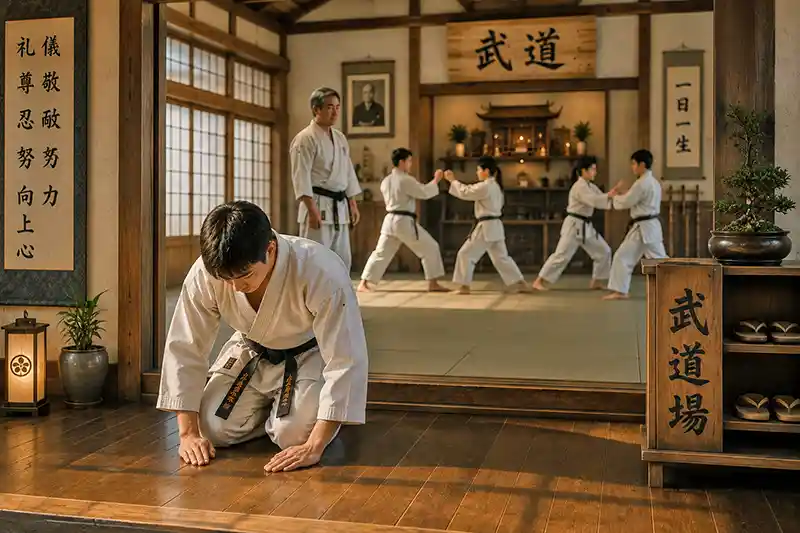
A dojo is not only a physical space. It is also a state of mind. The way a student approaches training often determines how much they gain from the experience. Walking into a dojo with the right attitude means being willing to learn, accepting correction, and understanding that improvement comes through patience rather than instant results.
Many beginners arrive expecting to quickly master techniques, but traditional training teaches a different lesson. Progress comes from repeating simple movements, making mistakes, and refining those skills over time. A student who stays humble and consistent will often advance further than someone who relies only on natural athletic ability.
This mindset is one reason experienced martial artists continue training even after reaching advanced ranks. The goal is not simply to become better than others, but to continue improving compared to who you were yesterday. Every class becomes another opportunity to develop focus, discipline, and awareness.
The customs practiced before and after training, from bowing to maintaining proper etiquette, help reinforce this mindset. They remind students that the dojo is a place for growth, and that every person who enters the training floor has something new to learn.
Why the Dojo Remains a Lifelong Journey
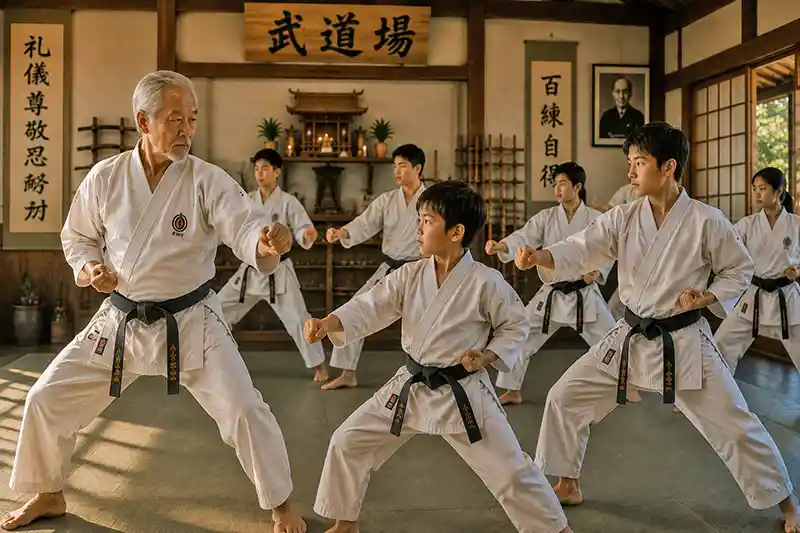
One of the most unique aspects of martial arts training is that the journey rarely has a true finish line. Unlike many activities where reaching a goal marks the end of the process, the dojo teaches students that improvement continues throughout their entire lives. Even highly experienced martial artists continue practicing fundamentals, refining techniques, and learning from others.
This idea is deeply connected to the traditional concept of continuous improvement. A student may earn a black belt, become an instructor, or spend decades training, but there is always another detail to refine. A movement can become smoother, timing can become sharper, and understanding can become deeper with every year of practice.
The lifelong nature of the dojo is also what allows generations of martial artists to connect. A beginner and a highly experienced instructor may stand on the same training floor, each working on their own goals while sharing the same commitment to improvement. The lessons learned from one generation are passed to the next, keeping traditions alive while allowing them to evolve.
For many martial artists, the dojo eventually becomes more than a place they visit. It becomes part of their identity. The habits developed through years of training, including discipline, patience, and perseverance, continue influencing their lives long after they leave the mat.
Why Every Student Has a Place in the Dojo
One of the most important traditions of the dojo is the belief that every student has value, regardless of age, experience, or natural ability. A beginner stepping onto the training floor for the first time and an advanced practitioner with decades of experience are both following the same path of improvement. The difference is not whether they belong, but simply where they are in their journey.
Traditional martial arts emphasize that progress looks different for everyone. Some students may quickly develop physical skills, while others may find their greatest growth in confidence, discipline, or mental focus. The dojo provides an environment where each person can work toward personal goals while still contributing to the growth of those around them.
This inclusive approach is one reason martial arts have remained accessible to people of all backgrounds. Children learn patience and confidence, adults develop new skills and discipline, and experienced practitioners continue refining their understanding by helping others. Everyone has something to learn and something to teach.
The dojo succeeds because it is not built around a single type of student. It is built around the idea that improvement is always possible. Whether someone trains for a few months or a lifetime, the lessons learned inside the dojo can continue shaping who they become.
Why Dojo Traditions Continue to Influence Modern Martial Artists
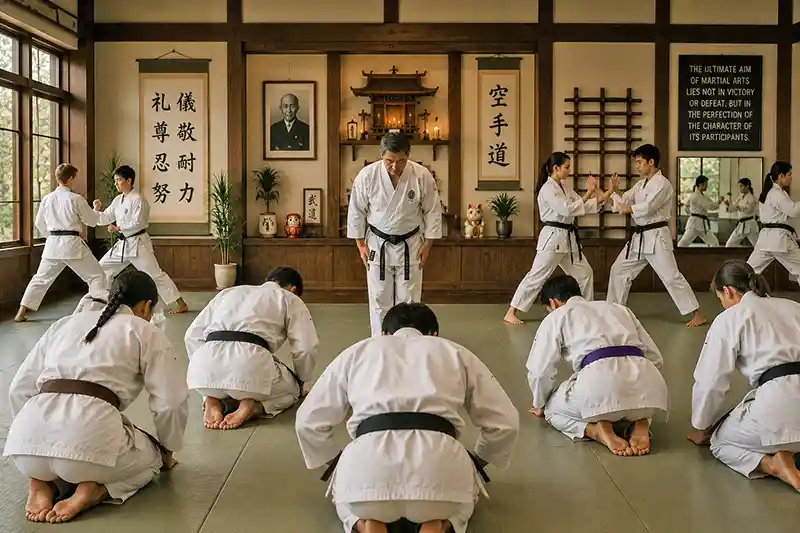
Many martial arts traditions have survived for hundreds of years because they continue to solve the same challenges students face today. Learning a martial art requires focus, patience, humility, and the ability to keep improving despite setbacks. These qualities were important for historical warriors and are just as valuable for modern students training in a local dojo.
The rituals and customs found in many schools help reinforce these lessons. Bowing, maintaining a clean uniform, respecting instructors, and supporting training partners may seem like small details, but together they create a training environment built around accountability and mutual respect. These traditions help students understand that martial arts are not only about physical techniques.
Modern instructors often adapt these customs to fit their students and communities, but the underlying purpose remains unchanged. A child learning confidence, an adult developing discipline, and an experienced practitioner refining their skills are all benefiting from the same principles that shaped martial arts for generations.
The continued popularity of the dojo proves that these traditions still have meaning. While training methods and facilities may continue to evolve, the values that define a true dojo remain timeless.
The Dojo as a Bridge Between the Past and Future
The greatest strength of the dojo may be its ability to preserve history while continuing to adapt. Every generation of martial artists inherits knowledge from those who trained before them, but each generation also adds its own experiences, teaching methods, and perspectives. This balance between tradition and change has allowed the dojo to remain relevant for centuries.
A student practicing a technique today is connected to countless others who performed similar movements generations ago. The same principles of balance, timing, discipline, and control continue to be taught, even as the environment around the dojo changes. This connection to the past gives martial arts a sense of history that few other forms of training can provide.
At the same time, dojos must continue evolving to serve modern students. Instructors today use improved safety equipment, new teaching approaches, and a greater understanding of sports science while still preserving the values that define traditional training. The best schools understand that honoring tradition does not mean refusing change.
This balance is what makes the dojo unique. It is not simply a reminder of the past or a training space for the present. It is a place where centuries of knowledge are passed forward, ensuring that future generations can continue learning from the martial arts journey.
The Enduring Legacy of the Dojo
The dojo has survived for centuries because it represents something much deeper than a place to practice martial arts. It is a space where knowledge is passed down, challenges are overcome, and students learn lessons that extend far beyond physical techniques. While the appearance of the dojo has changed throughout history, its purpose has remained remarkably consistent.
Every generation of martial artists leaves its mark on the tradition. Ancient teachers passed down principles through direct instruction, modern instructors use new training methods and technology, and future generations will continue adapting the art to their own world. Yet the core ideas of respect, discipline, perseverance, and self-improvement remain unchanged.
For many students, the dojo becomes a place where they discover more about themselves than they expected. It teaches patience when progress feels slow, confidence when facing challenges, and humility when learning from others. These lessons are why so many martial artists continue training long after they first step onto the mat.
The dojo is not simply a room where martial arts techniques are practiced. It is a living tradition that connects the past, present, and future. As long as people continue seeking personal growth through martial arts, the spirit of the dojo will continue to endure.
Frequently Asked Questions About Dojos
What Does the Word Dojo Mean?
The word dojo means "place of the way" in Japanese. While it is now strongly associated with martial arts training halls, the term originally referred to places of spiritual practice and personal development. Martial artists adopted the word because a dojo represents more than a place to learn techniques. It is a place where students work to improve their skills, discipline, and character through dedicated practice.
Is a Dojo the Same Thing as a Martial Arts Gym?
A dojo and a martial arts gym may look similar, but they often have different philosophies. A gym usually focuses primarily on physical conditioning, fitness, and performance, while a dojo places greater emphasis on discipline, etiquette, personal growth, and the relationship between instructor and student.
Many modern martial arts schools combine elements of both. They may use fitness equipment, modern training methods, and competitive programs while still maintaining traditional dojo values. The biggest difference is that a dojo is not only focused on making students physically stronger. It is designed to help students develop patience, confidence, focus, and character through consistent training.
Why Do Martial Artists Bow in a Dojo?
Martial artists bow in a dojo as a sign of respect, focus, and mindfulness. The bow acknowledges the instructor, training partners, and the opportunity to learn. It is a way of showing that students are entering the training space with the proper attitude and leaving behind outside distractions.
Bowing is not meant to represent worship or submission. Instead, it reflects the idea that martial arts training requires humility and mutual respect. A student who respects their instructor and training partners creates a better environment for everyone to learn and improve.
Do You Have to Be Experienced to Join a Dojo?
No, most dojos are designed to welcome complete beginners. Many students enter a dojo having never practiced a martial art before, and instructors expect new students to need time to learn basic movements, etiquette, and training habits.
A good dojo is built around the idea that everyone starts somewhere. Beginners are not expected to perform advanced techniques immediately. Instead, they learn through repetition, instruction, and guidance from more experienced students and instructors.
The most important qualities for a new student are often attitude and commitment rather than athletic ability. A willingness to learn, accept corrections, and consistently practice will usually matter far more than previous experience.
Why Do Students Wear Uniforms in a Dojo?
Students wear uniforms in a dojo because they represent equality, discipline, and commitment to training. When everyone wears similar clothing, differences in background, profession, and social status become less important. The focus shifts away from appearance and toward learning, effort, and improvement.
Traditional uniforms are also designed for the physical demands of martial arts. A properly made gi allows students to move freely while handling repeated practice, gripping, and partner training. Maintaining a clean uniform and wearing it correctly also reinforces the importance of respect and attention to detail.
Although uniform requirements vary between martial arts styles and schools, the purpose remains similar. The uniform reminds students that they are part of a larger tradition and that training involves both physical skill and personal development.
What Happens During a Typical Dojo Class?
A typical dojo class usually begins with preparation, including changing into a uniform, organizing equipment, and following proper etiquette before training begins. Many traditional schools start with a formal bow or a brief period of focus to help students transition from everyday life into a training mindset.
Classes often include warm-ups, basic techniques, drills, forms, partner exercises, and conditioning. Beginners may spend more time learning fundamental movements, while advanced students may work on more complex techniques or help guide newer practitioners.
Most importantly, a dojo class is built around repetition and improvement. Students are not expected to master techniques after a single lesson. Instead, they develop skills gradually through consistent practice, feedback from instructors, and cooperation with their training partners.
Can Children Train in a Dojo?
Yes, many dojos offer classes specifically designed for children. Martial arts training can help younger students develop coordination, confidence, focus, discipline, and respect while learning physical skills in a structured environment.
A well-run children's program is not simply about teaching techniques. Instructors typically emphasize patience, listening skills, teamwork, and the importance of treating training partners with respect. These lessons can help children build habits that benefit them both inside and outside the dojo.
The best programs adjust training methods to match the age and experience level of their students. Younger beginners may focus on basic movements, balance, and confidence-building exercises, while older students may gradually progress into more advanced techniques and responsibilities.
How Long Does It Take to Become Skilled in a Dojo?
The amount of time it takes to become skilled in a dojo depends on many factors, including the martial art being studied, how often a student trains, the quality of instruction, and the effort put into practice outside of class. Some students develop strong fundamentals within a few months, while others spend many years refining their abilities.
Traditional martial arts are built around long-term improvement rather than quick results. Students typically spend significant time repeating basic techniques, developing proper movement, and building an understanding of timing, distance, and control before advancing to more complex skills.
Many martial artists view progress as a lifelong journey rather than a destination. Even advanced practitioners continue training because there is always another skill to refine, another challenge to overcome, and another opportunity to improve.
What Is the Difference Between a Dojo and a Dojang?
The difference between a dojo and a dojang comes from the martial arts traditions they are associated with. A dojo is a Japanese term commonly used for training halls that teach arts such as karate, judo, aikido, and other Japanese martial arts. A dojang is a Korean term used for training spaces that teach Korean martial arts such as taekwondo and hapkido.
Although the words come from different languages and cultures, they serve a similar purpose. Both represent places where students learn martial arts techniques while developing discipline, respect, and personal growth. The customs, terminology, and training methods may differ, but the underlying philosophy of dedicated practice is very similar.
The important distinction is not the building itself, but the tradition and martial art being practiced inside. Whether a student trains in a dojo or a dojang, the goal remains the same: continuous improvement through consistent effort and learning.
Why Are Dojos Considered Places of Personal Growth?
Dojos are considered places of personal growth because martial arts training develops much more than physical ability. While students learn techniques, combinations, and movement, they also practice qualities such as patience, discipline, confidence, and perseverance.
The structure of dojo training encourages students to face challenges and improve through consistent effort. Mistakes are treated as opportunities to learn rather than failures, and students gradually develop the ability to stay focused even when progress is difficult.
This emphasis on self-improvement is one of the reasons martial artists often describe the dojo as a place where they learn about themselves. The skills developed through training can influence how students handle challenges, set goals, and approach everyday life outside the dojo.
What Is the Proper Etiquette When Entering a Dojo?
Proper dojo etiquette helps create an environment built around respect, focus, and safety. Beginners are usually expected to arrive on time, keep their uniform clean, remove shoes if required, and follow the instructions of the instructor and senior students.
Many traditional dojos begin and end classes with a bow to acknowledge the training space, the instructor, and fellow students. Students are also expected to avoid unnecessary distractions, treat training partners respectfully, and maintain a positive attitude while learning.
The specific customs may vary between martial arts styles and schools, but the underlying purpose is the same. Dojo etiquette teaches students that martial arts training is not only about learning techniques. It is also about developing respect, discipline, and awareness.
Why Do Some Dojos Have a Shomen or Shrine Area?
Many traditional Japanese dojos have a shomen, which refers to the front or honored side of the training hall. This area may contain calligraphy, artwork, a school emblem, or sometimes a small shrine. It represents the history, values, and traditions connected to the martial art being practiced.
The shomen is not intended to be worshiped. Instead, it serves as a reminder of the generations of teachers and students who helped preserve the art. Facing this direction during formal bows connects modern practitioners with the history and principles behind their training.
Not every dojo includes a shrine or follows the same customs, especially outside Japan. However, many traditional schools maintain some form of symbolic area to reinforce the importance of respect, tradition, and the connection between past and present martial artists.
Can You Practice Martial Arts Without Joining a Dojo?
It is possible to practice some aspects of martial arts without joining a dojo. Online lessons, instructional videos, books, and solo training can help students learn basic movements, improve fitness, and develop familiarity with certain techniques.
However, training alone has limitations. A qualified instructor can provide corrections that are difficult to recognize without guidance, while training partners allow students to develop timing, distance, and adaptability in ways that solo practice cannot fully replicate.
For many martial artists, the greatest benefit of a dojo is not only the instruction but also the community. Training alongside others creates accountability, motivation, and opportunities to learn from people with different levels of experience.
Why Are Senior Students Expected to Help Beginners in a Dojo?
Senior students often help beginners because teaching is considered part of the learning process. Explaining techniques, demonstrating movements, and guiding newer students can deepen an experienced martial artist's own understanding of the art.
Helping beginners also strengthens the dojo community. A new student who feels supported is more likely to stay committed, while experienced students learn valuable lessons about patience, communication, and leadership.
This tradition creates a cycle where knowledge is passed from one generation of students to the next. The instructor may teach the fundamentals, but the entire dojo contributes to helping each person improve.
What Should a Beginner Bring to Their First Dojo Class?
A beginner usually does not need much equipment for their first dojo class. Most schools allow new students to train in comfortable athletic clothing before purchasing a traditional uniform. Bringing water, a towel, and a willingness to learn is often more important than having specialized gear.
As students continue training, they may need equipment specific to their martial art, such as a uniform, belt, protective gear, or training tools. The instructor can usually recommend the correct equipment based on the style and level of training.
The most important thing a beginner can bring to their first class is the right attitude. Being respectful, asking questions, and being open to learning will make the experience much more rewarding.
Why Do Martial Artists Practice the Same Techniques Repeatedly?
Martial artists repeat techniques because repetition is how movements become natural and reliable. A technique that looks simple when demonstrated may require thousands of repetitions to develop proper timing, balance, coordination, and control.
Practicing the same movements repeatedly also allows students to refine small details. Experienced martial artists continue working on basic techniques because even simple movements can always be improved.
This focus on repetition is one of the reasons traditional martial arts emphasize patience. Progress does not come from learning as many techniques as possible. It comes from developing a deep understanding of the fundamentals and being able to perform them effectively under pressure.
You May Also Be Interested In:
- Dojo Spotlight: Scottsdale Martial Arts Center
- The Martial Arts Shoe Debate: Why Some Schools Ban Them and Others Love Them
- What Is a Rope Dart? History, Training, and Martial Arts Uses
- The Most Dangerous Chain Weapons in Martial Arts History
- What Is a Chain Whip? History, Training, and Martial Arts Uses
- Why Is It Called a 'Gi'? The Strange History of Martial Arts Uniforms
- The Real History of Nunchaku: From Farm Tool to Martial Arts Icon
- Whatever Happened to These Martial Arts?
- 10 Reasons Why You Should Try Martial Arts
- What is the Best Bo Staff for Martial Arts?
1 Comment(s)
"Great article! I studied under a minister and he introduced the Bible into our study. I like the message of the do ( the way) jo ( the place). Before Christians were called Christians, they were called the people of the way. It makes sense of the ritual place of solitude peace and grace."
Written By: Christopher W Green
8/9/26 - 10:49am
Leave a Reply