




The Martial Arts Shoe Debate: Why Some Schools Ban Them and Others Love Them
June 15th, 2026
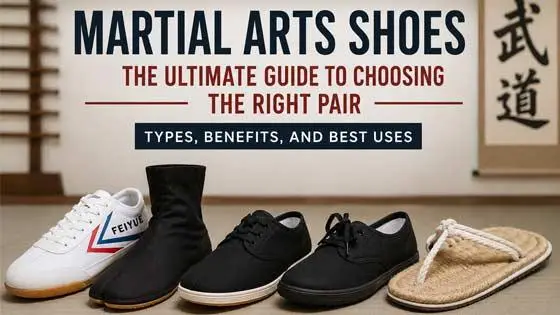
Walk into one martial arts school and everyone trains barefoot. Walk into another, and students are wearing specialized training shoes like it is completely normal.
This is one of those surprisingly heated martial arts debates that outsiders rarely know exists. Some practitioners believe shoes ruin balance, weaken technique, and disconnect students from proper movement. Others argue barefoot training is outdated, unsanitary, and unnecessarily hard on the body.
This is one of those surprisingly heated martial arts debates that outsiders rarely know exists. Some practitioners believe shoes ruin balance, weaken technique, and disconnect students from proper movement. Others argue barefoot training is outdated, unsanitary, and unnecessarily hard on the body.
And depending on the martial art, both sides think they are completely right.
From karate and taekwondo to kung fu, MMA, and ninja training, the rules around footwear can vary wildly. Some schools ban shoes completely. Others require them. A few martial arts even developed specialized footwear designed to improve grip, speed, or movement.
So why do some martial artists refuse to wear shoes while others swear by them? The answer turns out to be part history, part psychology, part tradition, and surprisingly personal.
If you have ever walked into a karate or taekwondo school for the first time, you probably noticed something immediately: everyone takes their shoes off.
To outsiders, that can feel strange. In most sports, shoes are non-negotiable. Basketball players wear basketball shoes. Wrestlers wear wrestling shoes. Runners wear running shoes. So why do so many martial artists train barefoot?
Part of the answer is tradition.
Many martial arts developed in cultures where training indoors meant removing footwear as a sign of cleanliness and respect. Japanese and Korean dojos often treated training spaces almost like sacred environments. Bringing outdoor dirt onto mats or wooden floors was considered disrespectful, which is one reason removing shoes became deeply tied to martial arts etiquette.
But there is also a practical reason many instructors still prefer barefoot training today: connection to the ground. Training barefoot can improve balance, foot awareness, grip, and movement mechanics. Many martial artists believe shoes slightly disconnect students from learning proper foot placement, especially during kicking, pivoting, and stance work.
That does not mean everyone agrees, though.
Critics argue barefoot training can be rough on joints, hard on aging feet, and not ideal for every surface. Hygiene concerns also come up, especially in busy schools with shared mats. That is one reason some students eventually look into specialized martial arts shoes, especially if they train on harder flooring or want more support.
Interestingly, even schools that strongly prefer barefoot training sometimes make exceptions for injuries, outdoor training, or style-specific footwear traditions.
In other words, barefoot training is not just some random martial arts habit. There are real historical and practical reasons behind it, even if not everyone agrees they still make sense today.
While many martial arts schools strongly prefer barefoot training, others look at shoes and think, "Why would you train without them?"
This usually comes down to environment, style, and purpose.
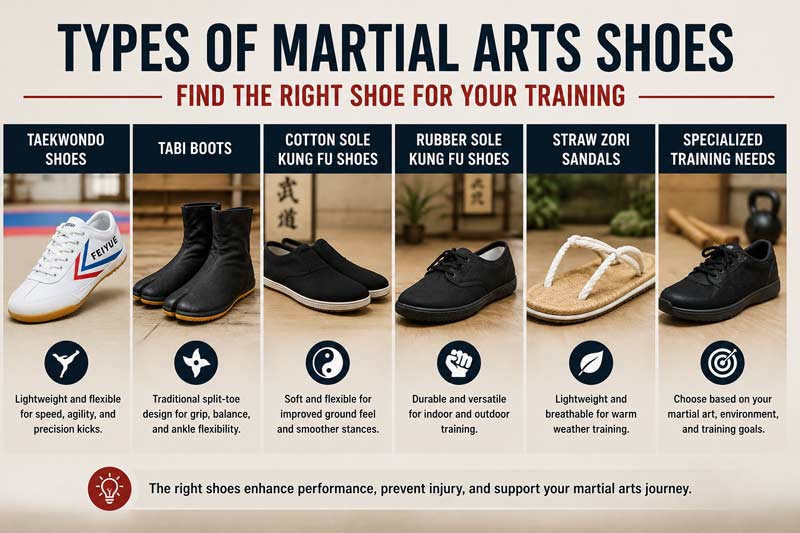
For example, some forms of kung fu traditionally used footwear because practitioners often trained outdoors or on harder surfaces. Lightweight shoes helped with grip, foot protection, and movement without sacrificing agility. That is one reason minimalist styles of footwear, including cotton sole kung fu shoes and rubber sole kung fu shoes, are still popular with certain practitioners today.
Taekwondo is another interesting example. While many schools train barefoot indoors, some students wear specialized shoes during demonstrations, outdoor practice, or specific training environments. Lightweight options like martial arts training shoes are often designed to stay flexible while adding grip and protection.
Then there are martial arts styles tied closely to historical footwear traditions. Ninja-inspired training sometimes incorporates split-toe footwear like tabi boots, which were originally valued for mobility, stealth, and flexibility across uneven terrain.
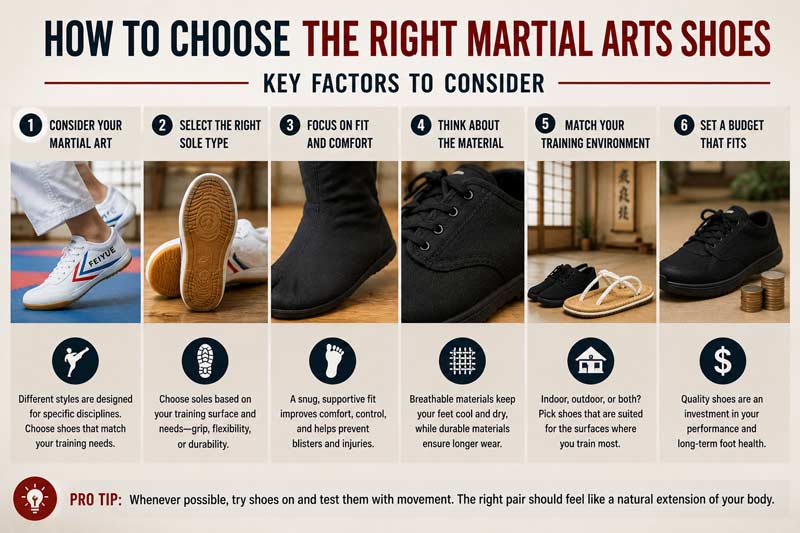
The interesting part is that shoes in martial arts are rarely about fashion. Most people using them are chasing something practical: better traction, safer training, foot support, or simply adapting to the surface they train on.
That is why the "shoes vs barefoot" debate gets so complicated. One school may train on soft puzzle mats inside a climate-controlled dojo. Another may practice on hardwood floors, concrete, or outdoor spaces where barefoot training becomes much less appealing.
In other words, martial arts shoes are not necessarily breaking tradition. Sometimes, they are tradition.
This is where the martial arts shoe debate gets surprisingly heated.
Ask someone who trains barefoot and you will often hear the same argument: shoes weaken foot awareness. Many traditional practitioners believe training barefoot improves balance, grip, mobility, and overall connection to movement. Without shoes, students can feel subtle weight shifts during stances, pivots, and kicks in ways that are harder to notice with extra material under the foot.
But ask someone who trains in shoes and the answer sounds completely different.
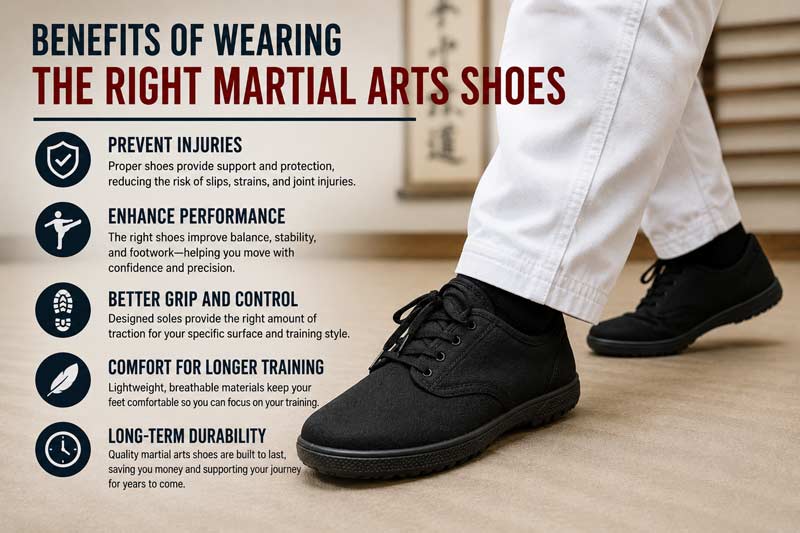
Supporters of martial arts footwear often argue that the right shoes improve performance, not hurt it. Better traction can mean safer pivots. More support can reduce foot fatigue during long sessions. On rougher surfaces, shoes may help students move more confidently without constantly adjusting for discomfort.
This becomes especially noticeable in arts that involve lots of footwork. Certain kung fu practitioners prefer lightweight shoes because they allow fast movement while still protecting the foot. Some taekwondo students also prefer specialized footwear during demonstrations or outdoor practice where grip matters more.
Interestingly, some martial artists change their opinion over time. Younger students often love barefoot training because they feel quicker and lighter. Older practitioners dealing with joint pain, plantar fasciitis, or years of wear-and-tear sometimes become much more open to supportive footwear.
There is also a simple reality people do not always mention: training surface matters. Bare feet feel great on clean mats. Hard concrete, cold floors, or outdoor terrain can change the conversation very quickly.
So do shoes improve martial arts performance?
For some people, absolutely. For others, barefoot still feels better. That is probably why this debate never really goes away.
Now for the other side of the argument, because some martial artists feel very strongly about this.
To many traditional practitioners, shoes are not just unnecessary. They are a problem.
One of the biggest complaints is reduced foot awareness. Martial arts relies heavily on subtle balance shifts, pivots, and weight distribution. Some instructors believe even lightweight shoes dull the feedback students receive from the floor, making movement feel less precise.
There is also the argument that shoes can hide bad habits.
Barefoot training forces students to strengthen the feet naturally and pay closer attention to posture, stance, and mechanics. If balance feels off, students notice quickly. Some instructors argue supportive footwear can mask weaknesses instead of helping students fix them.
Kicking is another surprisingly controversial topic. Certain practitioners believe shoes slightly change striking mechanics or make students less mindful of proper foot positioning during kicks. In styles that emphasize precision, that matters.
Then there is the tradition argument.
For many schools, barefoot training is simply part of martial arts culture. Shoes indoors can feel strange or even disrespectful depending on the school. In some dojos, removing footwear is tied closely to etiquette, discipline, and respect for the training space itself.
Interestingly, even martial artists who occasionally wear shoes often still prefer barefoot training for technical drills or rank testing. The idea is simple: if technique works barefoot, it will usually transfer well everywhere else.
Of course, critics of this mindset think some schools are being overly stubborn and clinging to tradition for tradition's sake.
Which explains why this debate somehow becomes way more passionate than outsiders would ever expect.
If you want to understand why opinions around martial arts shoes started shifting, MMA deserves a lot of credit.
For decades, many traditional martial arts treated barefoot training as the default. Then mixed martial arts exploded in popularity and suddenly people started paying much more attention to what actually worked across different environments, surfaces, and fighting styles.
Interestingly, MMA itself mostly stayed barefoot. Fighters compete without shoes, train on mats, and rely heavily on grip, mobility, and foot sensitivity. But MMA also made something else more acceptable: adapting training to the situation instead of blindly following tradition.
Suddenly, conversations around recovery, injury prevention, mobility, and performance became much more common. Martial artists who once would have ignored footwear started asking practical questions.
Would shoes help during outdoor conditioning?
Do older students benefit from extra support?
What about hardwood floors, concrete garages, or colder training environments?
That shift quietly opened the door for more students to experiment with footwear without feeling like they were somehow "breaking the rules." Today, it is not unusual to see practitioners train barefoot for technical drills but switch to shoes during conditioning, weapons work, outdoor sessions, or specific styles of movement.
You can even see this crossover in martial arts fashion and training culture. Lightweight training shoes, minimalist soles, and traditional-inspired footwear all started becoming more common once martial artists became less rigid about a one-size-fits-all approach.
Ironically, MMA did not necessarily convince martial artists to wear shoes. It just convinced many people to stop treating the topic like there was only one correct answer.
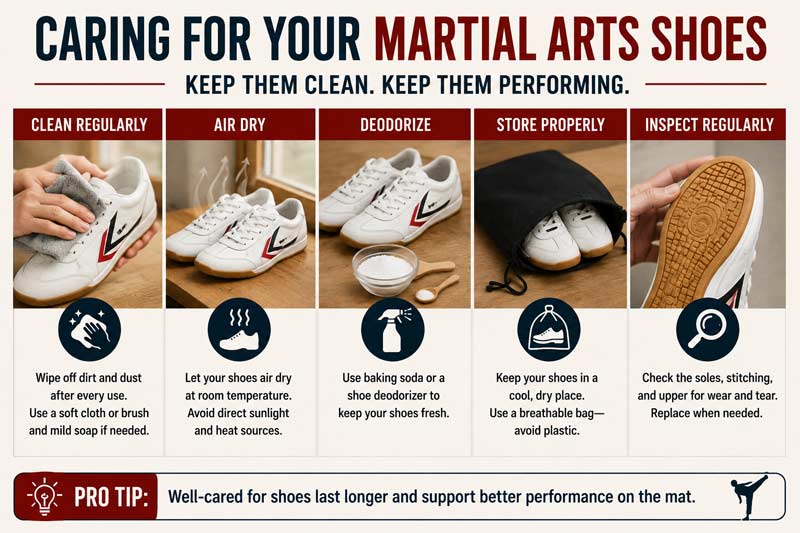
There is one part of the martial arts shoe debate people rarely talk about openly, but almost everyone thinks about eventually: hygiene.
Traditional barefoot training makes perfect sense on clean mats that are regularly disinfected. But not every training environment is ideal. Some schools train on older surfaces, shared mats, hardwood floors, garage gyms, or mixed-use spaces where "barefoot only" starts feeling less appealing to certain students.
Then there is the surface problem.
Training barefoot on soft puzzle mats feels completely different than training on hardwood, concrete, cold garage flooring, or outdoor terrain. What feels natural in one dojo can feel miserable somewhere else.
This is one reason opinions around footwear often shift over time. A younger student training indoors on padded mats may love barefoot practice. Someone recovering from foot pain, dealing with cold floors, or training outdoors may suddenly start appreciating extra support and protection a lot more.
Certain styles also naturally adapted to different environments. Traditional kung fu practitioners sometimes trained outdoors or on harder surfaces, which is one reason lightweight footwear became more common. Even historical Japanese footwear, including simple options like zori sandals, evolved around practicality rather than comfort alone.
What makes the debate funny is that many martial artists quietly compromise already. Plenty of people train barefoot during technical drills but switch to shoes for conditioning, weapons training, or colder environments.
In other words, the shoe debate is not always about tradition versus modern thinking. Sometimes it is just about what floor you are standing on.
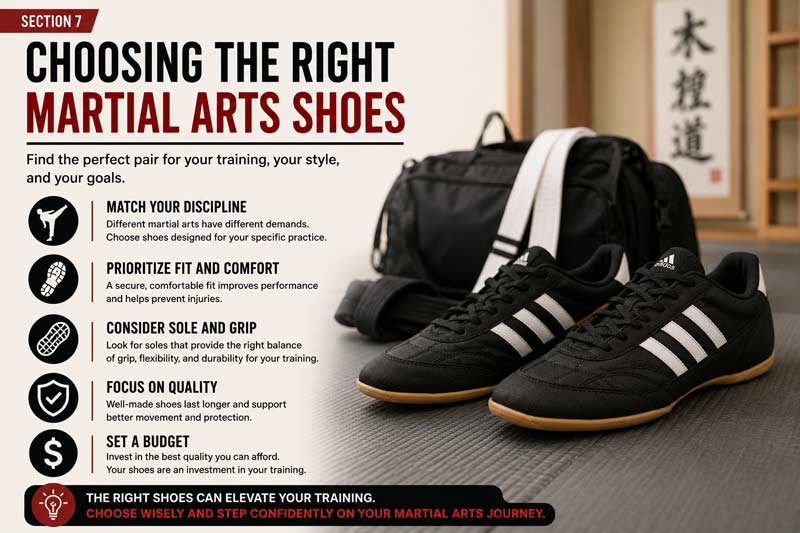
Here is something funny about the martial arts shoe debate: a lot of people end up changing their minds.
The hardcore barefoot student who once thought shoes were unnecessary suddenly develops knee pain after years of training and starts looking for more support. The person who swore by shoes realizes they move better barefoot on mats and quietly stops wearing them indoors.
Age plays a role.
So does injury history, training environment, and even the style someone practices. What works perfectly in your twenties on padded dojo mats may feel very different after years of impact, cold garage workouts, or outdoor conditioning sessions.
This is one reason many experienced martial artists become surprisingly flexible about the topic. Instead of treating it like a philosophical argument, they start asking practical questions.
What surface am I training on?
What am I working on today?
Do I need support, grip, or mobility?
That is often when students begin experimenting with different options. Some keep barefoot training for forms and technical drills but switch to shoes for conditioning or weapons work. Others rotate depending on weather or training location. Minimalist footwear becomes popular because it offers some protection without feeling overly restrictive.
Ironically, many longtime martial artists eventually land somewhere in the middle: barefoot when it makes sense, shoes when they help.
That may be why this debate never really gets settled. Most experienced practitioners eventually realize the "best" answer depends less on ideology and more on context.
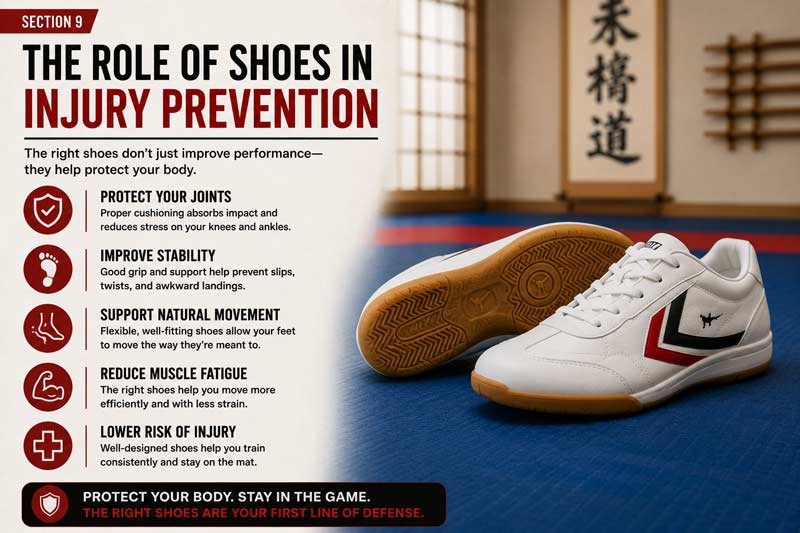
For something as simple as footwear, martial artists can get surprisingly intense about this topic.
Mention shoes in the wrong dojo and suddenly everyone has an opinion.
One person insists barefoot training is the only "real" way to practice. Another argues shoes are smarter, safer, and more practical. Someone else says it depends entirely on the martial art. Before long, what started as a simple question somehow turns into a philosophy debate.
Part of the reason is identity.
Martial arts are full of traditions, habits, and rituals that people become emotionally attached to. If someone has trained barefoot for twenty years, shoes can feel unnecessary or even wrong. Meanwhile, someone who trains outdoors, deals with foot pain, or grew up in styles that used footwear may see barefoot-only training as outdated.
There is also a funny psychological effect happening here. People naturally assume whatever worked for them must be the "correct" answer. If barefoot training improved balance and movement, they credit the lack of shoes. If footwear reduced pain and helped training consistency, shoes suddenly become essential.
The reality is much less dramatic.
Most experienced martial artists eventually realize there is no universal answer. Different styles train differently. Different bodies move differently. Different floors matter. Different goals matter.
Ironically, many practitioners who argue the loudest eventually end up quietly breaking their own rules anyway. The barefoot purist wears shoes for outdoor conditioning. The shoe advocate goes barefoot for forms or technical drills.
Which may explain why this debate never ends: both sides are usually at least a little right.
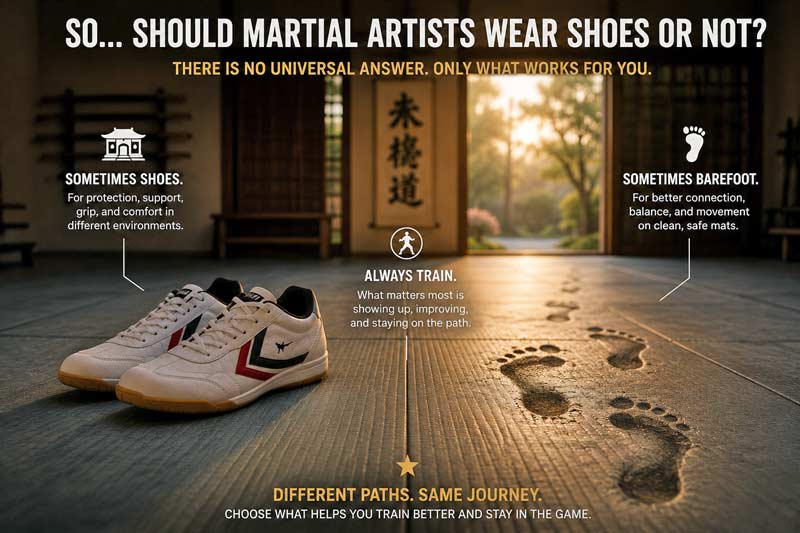
After all the debates, traditions, strong opinions, and surprisingly passionate arguments, the answer turns out to be much less dramatic than people expect.
Sometimes yes. Sometimes no.
If you train on clean mats in a traditional dojo, barefoot training may feel completely natural and make perfect sense. If you train outdoors, on hard floors, in cold environments, or deal with foot pain or injuries, shoes may genuinely improve comfort, support, and consistency.
The martial art matters. The school matters. The training surface matters. Your body matters.
What works for a young taekwondo student doing barefoot drills may not feel ideal for someone practicing kung fu outdoors or a longtime martial artist trying to protect aging joints. Some practitioners even switch back and forth depending on what they are working on that day.
That is probably the biggest takeaway from this entire debate: there is no universal answer.
Despite how intensely people argue about it, most experienced martial artists eventually land in the same place. Use what helps you train better, move better, and stay healthy enough to keep showing up.
Ironically, the people with the strongest opinions often become much more flexible after enough years of training.
Because whether you train barefoot or wear shoes, the thing that matters most is not what is on your feet.
It is whether you keep training.
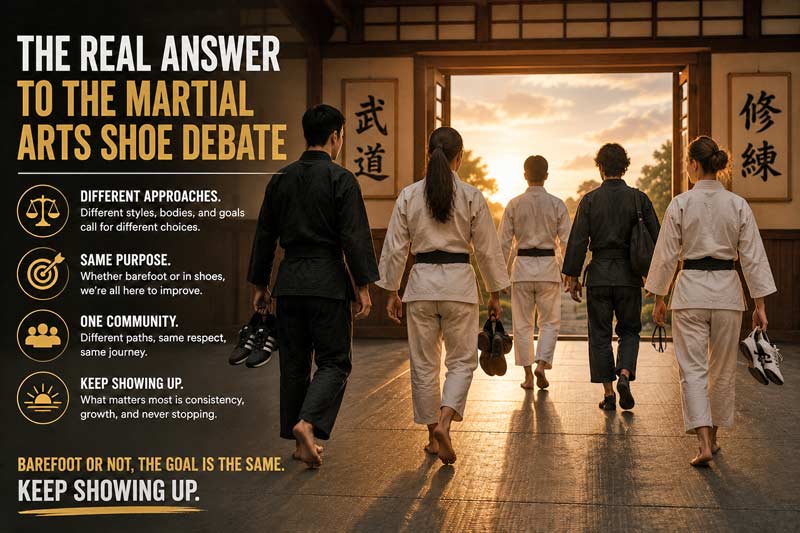
After all the arguments, traditions, strong opinions, and decades of dojo debates, the answer ends up being surprisingly simple.
Most martial artists are not actually arguing about shoes.
They are arguing about values.
Tradition versus practicality. Precision versus comfort. Barefoot connection versus extra support. Old-school habits versus adapting to modern training environments.
And the funny part is that both sides usually have a point.
Barefoot training can absolutely improve balance, awareness, and movement mechanics. The right shoes can also reduce discomfort, improve grip, and make training easier on certain surfaces or aging joints.
That is why the best answer usually comes down to context.
What martial art do you train?
What surface are you standing on?
What feels best for your body?
The martial artists who stay around long enough usually stop treating this like a battle between "right" and "wrong." Instead, they focus on something much more practical: what helps them train consistently and safely for the long run.
Because barefoot or not, the goal is still the same.
Keep showing up.
Sometimes yes, sometimes absolutely not.
Tournament rules vary a lot depending on the martial art, organization, and type of competition.
In many traditional karate, taekwondo, and judo tournaments, competitors are expected to compete barefoot. Shoes are often not allowed because organizers want consistency, safety, and adherence to traditional standards. Bare feet also make it easier for judges to evaluate foot positioning and technique.
But there are exceptions.
Certain kung fu events, weapons competitions, demonstrations, and specialty divisions may allow or even expect footwear, especially if the style traditionally trained in shoes. Outdoor events or performances on rough surfaces sometimes make exceptions as well.
Health concerns can also change the rules. Some organizations allow medical footwear or special accommodations for injuries if approved beforehand.
The safest move? Always check tournament regulations before showing up. Nothing feels worse than getting comfortable training in shoes only to find out competition rules require you to leave them at the edge of the mat.
Ironically, this is one reason many martial artists train both ways. Barefoot for tournament preparation, shoes for specific training environments or personal comfort.
Not necessarily, but they can feel different.
This is one of those topics where martial artists love to argue because the answer depends heavily on the person, the shoe, and the style being practiced.
Critics of martial arts shoes often argue that footwear slightly changes balance, foot positioning, and sensitivity during kicking. Some practitioners feel shoes reduce the natural connection to the floor, which can affect precision, especially for styles that rely heavily on pivots, chambering, and technical kicking mechanics.
On the other hand, supporters argue the right shoes can actually improve performance in certain situations. Better grip may help with stability. Extra support can reduce discomfort during long training sessions. Outdoor training or harder surfaces can also make shoes feel much more practical.
Interestingly, most people who regularly train in martial arts shoes adapt pretty quickly. After enough repetition, kicks often feel completely natural again.
The bigger question is probably not whether shoes make kicks weaker. It is whether they help or hurt your movement in the environment you actually train in.
That is why many martial artists eventually stop treating this like a right-versus-wrong argument and start treating it like a tool choice instead.
Split-toe shoes, often called tabi, were originally designed for movement, flexibility, and grip rather than style.
Historically associated with Japan, tabi footwear separated the big toe from the others to improve balance and help wearers move more naturally across uneven terrain. The design also worked well with traditional sandals and offered better traction than many people expect.
In martial arts culture, split-toe footwear became especially connected with ninja history and certain traditional training styles. Today, many practitioners wear tabi boots for ninja-themed training, weapons work, outdoor practice, or simply because they prefer the lightweight feel and mobility.
Some martial artists swear split-toe shoes improve foot control and movement awareness. Others think the difference is minimal and mostly comes down to personal preference.
The funny part? People who have never worn them often assume they look strange, right up until they try a pair and realize they are surprisingly comfortable.
Like most things in martial arts, whether tabi shoes feel useful depends heavily on the style, training surface, and what feels right for your body.
From karate and taekwondo to kung fu, MMA, and ninja training, the rules around footwear can vary wildly. Some schools ban shoes completely. Others require them. A few martial arts even developed specialized footwear designed to improve grip, speed, or movement.
So why do some martial artists refuse to wear shoes while others swear by them? The answer turns out to be part history, part psychology, part tradition, and surprisingly personal.
Why Most Martial Arts Train Barefoot in the First Place
If you have ever walked into a karate or taekwondo school for the first time, you probably noticed something immediately: everyone takes their shoes off.
To outsiders, that can feel strange. In most sports, shoes are non-negotiable. Basketball players wear basketball shoes. Wrestlers wear wrestling shoes. Runners wear running shoes. So why do so many martial artists train barefoot?
Part of the answer is tradition.
Many martial arts developed in cultures where training indoors meant removing footwear as a sign of cleanliness and respect. Japanese and Korean dojos often treated training spaces almost like sacred environments. Bringing outdoor dirt onto mats or wooden floors was considered disrespectful, which is one reason removing shoes became deeply tied to martial arts etiquette.
But there is also a practical reason many instructors still prefer barefoot training today: connection to the ground. Training barefoot can improve balance, foot awareness, grip, and movement mechanics. Many martial artists believe shoes slightly disconnect students from learning proper foot placement, especially during kicking, pivoting, and stance work.
That does not mean everyone agrees, though.
Critics argue barefoot training can be rough on joints, hard on aging feet, and not ideal for every surface. Hygiene concerns also come up, especially in busy schools with shared mats. That is one reason some students eventually look into specialized martial arts shoes, especially if they train on harder flooring or want more support.
Interestingly, even schools that strongly prefer barefoot training sometimes make exceptions for injuries, outdoor training, or style-specific footwear traditions.
In other words, barefoot training is not just some random martial arts habit. There are real historical and practical reasons behind it, even if not everyone agrees they still make sense today.
Why Some Martial Arts Actually Require Shoes
While many martial arts schools strongly prefer barefoot training, others look at shoes and think, "Why would you train without them?"
This usually comes down to environment, style, and purpose.
For example, some forms of kung fu traditionally used footwear because practitioners often trained outdoors or on harder surfaces. Lightweight shoes helped with grip, foot protection, and movement without sacrificing agility. That is one reason minimalist styles of footwear, including cotton sole kung fu shoes and rubber sole kung fu shoes, are still popular with certain practitioners today.
Taekwondo is another interesting example. While many schools train barefoot indoors, some students wear specialized shoes during demonstrations, outdoor practice, or specific training environments. Lightweight options like martial arts training shoes are often designed to stay flexible while adding grip and protection.
Then there are martial arts styles tied closely to historical footwear traditions. Ninja-inspired training sometimes incorporates split-toe footwear like tabi boots, which were originally valued for mobility, stealth, and flexibility across uneven terrain.
The interesting part is that shoes in martial arts are rarely about fashion. Most people using them are chasing something practical: better traction, safer training, foot support, or simply adapting to the surface they train on.
That is why the "shoes vs barefoot" debate gets so complicated. One school may train on soft puzzle mats inside a climate-controlled dojo. Another may practice on hardwood floors, concrete, or outdoor spaces where barefoot training becomes much less appealing.
In other words, martial arts shoes are not necessarily breaking tradition. Sometimes, they are tradition.
Do Shoes Actually Improve Martial Arts Performance?
This is where the martial arts shoe debate gets surprisingly heated.
Ask someone who trains barefoot and you will often hear the same argument: shoes weaken foot awareness. Many traditional practitioners believe training barefoot improves balance, grip, mobility, and overall connection to movement. Without shoes, students can feel subtle weight shifts during stances, pivots, and kicks in ways that are harder to notice with extra material under the foot.
But ask someone who trains in shoes and the answer sounds completely different.
Supporters of martial arts footwear often argue that the right shoes improve performance, not hurt it. Better traction can mean safer pivots. More support can reduce foot fatigue during long sessions. On rougher surfaces, shoes may help students move more confidently without constantly adjusting for discomfort.
This becomes especially noticeable in arts that involve lots of footwork. Certain kung fu practitioners prefer lightweight shoes because they allow fast movement while still protecting the foot. Some taekwondo students also prefer specialized footwear during demonstrations or outdoor practice where grip matters more.
Interestingly, some martial artists change their opinion over time. Younger students often love barefoot training because they feel quicker and lighter. Older practitioners dealing with joint pain, plantar fasciitis, or years of wear-and-tear sometimes become much more open to supportive footwear.
There is also a simple reality people do not always mention: training surface matters. Bare feet feel great on clean mats. Hard concrete, cold floors, or outdoor terrain can change the conversation very quickly.
So do shoes improve martial arts performance?
For some people, absolutely. For others, barefoot still feels better. That is probably why this debate never really goes away.
Why Some Martial Artists Think Shoes Ruin Technique
Now for the other side of the argument, because some martial artists feel very strongly about this.
To many traditional practitioners, shoes are not just unnecessary. They are a problem.
One of the biggest complaints is reduced foot awareness. Martial arts relies heavily on subtle balance shifts, pivots, and weight distribution. Some instructors believe even lightweight shoes dull the feedback students receive from the floor, making movement feel less precise.
There is also the argument that shoes can hide bad habits.
Barefoot training forces students to strengthen the feet naturally and pay closer attention to posture, stance, and mechanics. If balance feels off, students notice quickly. Some instructors argue supportive footwear can mask weaknesses instead of helping students fix them.
Kicking is another surprisingly controversial topic. Certain practitioners believe shoes slightly change striking mechanics or make students less mindful of proper foot positioning during kicks. In styles that emphasize precision, that matters.
Then there is the tradition argument.
For many schools, barefoot training is simply part of martial arts culture. Shoes indoors can feel strange or even disrespectful depending on the school. In some dojos, removing footwear is tied closely to etiquette, discipline, and respect for the training space itself.
Interestingly, even martial artists who occasionally wear shoes often still prefer barefoot training for technical drills or rank testing. The idea is simple: if technique works barefoot, it will usually transfer well everywhere else.
Of course, critics of this mindset think some schools are being overly stubborn and clinging to tradition for tradition's sake.
Which explains why this debate somehow becomes way more passionate than outsiders would ever expect.
Why MMA Quietly Changed the Martial Arts Shoe Debate
If you want to understand why opinions around martial arts shoes started shifting, MMA deserves a lot of credit.
For decades, many traditional martial arts treated barefoot training as the default. Then mixed martial arts exploded in popularity and suddenly people started paying much more attention to what actually worked across different environments, surfaces, and fighting styles.
Interestingly, MMA itself mostly stayed barefoot. Fighters compete without shoes, train on mats, and rely heavily on grip, mobility, and foot sensitivity. But MMA also made something else more acceptable: adapting training to the situation instead of blindly following tradition.
Suddenly, conversations around recovery, injury prevention, mobility, and performance became much more common. Martial artists who once would have ignored footwear started asking practical questions.
Would shoes help during outdoor conditioning?
Do older students benefit from extra support?
What about hardwood floors, concrete garages, or colder training environments?
That shift quietly opened the door for more students to experiment with footwear without feeling like they were somehow "breaking the rules." Today, it is not unusual to see practitioners train barefoot for technical drills but switch to shoes during conditioning, weapons work, outdoor sessions, or specific styles of movement.
You can even see this crossover in martial arts fashion and training culture. Lightweight training shoes, minimalist soles, and traditional-inspired footwear all started becoming more common once martial artists became less rigid about a one-size-fits-all approach.
Ironically, MMA did not necessarily convince martial artists to wear shoes. It just convinced many people to stop treating the topic like there was only one correct answer.
Why Hygiene and Training Surfaces Changed the Conversation
There is one part of the martial arts shoe debate people rarely talk about openly, but almost everyone thinks about eventually: hygiene.
Traditional barefoot training makes perfect sense on clean mats that are regularly disinfected. But not every training environment is ideal. Some schools train on older surfaces, shared mats, hardwood floors, garage gyms, or mixed-use spaces where "barefoot only" starts feeling less appealing to certain students.
Then there is the surface problem.
Training barefoot on soft puzzle mats feels completely different than training on hardwood, concrete, cold garage flooring, or outdoor terrain. What feels natural in one dojo can feel miserable somewhere else.
This is one reason opinions around footwear often shift over time. A younger student training indoors on padded mats may love barefoot practice. Someone recovering from foot pain, dealing with cold floors, or training outdoors may suddenly start appreciating extra support and protection a lot more.
Certain styles also naturally adapted to different environments. Traditional kung fu practitioners sometimes trained outdoors or on harder surfaces, which is one reason lightweight footwear became more common. Even historical Japanese footwear, including simple options like zori sandals, evolved around practicality rather than comfort alone.
What makes the debate funny is that many martial artists quietly compromise already. Plenty of people train barefoot during technical drills but switch to shoes for conditioning, weapons training, or colder environments.
In other words, the shoe debate is not always about tradition versus modern thinking. Sometimes it is just about what floor you are standing on.
Why Some Martial Artists Secretly Switch Sides Over Time
Here is something funny about the martial arts shoe debate: a lot of people end up changing their minds.
The hardcore barefoot student who once thought shoes were unnecessary suddenly develops knee pain after years of training and starts looking for more support. The person who swore by shoes realizes they move better barefoot on mats and quietly stops wearing them indoors.
Age plays a role.
So does injury history, training environment, and even the style someone practices. What works perfectly in your twenties on padded dojo mats may feel very different after years of impact, cold garage workouts, or outdoor conditioning sessions.
This is one reason many experienced martial artists become surprisingly flexible about the topic. Instead of treating it like a philosophical argument, they start asking practical questions.
What surface am I training on?
What am I working on today?
Do I need support, grip, or mobility?
That is often when students begin experimenting with different options. Some keep barefoot training for forms and technical drills but switch to shoes for conditioning or weapons work. Others rotate depending on weather or training location. Minimalist footwear becomes popular because it offers some protection without feeling overly restrictive.
Ironically, many longtime martial artists eventually land somewhere in the middle: barefoot when it makes sense, shoes when they help.
That may be why this debate never really gets settled. Most experienced practitioners eventually realize the "best" answer depends less on ideology and more on context.
Why People Get Weirdly Opinionated About Martial Arts Shoes
For something as simple as footwear, martial artists can get surprisingly intense about this topic.
Mention shoes in the wrong dojo and suddenly everyone has an opinion.
One person insists barefoot training is the only "real" way to practice. Another argues shoes are smarter, safer, and more practical. Someone else says it depends entirely on the martial art. Before long, what started as a simple question somehow turns into a philosophy debate.
Part of the reason is identity.
Martial arts are full of traditions, habits, and rituals that people become emotionally attached to. If someone has trained barefoot for twenty years, shoes can feel unnecessary or even wrong. Meanwhile, someone who trains outdoors, deals with foot pain, or grew up in styles that used footwear may see barefoot-only training as outdated.
There is also a funny psychological effect happening here. People naturally assume whatever worked for them must be the "correct" answer. If barefoot training improved balance and movement, they credit the lack of shoes. If footwear reduced pain and helped training consistency, shoes suddenly become essential.
The reality is much less dramatic.
Most experienced martial artists eventually realize there is no universal answer. Different styles train differently. Different bodies move differently. Different floors matter. Different goals matter.
Ironically, many practitioners who argue the loudest eventually end up quietly breaking their own rules anyway. The barefoot purist wears shoes for outdoor conditioning. The shoe advocate goes barefoot for forms or technical drills.
Which may explain why this debate never ends: both sides are usually at least a little right.
So... Should Martial Artists Wear Shoes or Not?
After all the debates, traditions, strong opinions, and surprisingly passionate arguments, the answer turns out to be much less dramatic than people expect.
Sometimes yes. Sometimes no.
If you train on clean mats in a traditional dojo, barefoot training may feel completely natural and make perfect sense. If you train outdoors, on hard floors, in cold environments, or deal with foot pain or injuries, shoes may genuinely improve comfort, support, and consistency.
The martial art matters. The school matters. The training surface matters. Your body matters.
What works for a young taekwondo student doing barefoot drills may not feel ideal for someone practicing kung fu outdoors or a longtime martial artist trying to protect aging joints. Some practitioners even switch back and forth depending on what they are working on that day.
That is probably the biggest takeaway from this entire debate: there is no universal answer.
Despite how intensely people argue about it, most experienced martial artists eventually land in the same place. Use what helps you train better, move better, and stay healthy enough to keep showing up.
Ironically, the people with the strongest opinions often become much more flexible after enough years of training.
Because whether you train barefoot or wear shoes, the thing that matters most is not what is on your feet.
It is whether you keep training.
The Real Answer to the Martial Arts Shoe Debate
After all the arguments, traditions, strong opinions, and decades of dojo debates, the answer ends up being surprisingly simple.
Most martial artists are not actually arguing about shoes.
They are arguing about values.
Tradition versus practicality. Precision versus comfort. Barefoot connection versus extra support. Old-school habits versus adapting to modern training environments.
And the funny part is that both sides usually have a point.
Barefoot training can absolutely improve balance, awareness, and movement mechanics. The right shoes can also reduce discomfort, improve grip, and make training easier on certain surfaces or aging joints.
That is why the best answer usually comes down to context.
What martial art do you train?
What surface are you standing on?
What feels best for your body?
The martial artists who stay around long enough usually stop treating this like a battle between "right" and "wrong." Instead, they focus on something much more practical: what helps them train consistently and safely for the long run.
Because barefoot or not, the goal is still the same.
Keep showing up.
FAQ: Are Martial Arts Shoes Allowed in Tournaments?
Sometimes yes, sometimes absolutely not.
Tournament rules vary a lot depending on the martial art, organization, and type of competition.
In many traditional karate, taekwondo, and judo tournaments, competitors are expected to compete barefoot. Shoes are often not allowed because organizers want consistency, safety, and adherence to traditional standards. Bare feet also make it easier for judges to evaluate foot positioning and technique.
But there are exceptions.
Certain kung fu events, weapons competitions, demonstrations, and specialty divisions may allow or even expect footwear, especially if the style traditionally trained in shoes. Outdoor events or performances on rough surfaces sometimes make exceptions as well.
Health concerns can also change the rules. Some organizations allow medical footwear or special accommodations for injuries if approved beforehand.
The safest move? Always check tournament regulations before showing up. Nothing feels worse than getting comfortable training in shoes only to find out competition rules require you to leave them at the edge of the mat.
Ironically, this is one reason many martial artists train both ways. Barefoot for tournament preparation, shoes for specific training environments or personal comfort.
FAQ: Do Martial Arts Shoes Make Kicks Weaker?
Not necessarily, but they can feel different.
This is one of those topics where martial artists love to argue because the answer depends heavily on the person, the shoe, and the style being practiced.
Critics of martial arts shoes often argue that footwear slightly changes balance, foot positioning, and sensitivity during kicking. Some practitioners feel shoes reduce the natural connection to the floor, which can affect precision, especially for styles that rely heavily on pivots, chambering, and technical kicking mechanics.
On the other hand, supporters argue the right shoes can actually improve performance in certain situations. Better grip may help with stability. Extra support can reduce discomfort during long training sessions. Outdoor training or harder surfaces can also make shoes feel much more practical.
Interestingly, most people who regularly train in martial arts shoes adapt pretty quickly. After enough repetition, kicks often feel completely natural again.
The bigger question is probably not whether shoes make kicks weaker. It is whether they help or hurt your movement in the environment you actually train in.
That is why many martial artists eventually stop treating this like a right-versus-wrong argument and start treating it like a tool choice instead.
FAQ: Why Do Some Martial Arts Use Split-Toe Shoes?
Split-toe shoes, often called tabi, were originally designed for movement, flexibility, and grip rather than style.
Historically associated with Japan, tabi footwear separated the big toe from the others to improve balance and help wearers move more naturally across uneven terrain. The design also worked well with traditional sandals and offered better traction than many people expect.
In martial arts culture, split-toe footwear became especially connected with ninja history and certain traditional training styles. Today, many practitioners wear tabi boots for ninja-themed training, weapons work, outdoor practice, or simply because they prefer the lightweight feel and mobility.
Some martial artists swear split-toe shoes improve foot control and movement awareness. Others think the difference is minimal and mostly comes down to personal preference.
The funny part? People who have never worn them often assume they look strange, right up until they try a pair and realize they are surprisingly comfortable.
Like most things in martial arts, whether tabi shoes feel useful depends heavily on the style, training surface, and what feels right for your body.
You May Also Be Interested In:
- The History of the Dojo: Why Martial Arts Schools Look the Way They Do
- 4 Must-Have Self-Defense Weapons to Protect Yourself and the Ones You Love
- Security Weapons to Protect Yourself and the Ones You Love
- What is the Best Bo Staff for Martial Arts?
- Whatever Happened to These Martial Arts?
- 10 Reasons Why You Should Try Martial Arts
- What Martial Arts Style Should I Choose?
- Top 5 Least Practical Martial Arts Weapons You Know You Want
- What Are Flexible Weapons in Martial Arts?
- What Gear Do I Need For My First Martial Arts Class?
Leave a Reply