



Why Your Throwing Knives Aren't Sticking (And How to Fix It)
April 21st, 2026
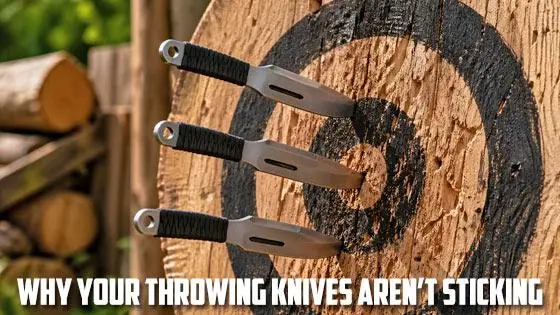
If you've ever thrown a knife that hit the target...then immediately dropped to the ground, you're not alone. It's one of the most frustrating parts of learning how to throw throwing knives, especially when it feels like you're doing everything right. The truth is, most sticking problems come down to just a few small mistakes that are easy to fix once you know what to look for. Whether it's your distance, your rotation, or even the type of target you're using, dialing in the basics can make a huge difference in how often your throws actually stick.
You're Standing the Wrong Distance
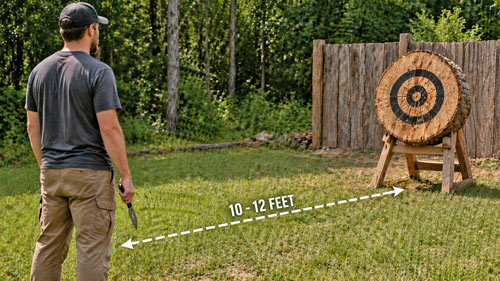
One of the biggest reasons throwing knives won't stick has nothing to do with your strength or accuracy. It comes down to distance. If you're standing too close or too far from the target, your knife won't complete the proper rotation before it hits, which usually leads to that frustrating bounce-off.
Most throwing knives are designed to rotate a specific number of times based on how far you are from the target. For beginners, a good starting point is around 10 to 12 feet for a full rotation throw. If your knife hits handle-first or flat against the target, you're likely too close. If it over-rotates and hits with the back end, you're probably standing too far away.
The easiest way to fix this is to adjust your distance in small increments. Take a step forward or backward after each throw and watch how the knife hits. Once you find that sweet spot where the blade consistently sticks, your success rate will improve almost immediately.
Your Knife Rotation Is Off
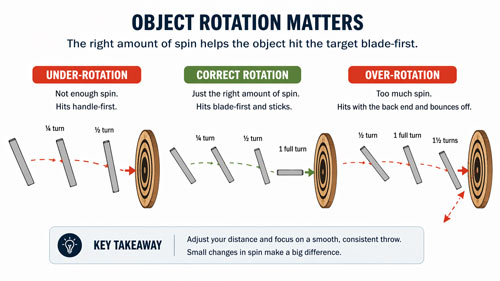
Even if you're standing at the right distance, your throwing knives still won't stick if the rotation isn't dialed in. This is one of the most common issues beginners run into. The knife needs to complete just the right amount of spin so the blade, not the handle or the flat side, hits the target.
If your knife is hitting the target handle-first, it means the rotation is coming up short. On the flip side, if it's over-rotating and hitting with the back end or bouncing off, you're getting too much spin. Both problems are extremely common, and both are easy to fix once you recognize what's happening.
The key is consistency. Keep your throwing motion smooth and repeatable instead of trying to throw harder. Most of the time, rotation issues come from subtle differences in your release point or how much force you're using. Focus on a controlled throw, release the knife cleanly, and let the natural rotation do the work. Once your motion becomes consistent, your knives will start sticking far more often.
Your Target Might Be the Problem
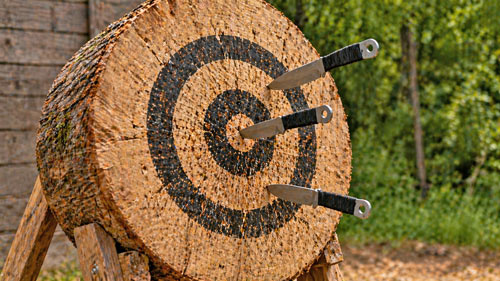
A lot of people assume the issue is their technique, but sometimes the problem is the target itself. Not all wood is good for throwing knives, and if your target is too hard, your knives are going to bounce off no matter how well you throw.
Soft woods like pine or cottonwood are ideal because they allow the blade to sink in more easily. Harder woods, especially dry or treated lumber, can be surprisingly difficult to stick and will quickly kill your confidence as a beginner. If you're practicing on something like a fence board or construction lumber, there's a good chance it's working against you.
A proper throwing target should be thick, slightly soft, and able to absorb repeated impacts without splintering apart. Tree stumps, stacked wood rounds, or purpose-built targets all work well. If your knives are hitting solidly but still not sticking, upgrading your target can make an immediate difference.
You're Using the Wrong Throwing Style
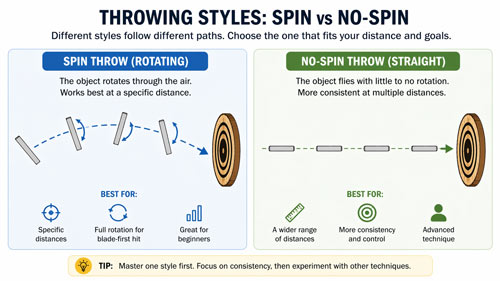
Not all throwing techniques work the same, and if you're using a style that doesn't match your distance or experience level, your throwing knives are going to struggle to stick. The two most common approaches are spin throwing and no-spin throwing, and each one behaves very differently when it comes to rotation.
Spin throwing is what most beginners naturally do. The knife rotates through the air and requires you to stand at a specific distance so the blade lands correctly. This is why small changes in where you stand can make such a big difference. No-spin throwing, on the other hand, minimizes rotation and relies more on technique and control, allowing you to throw from a wider range of distances.
If you're just starting out, it's usually best to stick with a basic spin technique and focus on consistency before experimenting with more advanced styles. Once you understand how distance and rotation work together, you can explore different methods and find what feels most natural.
Your Knives Might Not Be Designed for Throwing
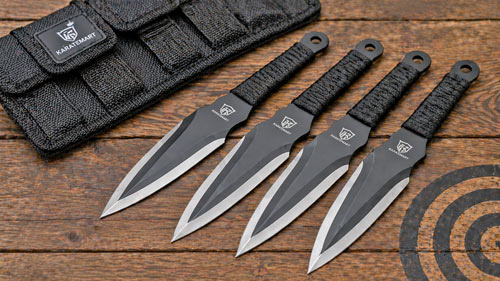
This is one of the most overlooked issues, especially for beginners. Not every knife is built for throwing, and if you're using something that isn't properly balanced, it's going to be much harder to get consistent sticks. Even if your technique is solid, the wrong knife can hold you back.
Throwing knives are specifically designed to be balanced so they rotate predictably through the air. They're usually made from a single piece of steel, with evenly distributed weight from tip to handle. If you're trying to throw a regular knife with uneven weight or bulky handles, you'll likely notice inconsistent rotation and more frequent bounce-offs.
If you're serious about improving your results, switching to a proper set of throwing knives can make a noticeable difference right away. A well-balanced knife takes a lot of the guesswork out of your throw and helps you build consistency much faster.
Simple Fixes That Instantly Improve Stick Rate
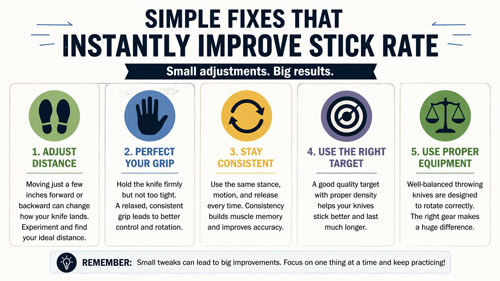
If your throwing knives aren't sticking consistently, the good news is that small adjustments can make a big difference. You don't need to completely relearn your technique. In most cases, just a few simple tweaks will dramatically improve your results.
Start by focusing on consistency. Use the same stance, grip, and throwing motion every time so your body can build muscle memory. Even small changes in how you release the knife can affect rotation, so keeping things repeatable is key.
Next, pay attention to your grip. Hold the knife firmly but not too tight, and avoid "flicking" your wrist during the release. A smooth, controlled throw will always perform better than one powered by force. Let the knife do the work instead of trying to muscle it into the target.
You can also experiment with very small changes in distance. Moving just a few inches forward or backward can completely change how the knife lands. If you're close to sticking but not quite there, this is often the easiest fix.
Finally, make sure your setup is working in your favor. A good target, proper throwing knives, and a consistent environment all help eliminate variables and make it easier to improve quickly.
Final Thoughts
Getting your throwing knives to stick consistently isn't about strength or luck. It comes down to a few key factors working together, like distance, rotation, technique, and using the right equipment. Once you start paying attention to these details, you'll notice improvement much faster than you might expect.
The most important thing is to stay consistent and be patient with the process. Small adjustments can have a big impact, and every throw gives you feedback you can use to improve. Stick with it, make those minor corrections, and before long, you'll start seeing your knives hit and stick far more often.
You May Also Be Interested In:
- Which Throwing Knives are Best?
- Throwing Knives and Other Deadly Weapons
- A Complete Guide to the Different Types of Throwing Knives
- Sticking To Your Plan: A New Year's Resolution Update for Martial Artists
- Which Throwing Weapon Would You Choose?
- Deadly Throwing Axe and Other Dangerous Weapons!
- Throwing Weapons Giveaway Contest
- Modern Throwing Axes and Other Dangerous Weapons!
- Deadliest Throwing Weapons for Your Ninja Arsenal
- Why Are Throwing Axes Shaped Differently from Fighting Axes?
Leave a Reply