



Why Did Seax Knives Have Such Strange Blades?
August 13th, 2026
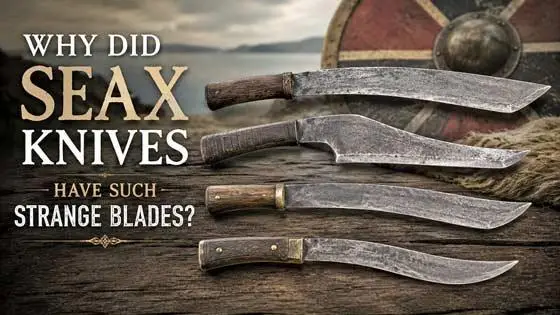
Few blades from early medieval Europe look quite as strange as the seax. Some were short utility knives with relatively simple profiles, while others grew into formidable weapons with broad blades, heavy spines, and points that seem almost aggressively angular. The most striking examples are the so-called broken-back seaxes, whose blades suddenly slope toward the tip as though someone chopped a section off the spine. Yet these unusual shapes were not random experiments in ancient bladesmithing. Different seax designs emerged across centuries and regions, reflecting changing ideas about cutting, thrusting, durability, craftsmanship, and even status. To understand why seax knives looked so different from one another, we first have to abandon the idea that the seax was ever just one type of knife.
The Seax Was Never Just One Kind of Knife
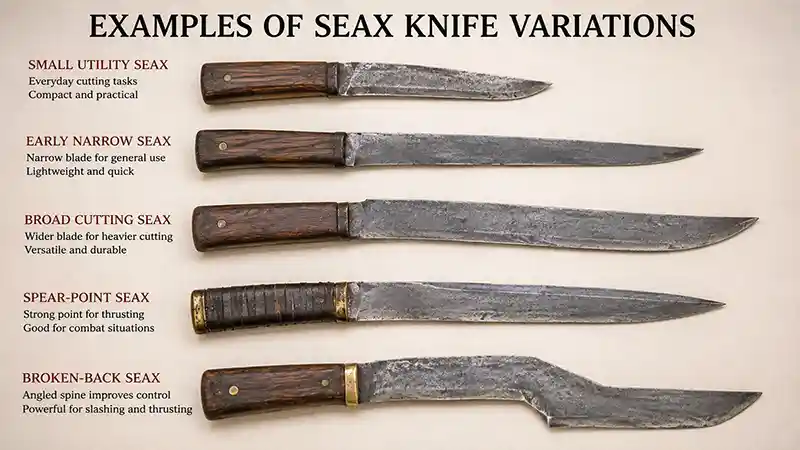
When modern people hear the word "seax," they often picture one specific weapon: a large knife with a straight cutting edge and a dramatic angled point. Archaeology tells a much messier story. Seaxes appeared in numerous sizes and blade profiles across northern Europe, and the design changed considerably over the centuries. Some examples were small enough to function as everyday utility knives, while others reached proportions that blurred the boundary between knife and short sword.
Early examples could have relatively narrow blades with gently curved or tapering profiles. Later forms became broader and heavier, and certain Anglo-Saxon examples developed the dramatic angular spine now known as the "broken-back" profile. Other seaxes had symmetrical spear-like points, long narrow blades, or broad cutting edges that looked nothing like the weapon most people imagine when they hear the name today.
Part of the confusion comes from the word itself. Old English seax essentially referred to a knife, and related terms appear elsewhere in Germanic languages. Rather than identifying one rigidly standardized weapon, the name covered a family of single-edged fixed blade knives that evolved according to period, region, and purpose.
That variety is the key to understanding everything that follows. Asking why "the seax" had such a strange blade is a little like asking why modern knives have a particular shape. They do not. What makes the seax fascinating is how many radically different solutions early European bladesmiths created around the same basic idea: a strong, single-edged blade carried at the waist.
The Broken-Back Seax Looked Almost Deliberately Unfinished
Of all the shapes associated with the seax, none attracts more attention than the broken-back profile. Instead of allowing the spine to taper gradually toward the point, the blade maintains much of its width before suddenly angling downward near the tip. The abrupt change creates a silhouette that can look as though a conventional knife had its upper corner sliced away.
The name "broken-back" is modern descriptive terminology, not evidence that people who originally carried these weapons thought their blades looked broken. Archaeological examples of this general form are particularly associated with Anglo-Saxon England during the later part of the seax's history, although individual blades varied considerably in their proportions.
What makes the design interesting is that the strange angle creates a pronounced point without requiring the entire blade to taper toward it. The smith could retain a broad blade and substantial spine through much of the weapon's length, then create the tip relatively abruptly. That produced a knife capable of combining a long cutting edge with a visually aggressive point.
Exactly why this profile became fashionable is harder to prove. Modern observers can propose mechanical advantages, but archaeological evidence rarely tells us precisely what a bladesmith intended more than a thousand years ago. Function may have mattered, but so could regional tradition, changing tastes, craftsmanship, and the desire to carry a blade whose appearance communicated something about its owner.
This is an important distinction throughout the history of knives. A strange blade shape does not always have one secret mechanical purpose waiting to be uncovered. Sometimes design evolves because usefulness, manufacturing traditions, and cultural preference all reinforce one another.
Why Keep So Much Steel Near the Tip?
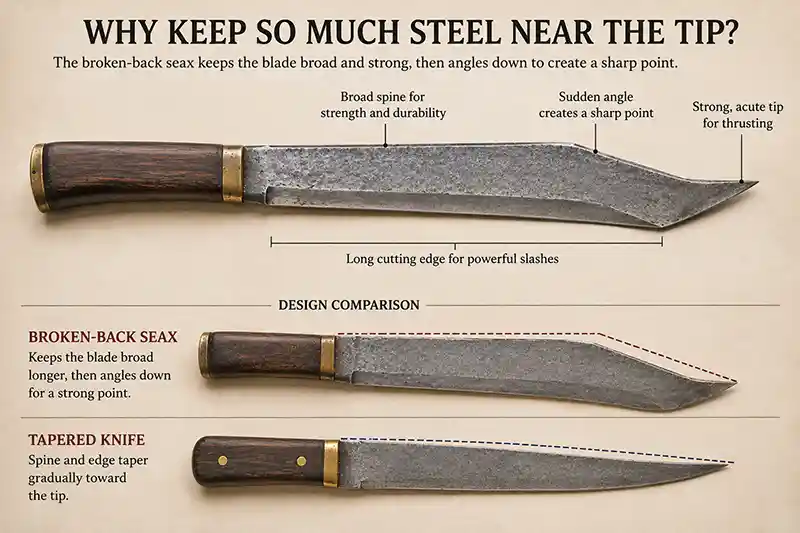
A broken-back seax does something very different from a knife whose blade gradually narrows from handle to point. Much of the blade remains broad for most of its length, preserving considerable material along the spine and cutting edge before the sudden angled section forms the tip. Visually, it almost seems as though the point was added at the last possible moment.
That geometry could provide a useful combination of characteristics. Keeping the blade broad maintains stiffness and leaves substantial steel behind the cutting edge, while the angled back still produces a distinct point. On larger seaxes, this allowed the weapon to retain the imposing proportions of a heavy cutting blade without ending in an excessively blunt tip.
There is a temptation to take this observation further and claim that the broken-back profile was specifically engineered to produce a superior thrusting weapon. The surviving evidence does not let us be that certain. A pointed seax could certainly thrust, but blade thickness, point geometry, overall length, balance, and the way the weapon was actually used all matter more than the silhouette alone.
The design may instead represent something more interesting than a single-purpose innovation. It gave bladesmiths a way to combine a broad single-edged blade with a dramatic point while creating an unmistakable regional style. In early medieval weapon design, practical construction and visual identity did not have to be competing goals. A blade could accomplish both at once.
Some Seaxes Became So Large They Barely Looked Like Knives
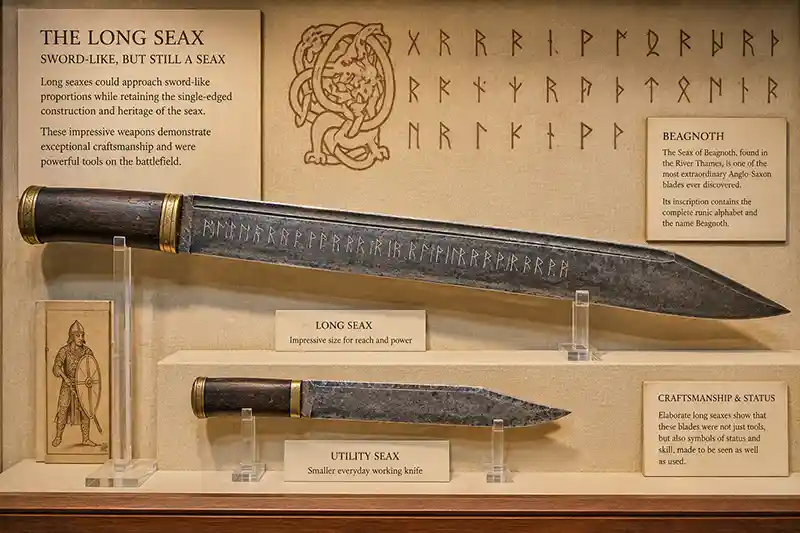
At the opposite end of the spectrum from small utility seaxes were enormous blades often described today as long seaxes. Some surviving examples approach sword-like proportions, with lengthy single-edged blades that make the modern distinction between "knife" and "sword" surprisingly difficult to apply. Yet they retained the basic construction and visual ancestry of the seax rather than simply becoming conventional double-edged swords.
These larger weapons demonstrate how far the basic seax concept could be pushed. Increasing blade length provided greater reach, while a substantial single-edged construction allowed the spine to remain comparatively robust. Some long seaxes also featured sophisticated pattern-welded blades, decorative grooves, inscriptions, or other details that required considerable skill to produce.
That craftsmanship is important because it destroys the stereotype of the seax as nothing more than a crude working knife enlarged for battle. Certain surviving examples were clearly valuable objects. One of the most extraordinary is the famous Seax of Beagnoth, found in the River Thames and now held by the British Museum. Its blade carries an inscription containing the complete Anglo-Saxon runic alphabet along with the name Beagnoth, turning an already impressive weapon into an exceptional piece of early medieval craftsmanship.
The existence of elaborate long seaxes also suggests that these blades could communicate status as well as serve practical purposes. A large, skillfully forged weapon hanging from the belt would have been difficult to overlook. By this stage in the seax's evolution, the humble utility combat knife concept had expanded into something capable of competing visually and functionally with a sword.
Some Seax Blades Were Far More Sophisticated Than They Look
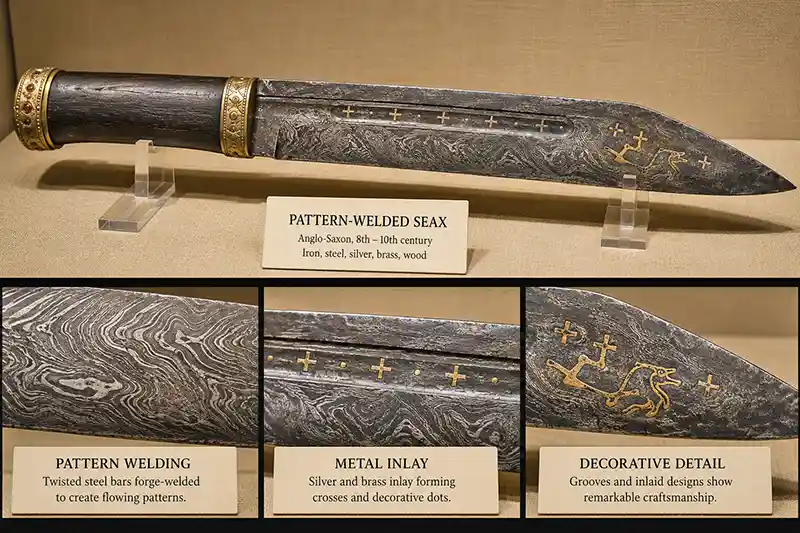
The seax is often imagined as a brutally simple weapon: a thick piece of iron, one sharpened edge, and a wooden handle. Some surviving examples could certainly be practical and relatively plain, but early medieval bladesmiths were capable of producing seaxes using techniques that required remarkable control over iron and steel.
Pattern welding is one of the most striking examples. Smiths could forge together bars of iron and steel, sometimes twisting them before welding, to create complex structures within the blade. When polished and etched, these different materials could reveal flowing patterns that resemble waves, chevrons, or intertwined lines running through the steel.
The technique was not exclusive to seaxes, and its purpose should not be reduced to decoration alone. In periods when producing large quantities of consistently high-quality steel was difficult, combining different materials allowed skilled smiths to manipulate the properties of a blade. Pattern welding could also create spectacular visual effects, turning an expensive weapon into an obvious demonstration of craftsmanship.
Some seaxes went even further. Archaeological finds include blades decorated with grooves, inlaid metals, inscriptions, and other embellishments. A weapon that appears brutally utilitarian from across a museum case can reveal extraordinary complexity when examined closely. That makes elaborate seaxes some of the most fascinating unique weapons to survive from early medieval Europe.
The strange shape of a seax therefore tells only part of its story. Beneath that heavy spine and single cutting edge could be a blade representing some of the finest metalworking its maker knew how to produce.
The Seax Was a Tool, a Weapon, and Sometimes a Status Symbol
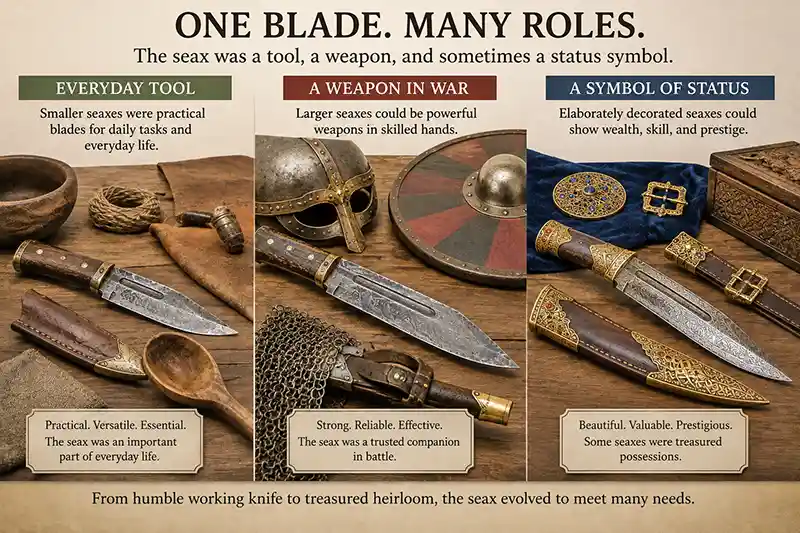
Trying to classify the seax as either an everyday knife or a fighting weapon creates a distinction that its original owners may not have recognized so neatly. Smaller seaxes were practical blades that could handle routine cutting tasks, while larger examples possessed enough length, weight, and reach to function as serious weapons. The same basic family of blades could therefore occupy very different roles depending on size and construction.
Archaeology provides another clue. Seaxes have been recovered from graves alongside other personal possessions and weapons, suggesting that at least some were important enough to accompany their owners in burial. Elaborately decorated blades, expensive fittings, and sophisticated forging techniques further demonstrate that certain seaxes were more than disposable working tools.
That does not mean every ornate seax was purely ceremonial. In early medieval societies, a valuable object could be functional and prestigious at the same time. A finely made blade could perform real work while also advertising the wealth, connections, or status of the person wearing it. The distinction between "practical knife" and "status object" was not necessarily an either-or choice.
This helps explain why the seax evolved into so many different forms. A farmer, craftsman, traveler, warrior, and wealthy landowner did not necessarily need identical blades. Once the basic single-edged design became widespread, smiths could alter its length, profile, materials, and decoration to suit different owners and expectations.
The seax's strange variety may therefore reflect something surprisingly familiar. Just as modern people choose very different knives for work, outdoor use, collecting, or personal preference, early medieval Europeans adapted one enormously successful blade concept to fit many different lives.
The Seax Was Not Exclusively a Viking Weapon
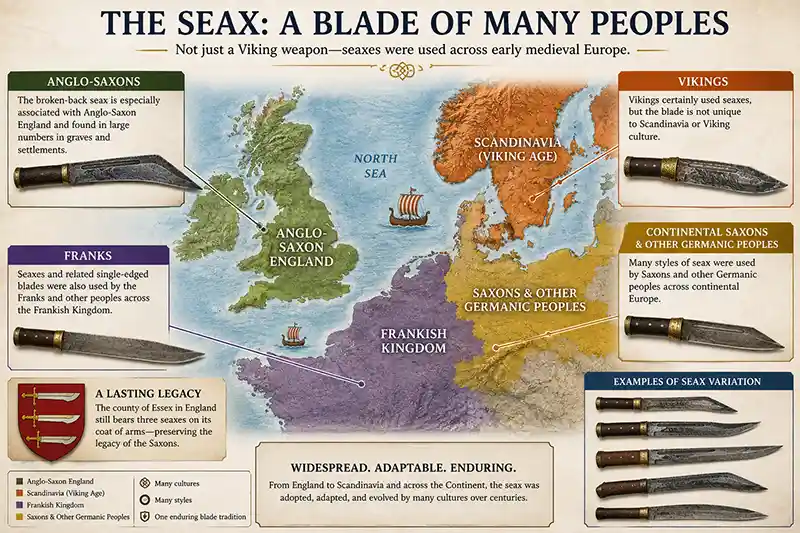
Modern depictions frequently place the seax beside round shields, longships, and Scandinavian warriors, which has helped turn it into something commonly described as a "Viking knife." Vikings certainly used seaxes and related single-edged blades, but treating the weapon as uniquely Scandinavian leaves out a large part of its history.
Seaxes appeared across several Germanic cultures of early medieval Europe. Archaeological examples have been found in areas associated with the Anglo-Saxons, Franks, continental Saxons, and other populations, with regional styles developing over time. The broken-back seax that attracts so much attention today is particularly associated with Anglo-Saxon England rather than representing a universal Viking blade design.
There is even an extraordinary linguistic connection hiding in plain sight. The name of the Saxons has traditionally been associated with the word seax, and the weapon became an emblem connected with Saxon identity. The modern English county of Essex still displays three stylized seaxes on its coat of arms, preserving that association more than a thousand years after these blades were commonly carried.
This wider history helps explain the enormous variation among surviving examples. The seax was not being manufactured by one culture according to one blueprint. Different communities adopted and modified single-edged blades over centuries, producing regional traditions that sometimes looked dramatically different from one another.
So while calling a seax a "Viking knife" may be convenient, it can also hide the more interesting story. The seax belonged to a much broader early medieval world, and some of its strangest forms developed far from the Scandinavian longships with which the weapon is now so often associated.
The Seax Was Usually Worn Horizontally Across the Belt
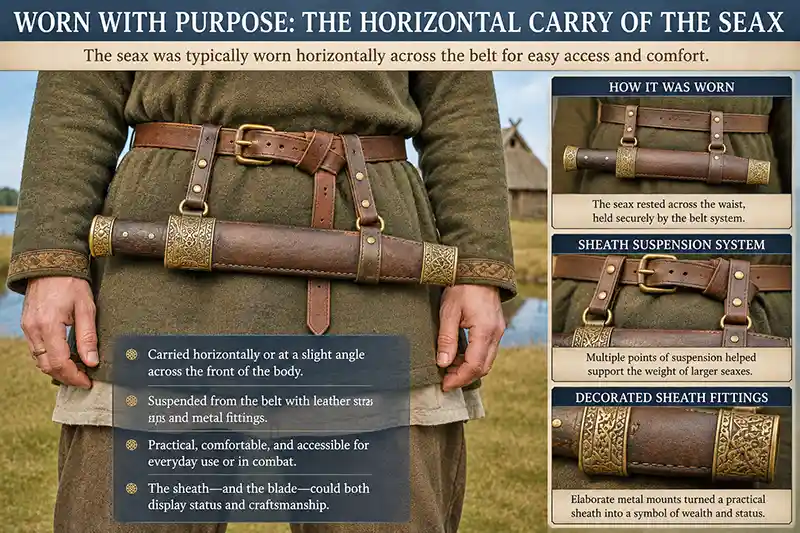
The blade was only half of the seax's unusual design. Archaeological evidence from surviving sheath fittings and burial finds suggests that many seaxes were carried horizontally or at a slight angle across the front of the body, suspended from the belt rather than hanging vertically down the leg like the stereotypical medieval sword.
This method of carry made practical sense for a blade that could vary enormously in size. A smaller seax could remain conveniently accessible during everyday work, while even a relatively long example could be carried without swinging against the leg while walking. Leather sheaths could be suspended from multiple points, helping distribute the weight of heavier blades along the belt.
The orientation also helps explain some archaeological finds that initially seem puzzling. Seaxes discovered in graves are sometimes positioned across the waist area, reflecting where the weapon and its sheath may have been worn. Decorative sheath fittings found alongside the blades provide additional evidence that the carrying system itself could receive considerable attention.
For an especially valuable seax, the sheath offered another opportunity to display wealth. Leather could be decorated, while metal mounts and fittings could transform an otherwise practical scabbard into something conspicuous. A large seax worn across the waist would have been difficult to hide, making both the blade and its sheath part of the owner's visible appearance.
This is another reason the seax should not be imagined simply as an early medieval version of a modern hunting knife. Its blade shape, enormous range of sizes, decorative possibilities, and distinctive method of carry belonged to a weapon tradition with an identity all its own.
Why Did the Seax Eventually Disappear?
For centuries, the seax was one of the most recognizable blades carried across parts of northern Europe. Then, gradually, it faded from everyday use. There was no single moment when people suddenly abandoned the design. Instead, the seax seems to have declined as weapons, tools, and the societies that produced them continued to change.
One factor was the increasing prominence of other weapon forms. Swords evolved, axes remained important, and specialized knives continued to fill everyday cutting roles. A large seax occupied an unusual middle ground between utility knife and dedicated weapon, and that niche may have become less important as equipment and fighting traditions changed.
The disappearance of the seax also reminds us that successful designs do not always vanish because something objectively better replaces them. Cultural preferences change. Manufacturing traditions disappear. Styles fall out of fashion. The equipment people carry can shift along with military organization, clothing, trade, and social identity. A blade deeply associated with one period can become obsolete when the world around it changes.
Yet the basic idea behind the seax never really disappeared. Heavy single-edged knives continued to emerge in different cultures and periods because a thick spine, substantial cutting edge, and simple fixed-blade construction remain useful characteristics. The seax itself faded, but the practical logic behind it did not.
That may be why the weapon feels strangely familiar today. Strip away the runes, archaeological context, and early medieval name, and some seaxes begin to resemble blade concepts that would reappear centuries later.
The Strange Blade Shapes Were Probably Never Strange to the People Who Used Them
To modern eyes, the seax can look almost experimental. Broken-back points, enormously broad blades, unusually long proportions, and heavy single-edged construction seem radically different from the symmetrical swords we tend to associate with early medieval warriors. But that reaction says as much about our expectations as it does about the weapon itself.
Someone living in Anglo-Saxon England or another part of early medieval northern Europe would have grown up seeing single-edged knives in everyday life. Different sizes and profiles would have been familiar, and the distinctions between a small working seax, an impressive long seax, and a decorated weapon may have communicated information that is difficult for us to reconstruct today.
The same thing happens when we examine unusual blades from other cultures. The forward curve of the kukri can initially look bizarre until we understand how its geometry affects the tool. As we saw when examining why the kukri is curved forward, a blade shape that appears strange from the outside can make considerably more sense once we understand the traditions and practical demands surrounding it.
That does not mean every unusual feature of the seax has a neat functional explanation. Some characteristics probably reflected manufacturing techniques. Others may have followed regional fashions, represented status, or simply continued because generations of smiths and owners preferred them. Trying to assign one mechanical purpose to every angle risks making the history less accurate rather than more understandable.
The real answer to why seax knives had such strange blades is therefore surprisingly complicated. There was never one seax shape and never one reason behind its design. What survives in museums today is evidence of centuries of experimentation, regional tradition, craftsmanship, practical necessity, and personal expression, all preserved in steel.
A Blade That Refused to Fit Into One Category
The seax survived for centuries because it was never required to be just one thing. It could be a small working knife, a heavy fighting blade, an elaborate possession worthy of burial, or a weapon so large that modern observers struggle to decide whether it should still be called a knife at all. Its shape changed because the people carrying it changed, and because different communities wanted different things from the same basic single-edged design.
That is what makes the broken-back seax and its relatives so fascinating today. Their strange profiles were not failed attempts to create something resembling a modern knife. They belonged to their own tradition, shaped by early medieval craftsmanship, available materials, regional preferences, practical needs, and ideas about what a valuable blade should look like.
More than a thousand years later, those differences are exactly what keep the seax interesting. A perfectly ordinary blade from its own time can now look almost alien in a museum case, leaving us to reconstruct why one smith created a graceful taper while another forged an enormous slab of steel ending in that unmistakable broken-back point.
The seax may have disappeared from European belts centuries ago, but its surviving blades still accomplish something remarkable. They remind us that the history of the knife was never a straight line toward the shapes we recognize today. Sometimes the strangest designs are the ones that reveal just how many different answers our ancestors found to the same basic problem.
What Was a Seax Knife Used For?
The seax could serve as both an everyday tool and a weapon, depending largely on its size and construction. Smaller examples were suitable for ordinary cutting tasks, while larger seaxes had enough blade length and mass to function as serious fighting weapons. Some elaborate examples also appear to have carried social or symbolic importance, showing that a seax could simultaneously be practical, valuable, and prestigious.
Were Seax Knives Used by Vikings?
Yes. Seaxes and related single-edged blades were used in Scandinavia during the Viking Age, but the seax was not exclusively a Viking weapon. Similar blades were carried by Anglo-Saxons, Franks, continental Saxons, and other Germanic peoples across early medieval Europe. Some of the most distinctive forms, including famous broken-back seaxes, are particularly associated with Anglo-Saxon England, so describing every seax simply as a "Viking knife" can give a misleading impression of its much broader history.
What Does the Word Seax Mean?
The Old English word seax essentially means "knife," with related words appearing in other Germanic languages. This helps explain why archaeologists use the term for such a surprisingly diverse collection of single-edged blades rather than one standardized weapon design. The name is also traditionally associated with the Saxons themselves, and stylized seaxes remain visible today on the coat of arms of Essex in England.
What Is a Broken-Back Seax?
A broken-back seax is a type of seax with a spine that remains relatively straight before suddenly angling downward toward the point. This abrupt transition creates the distinctive profile that gives the blade its modern descriptive name. Broken-back seaxes are particularly associated with Anglo-Saxon England, and surviving examples vary considerably in length, width, and the severity of the angled tip.
Was the Seax More Like a Knife or a Sword?
It depended on the individual seax. Smaller examples clearly functioned as knives, while long seaxes could reach dimensions that make the modern distinction between knife and sword surprisingly difficult to apply. Rather than fitting neatly into either category, the seax existed across a spectrum of sizes, from compact everyday cutting tools to large purpose-built weapons. Early medieval people did not necessarily classify blades according to the rigid categories modern collectors use today.
Why Did Some Seax Knives Have Such Long Blades?
Long seaxes provided greater reach while retaining the strong single-edged construction of smaller seaxes. Some became large enough to function as dedicated fighting weapons rather than ordinary utility knives, yet they continued to share features with the broader seax tradition. Their size also created opportunities for elaborate pattern welding, inscriptions, grooves, and decorative fittings, suggesting that certain long seaxes could serve as impressive displays of craftsmanship and status as well as practical weapons.
Did Seax Knives Have Pattern-Welded Blades?
Some seaxes were made using pattern welding, a sophisticated technique in which different iron and steel components were forge-welded together to form the blade. Certain constructions could produce striking twisted or flowing patterns when the finished surface was properly revealed. Not every seax was pattern welded, however, and surviving examples range from relatively simple working blades to remarkably elaborate weapons demonstrating some of the finest metalworking skills available in early medieval Europe.
How Were Seax Knives Carried?
Many seaxes appear to have been carried in leather sheaths suspended horizontally or at a slight angle from the belt. Archaeological finds of blades, sheath fittings, and burial arrangements help support this interpretation. Carrying the seax across the waist could keep it accessible while preventing longer examples from swinging against the leg, and elaborate metal fittings show that some sheaths were decorative objects in their own right.
Did Seax Knives Have Guards?
Most historical seaxes did not have the prominent crossguards associated with medieval swords. Their handles generally transitioned directly from the blade into grips made from materials such as wood, horn, or bone, although construction varied considerably across periods and regions. This relatively simple hilt design reinforces the seax's connection to the knife tradition, even when some examples grew large enough to rival short swords in overall size.
Why Did the Seax Disappear?
The seax did not vanish because of one sudden technological breakthrough. Its decline appears to have been gradual as European weapons, clothing, military practices, and everyday tools changed during the later medieval period. Large fighting seaxes increasingly occupied a role that could be filled by evolving swords and other dedicated weapons, while smaller utility knives continued developing into different forms.
Changing fashion probably mattered as well. Weapons were personal possessions that could communicate identity and status, and a blade style strongly associated with one period could lose popularity as society changed around it. The seax eventually disappeared as a recognizable weapon tradition, even though the basic idea of a strong, single-edged fixed blade certainly did not.
How Old Are the Oldest Seax Knives?
Seaxes and related single-edged blades appear in archaeological contexts from the early medieval period, with recognizable forms developing during the centuries following the collapse of Roman authority in western Europe. The weapon tradition continued evolving for several centuries, producing everything from relatively small utility blades to the enormous long seaxes of the later period. Because archaeologists classify several related blade forms as seaxes, assigning one precise date to the "first seax" is difficult, but the tradition was well established among Germanic peoples long before the Viking Age reached its height.
What Is the Seax of Beagnoth?
The Seax of Beagnoth is one of the most remarkable surviving Anglo-Saxon seaxes. Found in the River Thames in London during the 19th century, the large blade is famous for an inlaid inscription containing the complete Anglo-Saxon runic alphabet, or futhorc, followed by the name Beagnoth. Exactly who Beagnoth was is uncertain, but the extraordinary inscription makes the weapon an important artifact for both the study of early medieval blades and Anglo-Saxon writing. The original is now held by the British Museum.
Were Seax Knives Sharpened on Both Sides?
Seaxes were characteristically single-edged blades rather than double-edged swords. The primary cutting edge ran along one side, while the opposite side formed the spine. Even on large seaxes that approached sword-like proportions, this basic single-edged construction remained an important feature. The tip could still be formed into an effective point as the spine and cutting edge converged, particularly on dramatically shaped broken-back examples.
Did Women Carry Seax Knives?
Knives were common practical objects in early medieval society, and archaeological evidence shows that women as well as men could be buried with knives. Determining whether a particular blade should be classified as a seax, an everyday knife, a weapon, or some combination of these categories can be more complicated. Grave goods also do not always provide a simple record of how an object was used during life. It is therefore reasonable to say that women carried single-edged knives, but broad claims that large fighting seaxes were routinely carried by women require much stronger evidence and should be treated cautiously.
You May Also Be Interested In:
- Was the Seax Really a Viking Weapon?
- The Strange History of the Blowgun
- Why Is It Called a 'Gi'? The Strange History of Martial Arts Uniforms
- 5 Unusual Blades You Can't Live Without!
- New Weapon Wednesday! Balisong, Blades and Baton!
- New Weapons This Week! Swords, Blades & Batons!
- What Is the Best Sword of All Time? A Look at History's Greatest Blades
- Modern Combat Knife and Other Deadly Blades
- A Visual Guide to Japanese Swords: The Blades of the Samurai Era
- Extreme Knife Testing: Folders vs Fixed Blades
Leave a Reply