September 4th, 2026
Of all the strange abilities attributed to ninjas, walking across water sounds like one of the easiest to dismiss as pure fantasy. Yet museums, historical illustrations, and books about ninjutsu have long featured an unusual device known as the mizugumo, or "water spider," that supposedly allowed a shinobi to cross ponds, rivers, or even the defensive moat surrounding a castle. Reconstructions often resemble bizarre wooden flotation shoes strapped to the feet, creating an irresistible image of a ninja quietly stepping across the surface while everyone else would have to swim. There is just one problem: actually trying to make such a device support a human raises some serious questions. Were ninja water shoes an ingenious piece of covert equipment, a misunderstood historical tool, or one of those legends that became much more impressive with every retelling?
September 4th, 2026
Few images are more closely associated with ninjas than a black-clad figure throwing a small bomb at the ground, vanishing inside a sudden cloud of smoke, and somehow being gone by the time the haze clears. It is such a familiar trick that it hardly seems worth questioning. But real shinobi lived in an era when gunpowder, incendiary weapons, signaling devices, and surprisingly sophisticated fire-making techniques already existed in Japan. That raises a much more interesting possibility: perhaps the famous ninja smoke bomb was not invented by movies and cartoons after all. The real question is whether historical ninjas actually carried devices that could produce enough smoke to conceal an escape, or whether centuries of storytelling transformed something far less spectacular into one of the most famous disappearing acts in history.
September 1st, 2026
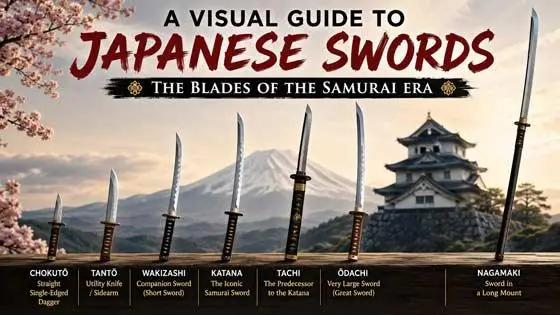
Japan's sword-making tradition produced far more than the
katana most people recognize today. Across centuries of warfare and changing samurai culture, Japanese blades appeared in dramatically different lengths, proportions, mounting styles, and roles, from the compact tanto and companion-sized wakizashi to the sweeping tachi and enormous odachi. Some emerged centuries apart, some existed alongside one another, and several names that seem straightforward today become surprisingly complicated when examined historically. In this visual guide, we'll compare the major types of Japanese swords, look at when and why they appeared, and explore the details that made each blade distinct.
August 28th, 2026
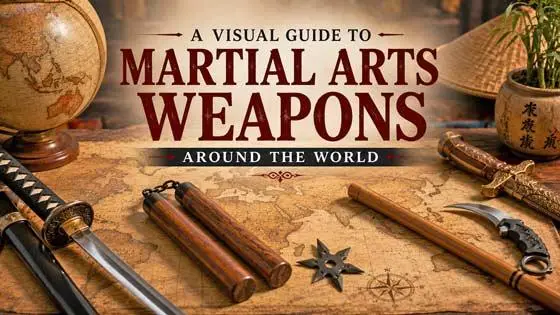
Martial arts weapons tell a story that stretches across continents, cultures, and thousands of years of human history. From the swords and polearms of Japan to the flexible weapons of China, the fighting sticks of the Philippines, and distinctive blades developed throughout Southeast Asia, each weapon reflects the environment, technology, traditions, and challenges of the people who created it. Some were carried onto battlefields, others became closely associated with systems of personal defense, and many eventually found a place in formal martial arts training. This visual guide travels around the world to examine these weapons region by region, exploring where they came from, what made them distinctive, and how they became part of the martial traditions we recognize today.
August 24th, 2026
At first glance, bolas seem almost too simple to be effective: a few weighted balls connected by cords and thrown toward a target. Yet in the hands of an experienced hunter, that simplicity concealed an ingenious advantage. Unlike a spear or arrow, which generally had to strike a relatively small target directly, a spinning set of bolas could spread across a much wider area before the cords wrapped around an animal's legs. Suddenly, speed could become a liability. The faster the animal ran, the more disastrous an entanglement could be. But bolas did not work like the perfectly choreographed throws we often see in movies. Their real effectiveness came from a clever combination of rotation, momentum, timing, and a surprisingly forgiving way of intercepting something that refused to stand still.